
Before Memmo my notes were scattered across PDFs. Now a workspace pulls everything into one place — I see exactly what's still left to study.
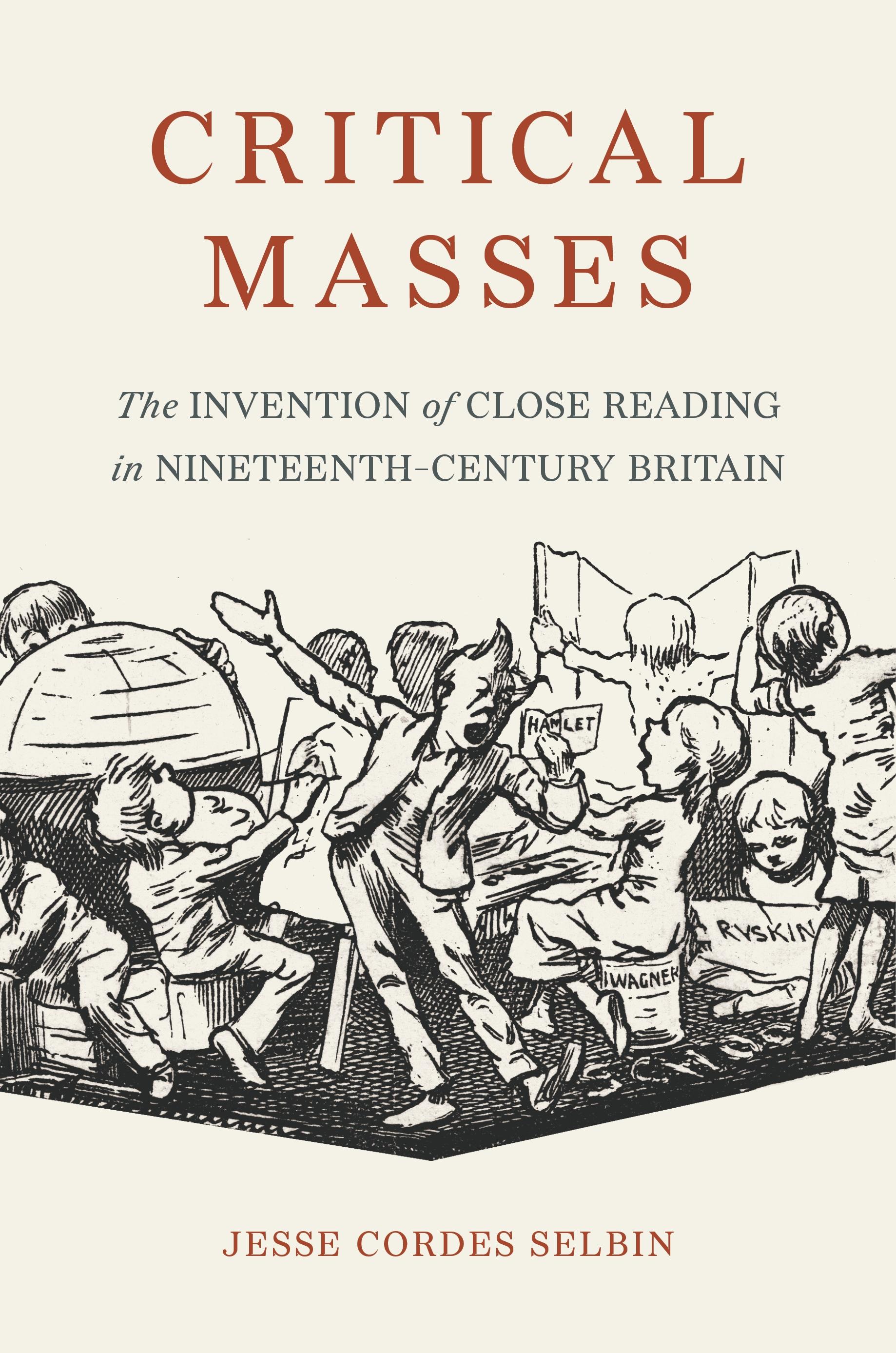
How close reading developed as an essential tool of critical thinking and democratic citizenship
For the past century, close reading has been seen as a specialized academic enterprise: the invention of professional scholars and critics. Yet in nineteenth-century Britain, the technique was widely framed as an instrument of the masses, a vehicle of collective uplift, and a vital facilitator of what we now call “critical thinking.” In Critical Masses, Jesse Cordes Selbin unearths the Victorian prehistory of close reading, showing how its primary practitioners operated outside academic institutions and cast their work as crucial to democratic engagement among an increasingly literate and enfranchised populace.
Cordes Selbin traces the tradition of the “Popular Critics”: cultural critics, educators, journalists, and novelists who promoted close reading as a tool of critical analysis among popular audiences, particularly workers and women. Popular Criticism, she demonstrates, anticipated the later academic approaches of Practical Criticism and New Criticism. She chronicles the efforts of working-class editor John Cassell to promote close reading to laborers and solicit their contributions, and John Ruskin’s late-career theories of textual interpretation. Cordes Selbin argues that Charlotte Brontë, Elizabeth Gaskell, and George Eliot expanded the mission of Popular Criticism by crafting novels to elicit close reading, building immersive storyworlds and then inviting readers to analyze both themselves and their world.
With Critical Masses, Cordes Selbin offers a new perspective on contemporary “method wars,” recovering an early conception of criticism as dialectical practice. She also finds in Victorian ideals of civic engagement a precedent for current political anxieties about democratic decline.
Before Memmo my notes were scattered across PDFs. Now a workspace pulls everything into one place — I see exactly what's still left to study.
Memmo's summaries are gold before exams. I don't have to re-read 800 pages two weeks before — just the important parts.
The AI chat has saved me the night before an exam more than once. I just keep asking until I get it — no waiting on a study group to reply.
The quizzes hit exactly what I need to know. Memmo tracks what I get stuck on — so I only practice what's worth it.
Flashcards with spaced repetition are magic. Memmo knows when I'm about to forget something and brings it back.
The AI podcasts are my favorite. I listen on my way to school and get a recap without sitting at a computer.

Handbok i kvalitativa metoder
281 kr

Hållbar utveckling: en introduktion för ingenjörer och andra problemlösare
334 kr

Brymans Samhällsvetenskapliga metoder
390 kr

Projektledning
491 kr

Den orättvisa hälsan: om socioekonomiska skillnader i hälsa och livslängd
326 kr

Organizational Leadership
429 kr

Vetenskapsteori för nybörjare
196 kr

På väg mot läraryrket
172 kr

Det sociala livet i skolan: Socialpsykologiska perspektiv
253 kr

Betygsättningens didaktik
151 kr

Personality
402 kr

Studying Leadership
404 kr

Managing Innovation
477 kr

Introduktion till samhällsvetenskaplig metod
347 kr

The Psychology of Sex and Gender
698 kr

Evidens och kunskap för socialt arbete
207 kr

Introduction to Leadership
605 kr