
Before Memmo my notes were scattered across PDFs. Now a workspace pulls everything into one place — I see exactly what's still left to study.
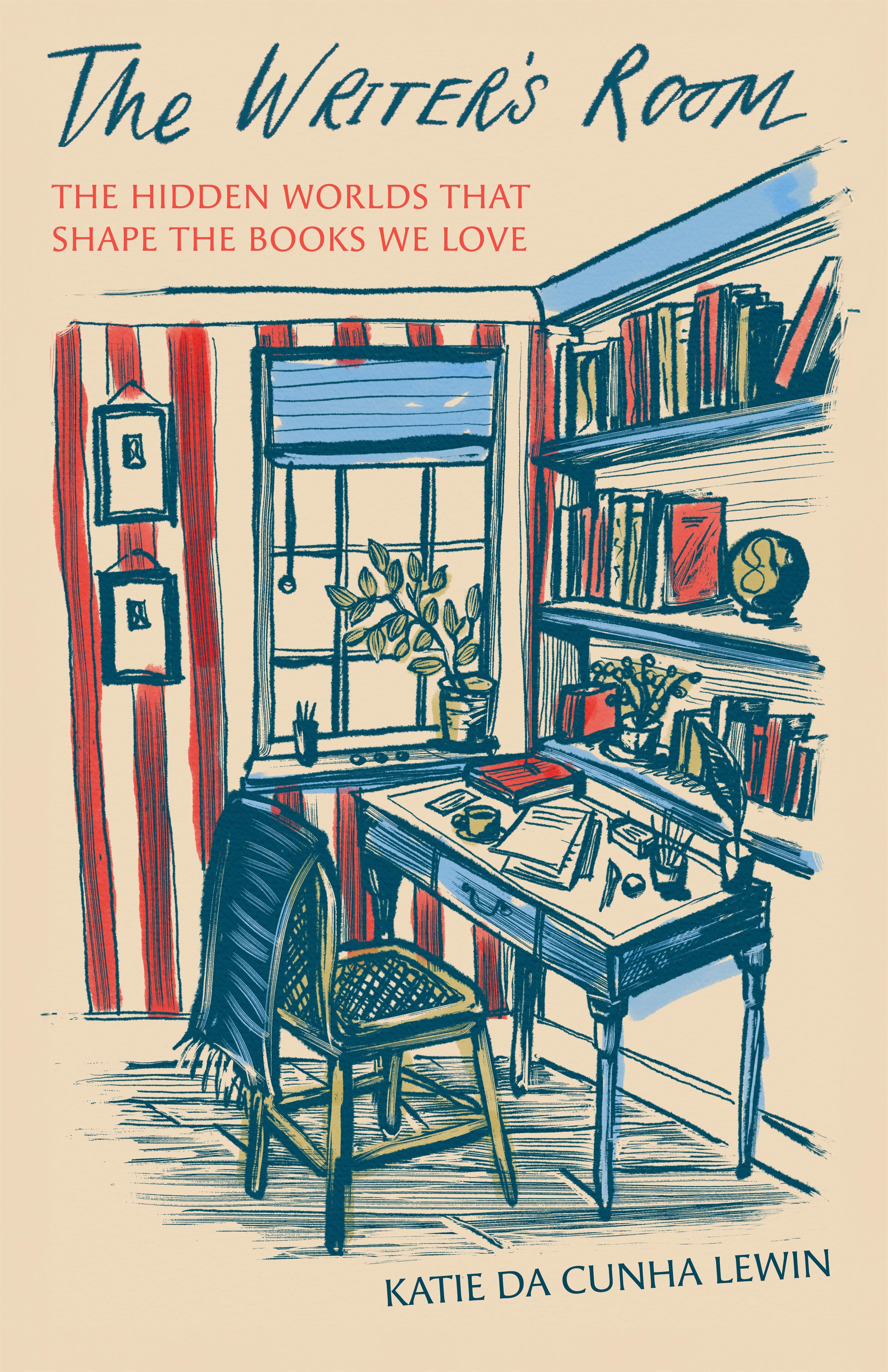
A journey into the unique spaces where some of literature’s greatest writers created their most memorable works
Virginia Woolf famously wrote in A Room of One’s Own that “it is necessary to have five hundred a year and a room with a lock on the door if you are to write fiction or poetry.” Writers have worked in all kinds of places, from garrets and sheds to boarding houses, bathrooms, and even while on the move. What is it that fascinates us about the writer’s room? This book takes readers inside literature’s creative spaces to explore this tantalizing question.
Beginning with her own secondhand writing desk, Katie da Cunha Lewin invites us to consider how these environments embody the craft of writing and shape the literary works we love. She paints vivid portraits of Woolf’s garden room at Monk’s House, Emily Brontë’s shared table in the parsonage, Sigmund Freud’s study with its legendary couch, and the bustling Parisian cafés where Ernest Hemingway crafted stories in notebooks. She dismantles the familiar furniture of the writer’s room to cast it in a surprising new light, from the hotel rooms where Maya Angelou wrote poetry to the busses where Lauren Elkin wrote on her phone to the kitchen tables around which Audre Lorde and the founders of Women of Color Press convened.
Lyrical, insightful, and rich with personal insights, The Writer’s Room reveals how these spaces are brimming with possibilities, shaping the creative process of authors and capturing the imaginations of readers.
The writers featured include Maya Angelou • James Baldwin • Claire-Louise Bennett • Ray Bradbury • the Brontë sisters • Alexander Chee • Agatha Christie • Lucille Clifton • Roald Dahl • Don DeLillo • Charles Dickens • Emily Dickinson • Joan Didion • Ernest Hemingway • bell hooks • Victor Hugo • Zora Neale Hurston • Derek Jarman • John Keats • Jack Kerouac • Hanif Kureishi • Harper Lee • Doris Lessing • Deborah Levy • Hilary Mantel • Paule Marshall • Sylvia Plath • Thomas Pynchon • William Shakespeare • Zadie Smith • Muriel Spark • Mark Twain • Alice Walker • Edith Wharton • Virginia Woolf
Before Memmo my notes were scattered across PDFs. Now a workspace pulls everything into one place — I see exactly what's still left to study.
Memmo's summaries are gold before exams. I don't have to re-read 800 pages two weeks before — just the important parts.
The AI chat has saved me the night before an exam more than once. I just keep asking until I get it — no waiting on a study group to reply.
The quizzes hit exactly what I need to know. Memmo tracks what I get stuck on — so I only practice what's worth it.
Flashcards with spaced repetition are magic. Memmo knows when I'm about to forget something and brings it back.
The AI podcasts are my favorite. I listen on my way to school and get a recap without sitting at a computer.

Handbok i kvalitativa metoder
281 kr

Hållbar utveckling: en introduktion för ingenjörer och andra problemlösare
334 kr

Brymans Samhällsvetenskapliga metoder
390 kr

Projektledning
491 kr

Den orättvisa hälsan: om socioekonomiska skillnader i hälsa och livslängd
326 kr

Organizational Leadership
429 kr

Vetenskapsteori för nybörjare
196 kr

På väg mot läraryrket
172 kr

Det sociala livet i skolan: Socialpsykologiska perspektiv
253 kr

Betygsättningens didaktik
151 kr

Personality
402 kr

Studying Leadership
404 kr

Managing Innovation
477 kr

Introduktion till samhällsvetenskaplig metod
347 kr

The Psychology of Sex and Gender
698 kr

Evidens och kunskap för socialt arbete
207 kr

Introduction to Leadership
605 kr