
Before Memmo my notes were scattered across PDFs. Now a workspace pulls everything into one place — I see exactly what's still left to study.
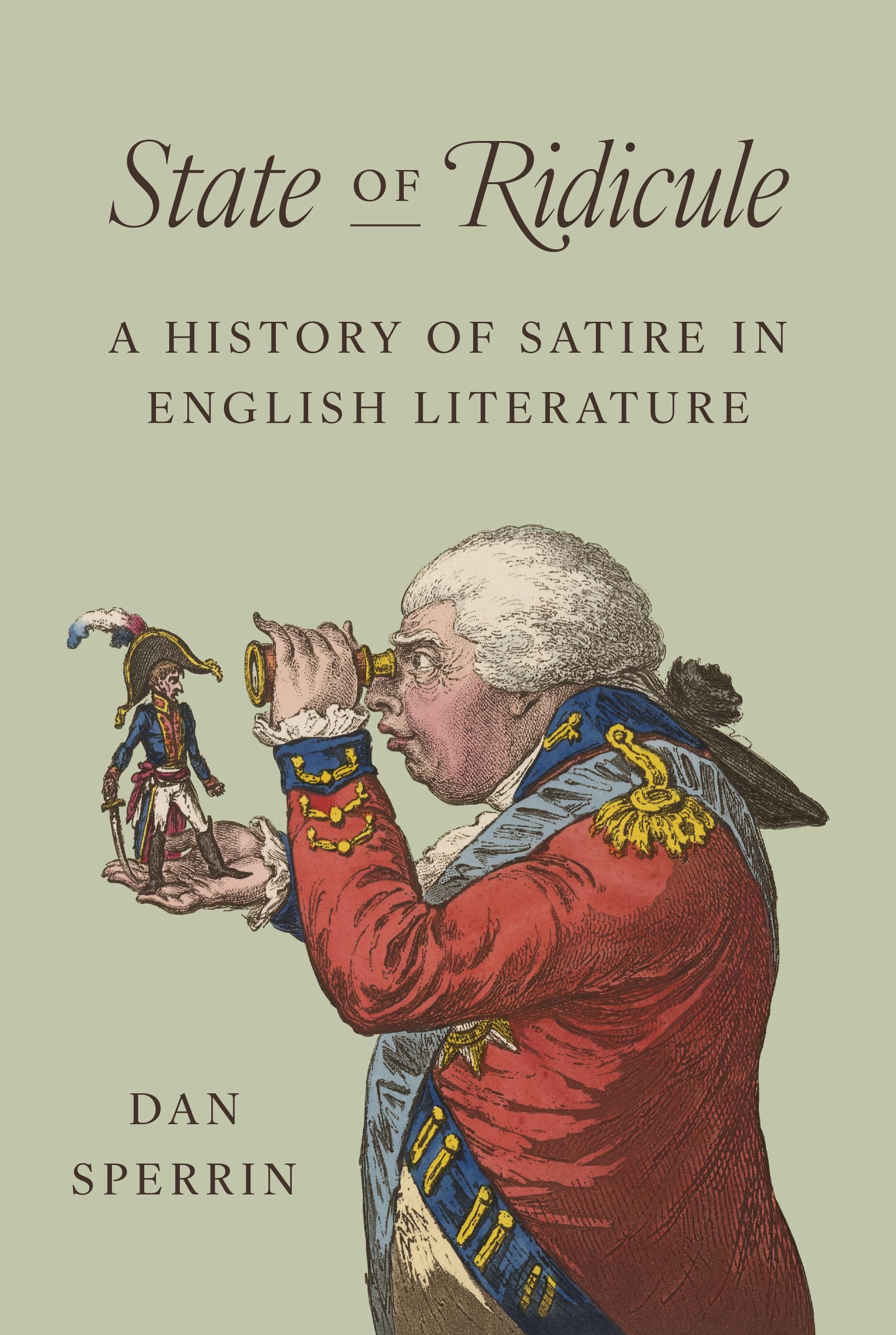
A history of political satire in English literature from its Roman foundations to the present day
Satire is a funny, aggressive, and largely oppositional literature which is typically created by people who refuse to participate in a given regime’s perception of itself. Although satire has always been a primary literature of state affairs, and although it has always been used to intervene in ongoing discussions about political theory and practice, there has been no attempt to examine this fascinating and unusual literature across the full chronological horizon. In State of Ridicule, Dan Sperrin provides the first ever longue durée history of political satire in British literature. He traces satire’s many extended and discontinuous trajectories through time while also chronicling some of the most inflamed and challenging political contexts within which it has been written.
Sperrin begins by describing the Roman foundations and substructures of British satire, paying particularly close attention to the core Roman canon: Horace, Persius, and Juvenal. He then proceeds chronologically, populating the branches of satire’s family tree with such figures as Chaucer, Jonson, Dryden, Swift, Pope, and Dickens, as well as a whole series of writers who are now largely forgotten. Satire, Sperrin shows, can be a literature of explicit statements and overt provocation—but it can also be notoriously indirect, oblique, suggestive, and covert, complicated by an author’s anonymity or pseudonymity. Sperrin meticulously analyses the references to transient political events that may mystify the contemporary reader. He also presents vivid and intriguing pen portraits of the satirists themselves along the way. Sperrin argues that if satire is to be contended with and reflected upon in all its provocative complexity—and if it is to be seen as anything more than a literature of political vandalism—then we must explore the full depth and intrigue of its past. This book offers a new starting point for our intellectual and imaginative contact with an important and fascinating kind of literature.
Before Memmo my notes were scattered across PDFs. Now a workspace pulls everything into one place — I see exactly what's still left to study.
Memmo's summaries are gold before exams. I don't have to re-read 800 pages two weeks before — just the important parts.
The AI chat has saved me the night before an exam more than once. I just keep asking until I get it — no waiting on a study group to reply.
The quizzes hit exactly what I need to know. Memmo tracks what I get stuck on — so I only practice what's worth it.
Flashcards with spaced repetition are magic. Memmo knows when I'm about to forget something and brings it back.
The AI podcasts are my favorite. I listen on my way to school and get a recap without sitting at a computer.

Handbok i kvalitativa metoder
281 kr

Hållbar utveckling: en introduktion för ingenjörer och andra problemlösare
334 kr

Brymans Samhällsvetenskapliga metoder
390 kr

Projektledning
491 kr

Den orättvisa hälsan: om socioekonomiska skillnader i hälsa och livslängd
326 kr

Organizational Leadership
429 kr

Vetenskapsteori för nybörjare
196 kr

På väg mot läraryrket
172 kr

Det sociala livet i skolan: Socialpsykologiska perspektiv
253 kr

Betygsättningens didaktik
151 kr

Personality
402 kr

Studying Leadership
404 kr

Managing Innovation
477 kr

Introduktion till samhällsvetenskaplig metod
347 kr

The Psychology of Sex and Gender
698 kr

Evidens och kunskap för socialt arbete
207 kr

Introduction to Leadership
605 kr