
Before Memmo my notes were scattered across PDFs. Now a workspace pulls everything into one place — I see exactly what's still left to study.
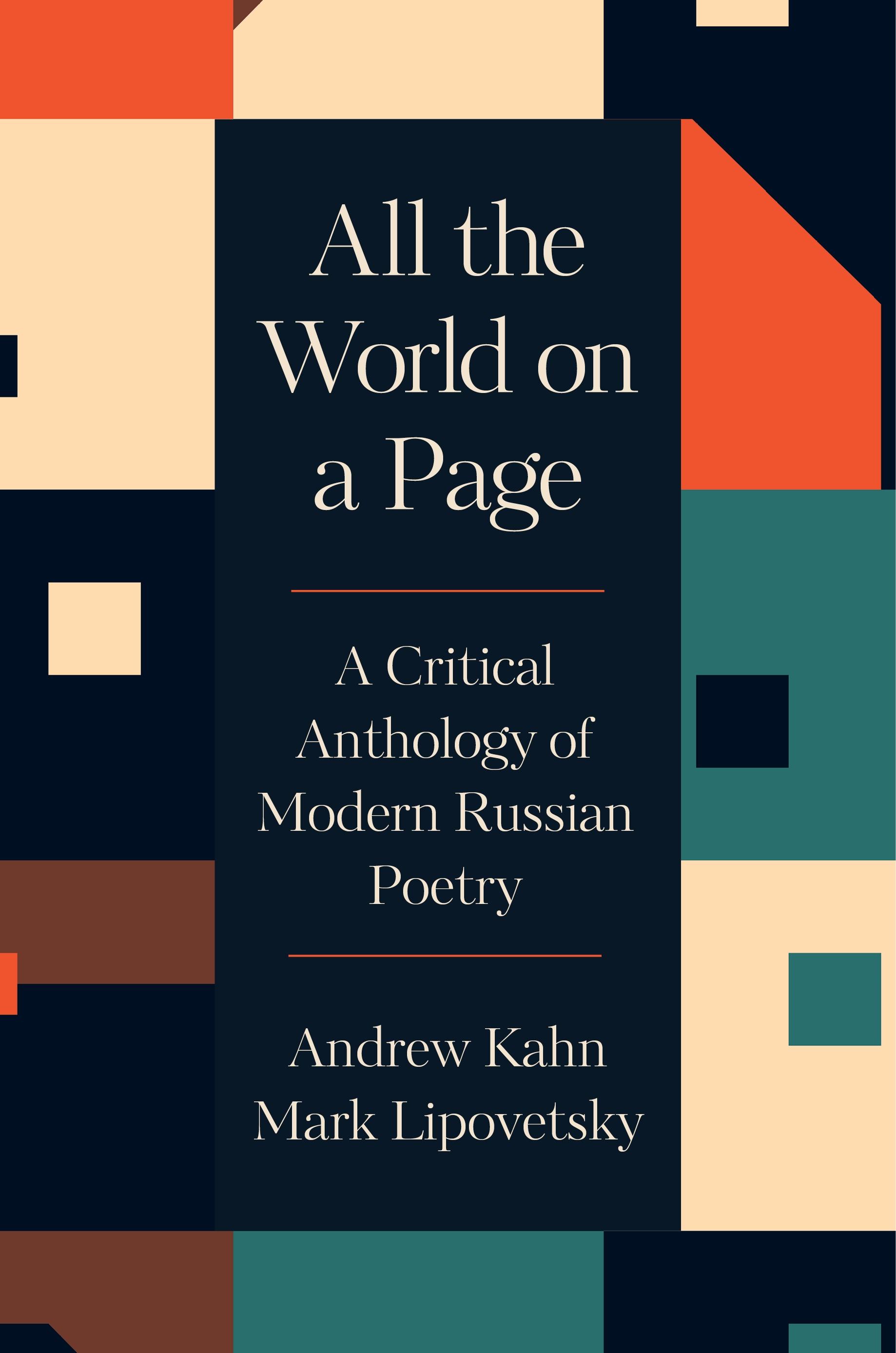
The rich and ongoing development of Russian lyric poetry, explored through close readings of thirty-four poems by poets ranging from Alexander Blok to Maria Stepanova
The Russian cultural tradition treats poetry as the supreme artistic form, with Alexander Pushkin as its national hero. Modern Russian lyric poets, often on the right side of history but the wrong side of their country’s politics, have engaged intensely with subjectivity, aesthetic movements, ideology (usually subversive), and literature itself. All the World on a Page gathers thirty-four poems, written between 1907 and 2022, presenting each poem in the original Russian and an English translation, accompanied by an essay that places the poem in its cultural, historical, and biographical contexts. The poems, both canonical and lesser-known works, extend across a range of moods and scenes: Velimir Khlebnikov’s Futurist revolutionary prophecy, Anna Akhmatova’s lyric cycle about poetic inspiration, Vladimir Nabokov’s Symbolist erotic dreamworld, Joseph Brodsky’s pastiche of a Chekhovian play set on a country estate, Maria Stepanova’s pandemic allegory of political repression, Galina Rymbu’s energetic manifesto “My Vagina.”
An introduction explores the abiding inspiration of modernism on the Russian lyric tradition. Kahn and Lipovetsky's separate chapter essays, informed by extensive knowledge of the existing scholarship and critical styles of interpretation, consider how the interplay of originality and tradition and form and voice work to engage the reader. The poems themselves, many of them in newly commissioned translations, operate outside state-mandated poetic styles to address the reader directly, “tête-à-tête,” as Brodsky said in his 1987 Nobel lecture. With each chapter devoted to a different poem, All the World on a Page allows readers to experience the richness of Russian poetry through poems and poets rather than through movements.
Before Memmo my notes were scattered across PDFs. Now a workspace pulls everything into one place — I see exactly what's still left to study.
Memmo's summaries are gold before exams. I don't have to re-read 800 pages two weeks before — just the important parts.
The AI chat has saved me the night before an exam more than once. I just keep asking until I get it — no waiting on a study group to reply.
The quizzes hit exactly what I need to know. Memmo tracks what I get stuck on — so I only practice what's worth it.
Flashcards with spaced repetition are magic. Memmo knows when I'm about to forget something and brings it back.
The AI podcasts are my favorite. I listen on my way to school and get a recap without sitting at a computer.

Handbok i kvalitativa metoder
281 kr

Hållbar utveckling: en introduktion för ingenjörer och andra problemlösare
334 kr

Brymans Samhällsvetenskapliga metoder
390 kr

Projektledning
491 kr

Den orättvisa hälsan: om socioekonomiska skillnader i hälsa och livslängd
326 kr

Vetenskapsteori för nybörjare
196 kr

Organizational Leadership
429 kr

På väg mot läraryrket
172 kr

Det sociala livet i skolan: Socialpsykologiska perspektiv
253 kr

Betygsättningens didaktik
151 kr

Personality
402 kr

Studying Leadership
404 kr

Managing Innovation
477 kr

Introduktion till samhällsvetenskaplig metod
347 kr

The Psychology of Sex and Gender
698 kr

Evidens och kunskap för socialt arbete
207 kr

Introduction to Leadership
605 kr