
Before Memmo my notes were scattered across PDFs. Now a workspace pulls everything into one place — I see exactly what's still left to study.
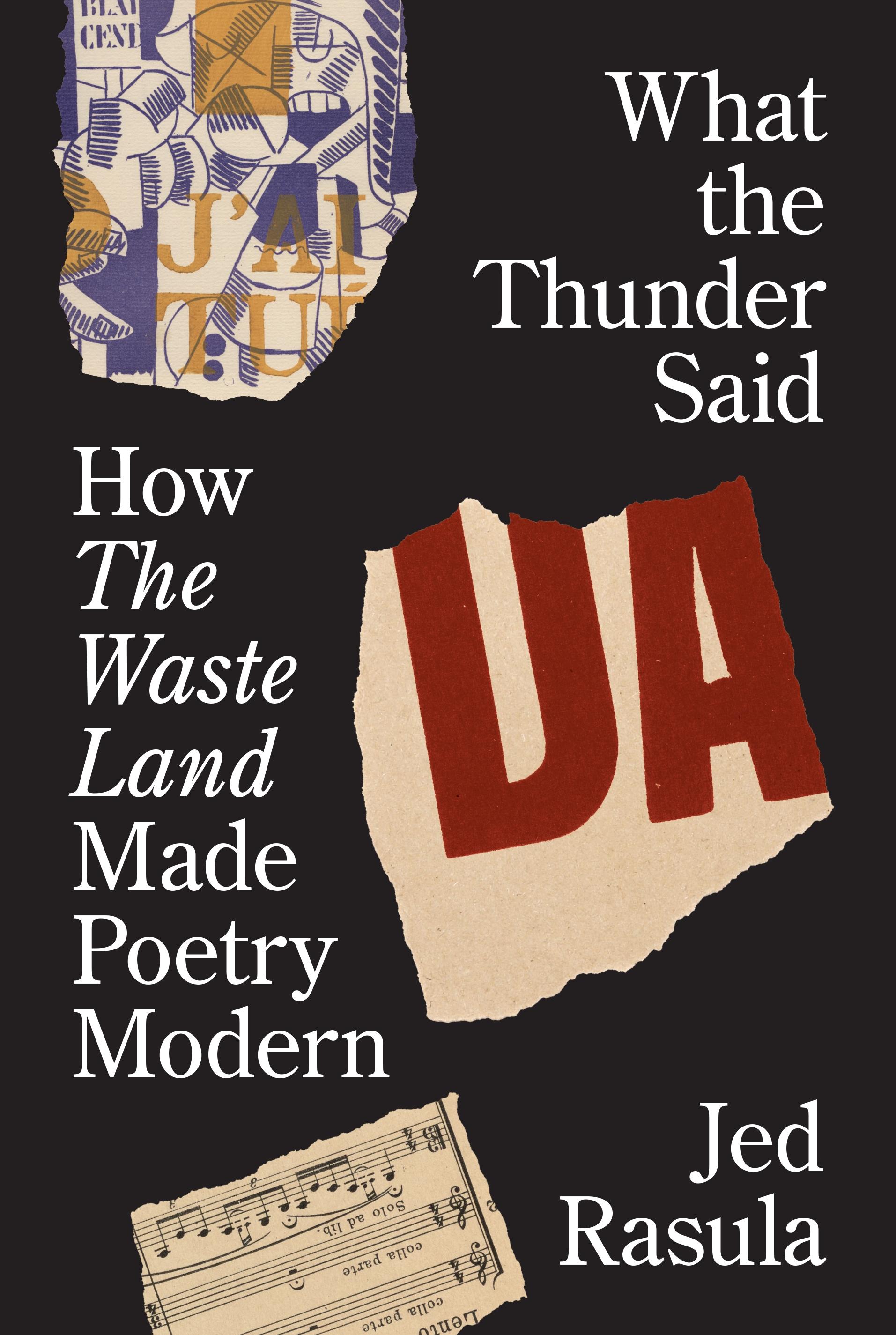
A rich cultural history of the creation, explosive impact, and enduring influence of T. S. Eliot’s modernist masterpiece
When T. S. Eliot published The Waste Land in 1922, it put the thirty-four-year-old author on a path to worldwide fame and the Nobel Prize. “But,” as Jed Rasula writes, “The Waste Land is not only a poem: it names an event, like a tornado or an earthquake. Its publication was a watershed, marking a before and after. It was a poem that unequivocally declared that the ancient art of poetry had become modern.” In What the Thunder Said, Rasula tells the story of how The Waste Land changed poetry forever and how this cultural bombshell served as a harbinger of modernist revolution in all the arts, from abstraction in visual art to atonality in music.
From its famous opening, “April is the cruellest month, breeding / Lilacs out of the dead land,” to its closing Sanskrit mantra, “Shantih shantih shantih,” The Waste Land combined singular imagery, experimental technique, and dense allusions, boldly fulfilling Ezra Pound’s injunction to “make it new.” What the Thunder Said traces the origins, reception, and enduring influence of the poem, from its roots in Wagnerism and French Symbolism to the way its strangely beguiling music continues to inspire readers. Along the way, we learn about Eliot’s storied circle, including Wyndham Lewis, Virginia Woolf, and Bertrand Russell, and about poets like Mina Loy and Marianne Moore, whose innovations have proven as consequential as those of the “men of 1914.”
Filled with fresh insights and unfamiliar anecdotes, What the Thunder Said recovers the explosive force of the twentieth century’s most influential poem.
Before Memmo my notes were scattered across PDFs. Now a workspace pulls everything into one place — I see exactly what's still left to study.
Memmo's summaries are gold before exams. I don't have to re-read 800 pages two weeks before — just the important parts.
The AI chat has saved me the night before an exam more than once. I just keep asking until I get it — no waiting on a study group to reply.
The quizzes hit exactly what I need to know. Memmo tracks what I get stuck on — so I only practice what's worth it.
Flashcards with spaced repetition are magic. Memmo knows when I'm about to forget something and brings it back.
The AI podcasts are my favorite. I listen on my way to school and get a recap without sitting at a computer.

Handbok i kvalitativa metoder
281 kr

Hållbar utveckling: en introduktion för ingenjörer och andra problemlösare
334 kr

Brymans Samhällsvetenskapliga metoder
390 kr

Projektledning
491 kr

Den orättvisa hälsan: om socioekonomiska skillnader i hälsa och livslängd
326 kr

Organizational Leadership
429 kr

Vetenskapsteori för nybörjare
196 kr

På väg mot läraryrket
172 kr

Det sociala livet i skolan: Socialpsykologiska perspektiv
253 kr

Betygsättningens didaktik
151 kr

Personality
402 kr

Studying Leadership
404 kr

Managing Innovation
477 kr

Introduktion till samhällsvetenskaplig metod
347 kr

The Psychology of Sex and Gender
698 kr

Evidens och kunskap för socialt arbete
207 kr

Introduction to Leadership
605 kr