
Before Memmo my notes were scattered across PDFs. Now a workspace pulls everything into one place — I see exactly what's still left to study.
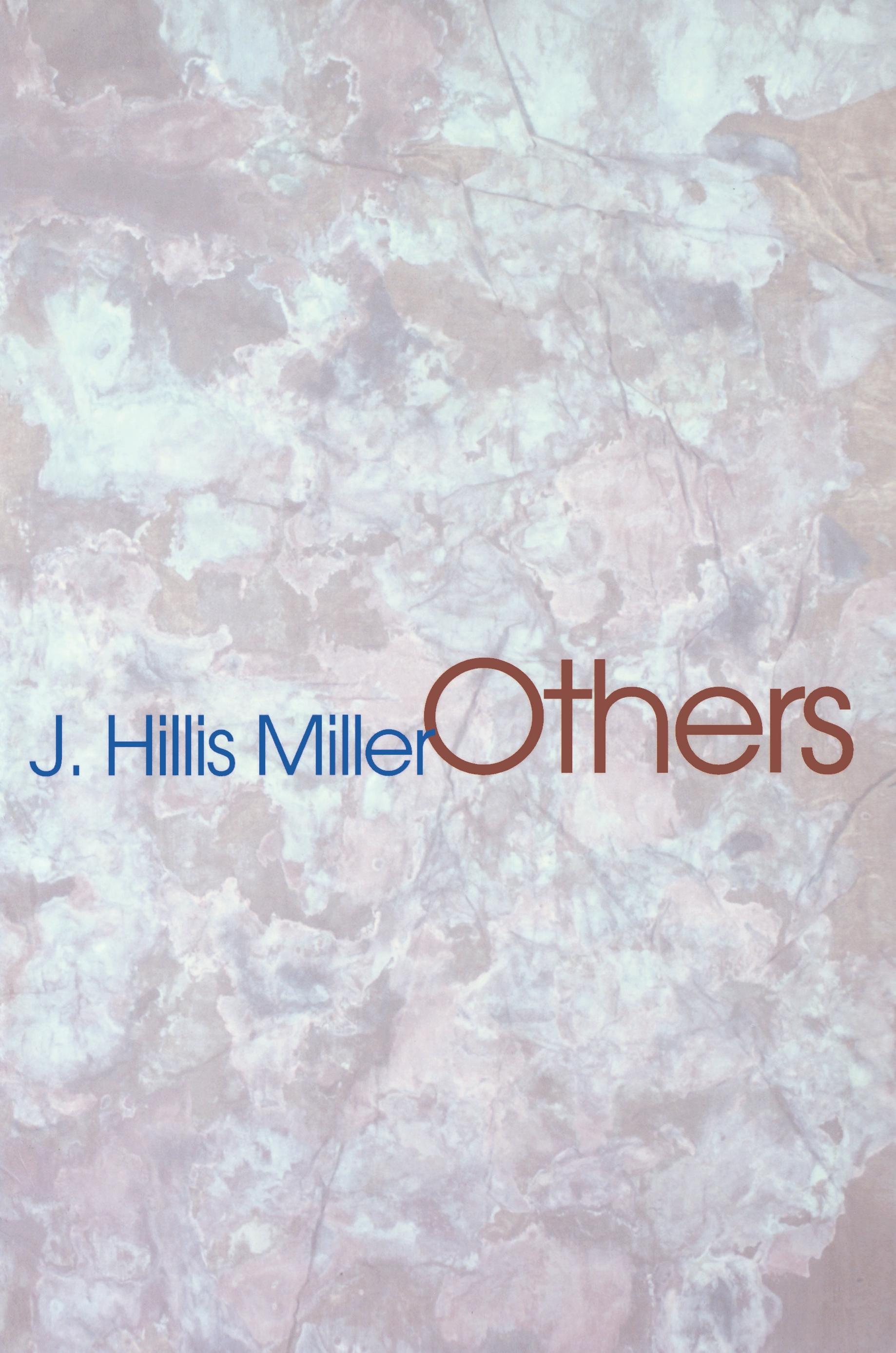
This volume fulfills the author's career-long reflections on radical otherness in literature. J. Hillis Miller investigates otherness through ten nineteenth- and twentieth-century authors: Friedrich Schlegel, Charles Dickens, George Eliot, Anthony Trollope, Joseph Conrad, W. B. Yeats, E. M. Forster, Marcel Proust, Paul de Man, and Jacques Derrida. From the exquisite close readings for which he is celebrated, Miller reaps a capacious understanding of otherness--one reachable not through theory but through literature itself.
Otherness has wide valence in contemporary literary and cultural studies and is often understood as a misconception by hegemonic groups of subaltern ones. In a pleasing counter to this, Others conceives of otherness as something that inhabits sameness. Instances of the ''wholly other'' within the familiar include your sense of self or your beloved, your sense of your culture as such, or your experience of literary, theoretical, and philosophical works that belong to your own culture--works that are themselves haunted by otherness.
Though Others begins and ends with chapters on theorists, the testimony they offer about otherness is not taken as more compelling than that of such literary works as Dicken's Our Mutual Friend, Conrad's ''The Secret Sharer,'' Yeats's ''Cold Heaven,'' or Proust's Remembrance of Things Past. Otherness, as this book finds it in the writers read, is not an abstract concept. It is an elusive feature of specific verbal constructs, different in each case. It can be glimpsed only through close readings that respect this diversity, as the plural in the title--Others--indicates.
We perceive otherness in the way that the unseen--and the characters' emotional responses to it--ripples the conservative ideological surface of Howard's End. We sense it as chaos in Schlegel's radical concept of irony. And we gaze at it in the multiple personifications of Heart of Darkness. Each testifies in its own way to the richness and tangible weight of an otherness close at hand.
Before Memmo my notes were scattered across PDFs. Now a workspace pulls everything into one place — I see exactly what's still left to study.
Memmo's summaries are gold before exams. I don't have to re-read 800 pages two weeks before — just the important parts.
The AI chat has saved me the night before an exam more than once. I just keep asking until I get it — no waiting on a study group to reply.
The quizzes hit exactly what I need to know. Memmo tracks what I get stuck on — so I only practice what's worth it.
Flashcards with spaced repetition are magic. Memmo knows when I'm about to forget something and brings it back.
The AI podcasts are my favorite. I listen on my way to school and get a recap without sitting at a computer.

Handbok i kvalitativa metoder
281 kr

Hållbar utveckling: en introduktion för ingenjörer och andra problemlösare
334 kr

Brymans Samhällsvetenskapliga metoder
390 kr

Projektledning
491 kr

Den orättvisa hälsan: om socioekonomiska skillnader i hälsa och livslängd
326 kr

Vetenskapsteori för nybörjare
196 kr

Organizational Leadership
429 kr

På väg mot läraryrket
172 kr

Det sociala livet i skolan: Socialpsykologiska perspektiv
253 kr

Betygsättningens didaktik
151 kr

Personality
402 kr

Studying Leadership
404 kr

Managing Innovation
477 kr

Introduktion till samhällsvetenskaplig metod
347 kr

The Psychology of Sex and Gender
698 kr

Evidens och kunskap för socialt arbete
207 kr

Introduction to Leadership
605 kr