
Before Memmo my notes were scattered across PDFs. Now a workspace pulls everything into one place — I see exactly what's still left to study.
How rhyme became entangled with debates about the nature of liberty in sixteenth- and seventeenth-century English poetry
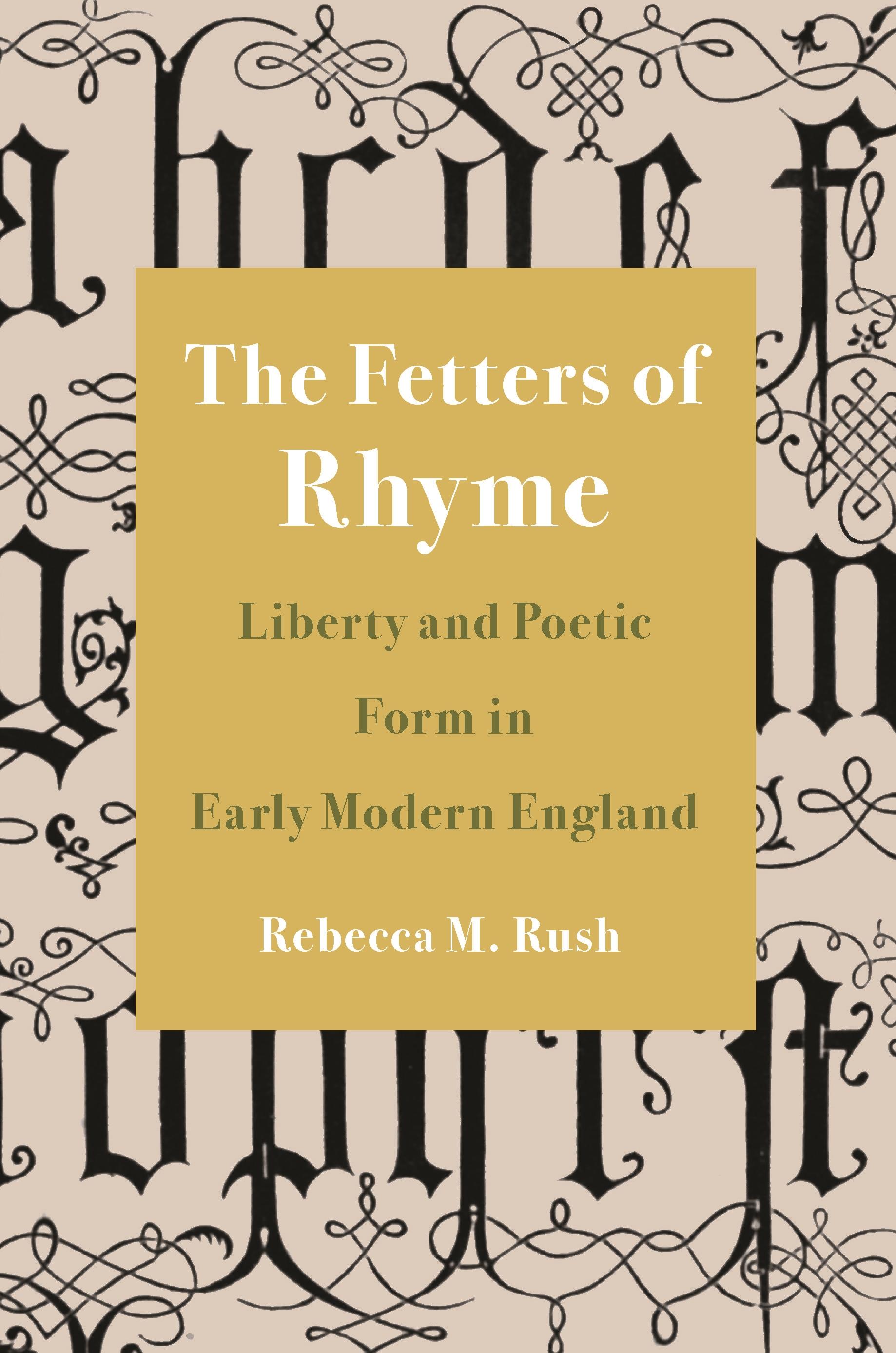
In his 1668 preface to Paradise Lost, John Milton rejected the use of rhyme, portraying himself as a revolutionary freeing English verse from “the troublesome and modern bondage of Riming.” Despite his claim to be a pioneer, Milton was not initiating a new line of thought—English poets had been debating about rhyme and its connections to liberty, freedom, and constraint since Queen Elizabeth’s reign. The Fetters of Rhyme traces this dynamic history of rhyme from the 1590s through the 1670s. Rebecca Rush uncovers the surprising associations early modern readers attached to rhyming forms like couplets and sonnets, and she shows how reading poetic form from a historical perspective yields fresh insights into verse’s complexities.
Rush explores how early modern poets imagined rhyme as a band or fetter, comparing it to the bonds linking individuals to political, social, and religious communities. She considers how Edmund Spenser’s sonnet rhymes stood as emblems of voluntary confinement, how John Donne’s revival of the Chaucerian couplet signaled sexual and political radicalism, and how Ben Jonson’s verse charted a middle way between licentious Elizabethan couplet poets and slavish sonneteers. Rush then looks at why the royalist poets embraced the prerational charms of rhyme, and how Milton spent his career reckoning with rhyme’s allures.
Examining a poetic feature that sits between sound and sense, liberty and measure, The Fetters of Rhyme elucidates early modern efforts to negotiate these forces in verse making and reading.
Before Memmo my notes were scattered across PDFs. Now a workspace pulls everything into one place — I see exactly what's still left to study.
Memmo's summaries are gold before exams. I don't have to re-read 800 pages two weeks before — just the important parts.
The AI chat has saved me the night before an exam more than once. I just keep asking until I get it — no waiting on a study group to reply.
The quizzes hit exactly what I need to know. Memmo tracks what I get stuck on — so I only practice what's worth it.
Flashcards with spaced repetition are magic. Memmo knows when I'm about to forget something and brings it back.
The AI podcasts are my favorite. I listen on my way to school and get a recap without sitting at a computer.

Handbok i kvalitativa metoder
281 kr

Hållbar utveckling: en introduktion för ingenjörer och andra problemlösare
334 kr

Brymans Samhällsvetenskapliga metoder
390 kr

Projektledning
491 kr

Den orättvisa hälsan: om socioekonomiska skillnader i hälsa och livslängd
326 kr

Vetenskapsteori för nybörjare
196 kr

Organizational Leadership
429 kr

På väg mot läraryrket
172 kr

Det sociala livet i skolan: Socialpsykologiska perspektiv
253 kr

Betygsättningens didaktik
151 kr

Personality
402 kr

Studying Leadership
404 kr

Managing Innovation
477 kr

Introduktion till samhällsvetenskaplig metod
347 kr

The Psychology of Sex and Gender
698 kr

Evidens och kunskap för socialt arbete
207 kr

Introduction to Leadership
605 kr