
Before Memmo my notes were scattered across PDFs. Now a workspace pulls everything into one place — I see exactly what's still left to study.
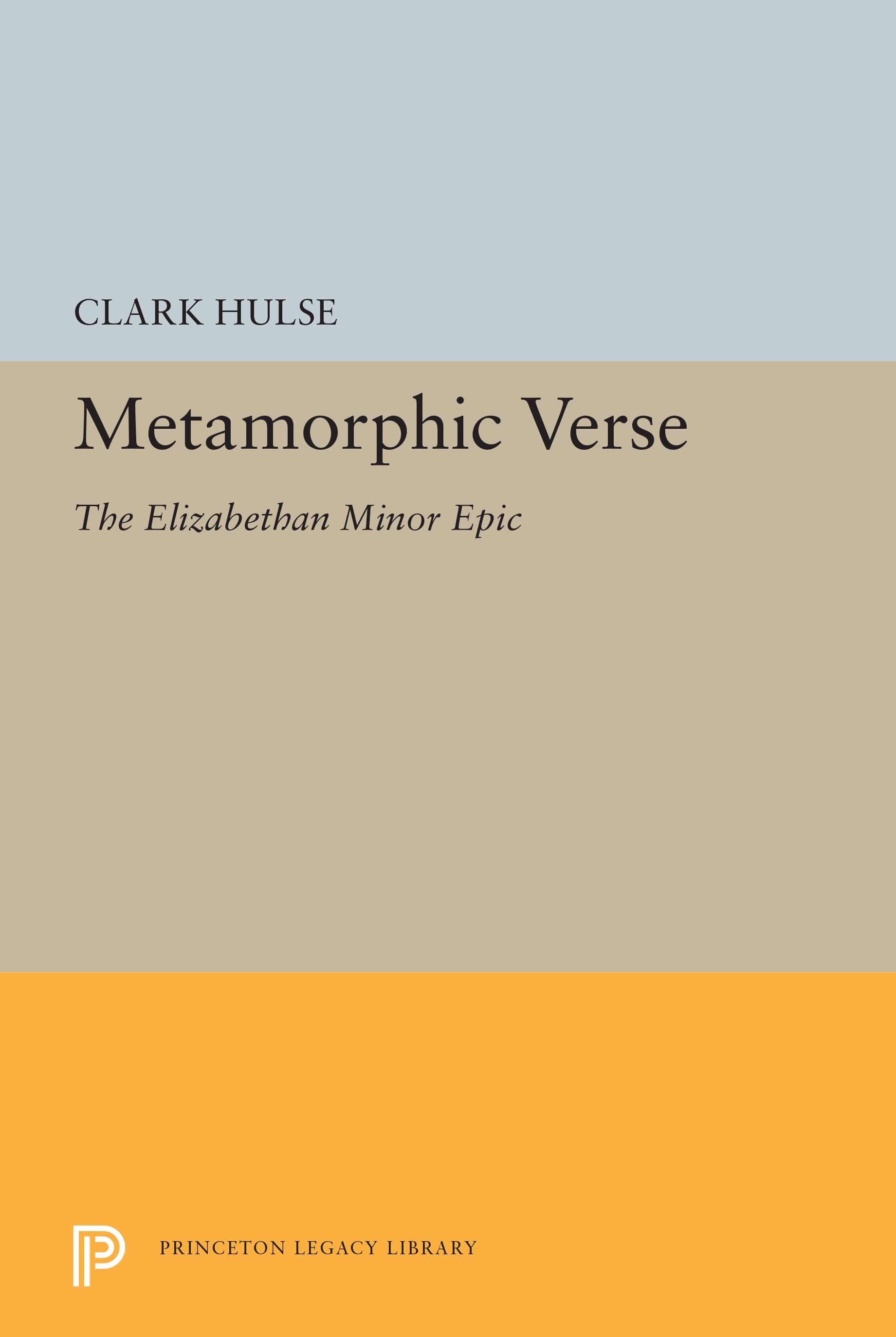
To Shakespeare, Spenser, Marlowe, and other Elizabethans, the minor epic was an important medium for poetic experimentation, but today, too often separated from the culture that bore it, it is not well understood. This author examines the form of the minor epic and its place in Elizabethan literary culture. Particularly, he explores the concept of metamorphosis as it shapes the minor epic at every level; in its subject matter, narrative technique, imagery, reworking of traditional materials, mixing of literary genres, and power to transform the poet.
Combining close reading with literary theory, Professor Hulse approaches the minor epic as a mixed genre, exploring the idea of genre itself as well as the particular genres that contributed to the minor epics, including the sonnet, satire, Ovidian epic, pastoral, and primeval poetry.
He also discusses wider issues, such as poetic inspiration, fictionality, and the nature of literary history; and takes up painting and historiography to show how they use the same narrative materials in different ways and to different ends. In the process he redefines Elizabethan literature as a fluid system, characterized by multiplicity of form and style and the poet's search for growth.
Clark Hulse is Associate Professor of English at the University of Illinois at Chicago Circle.
Originally published in 1982.
The Princeton Legacy Library uses the latest print-on-demand technology to again make available previously out-of-print books from the distinguished backlist of Princeton University Press. These editions preserve the original texts of these important books while presenting them in durable paperback and hardcover editions. The goal of the Princeton Legacy Library is to vastly increase access to the rich scholarly heritage found in the thousands of books published by Princeton University Press since its founding in 1905.
Before Memmo my notes were scattered across PDFs. Now a workspace pulls everything into one place — I see exactly what's still left to study.
Memmo's summaries are gold before exams. I don't have to re-read 800 pages two weeks before — just the important parts.
The AI chat has saved me the night before an exam more than once. I just keep asking until I get it — no waiting on a study group to reply.
The quizzes hit exactly what I need to know. Memmo tracks what I get stuck on — so I only practice what's worth it.
Flashcards with spaced repetition are magic. Memmo knows when I'm about to forget something and brings it back.
The AI podcasts are my favorite. I listen on my way to school and get a recap without sitting at a computer.

Handbok i kvalitativa metoder
281 kr

Hållbar utveckling: en introduktion för ingenjörer och andra problemlösare
334 kr

Brymans Samhällsvetenskapliga metoder
390 kr

Projektledning
491 kr

Den orättvisa hälsan: om socioekonomiska skillnader i hälsa och livslängd
326 kr

Vetenskapsteori för nybörjare
196 kr

Organizational Leadership
429 kr

På väg mot läraryrket
172 kr

Det sociala livet i skolan: Socialpsykologiska perspektiv
253 kr

Betygsättningens didaktik
151 kr

Personality
402 kr

Studying Leadership
404 kr

Managing Innovation
477 kr

Introduktion till samhällsvetenskaplig metod
347 kr

The Psychology of Sex and Gender
698 kr

Evidens och kunskap för socialt arbete
207 kr

Introduction to Leadership
605 kr