
Before Memmo my notes were scattered across PDFs. Now a workspace pulls everything into one place — I see exactly what's still left to study.
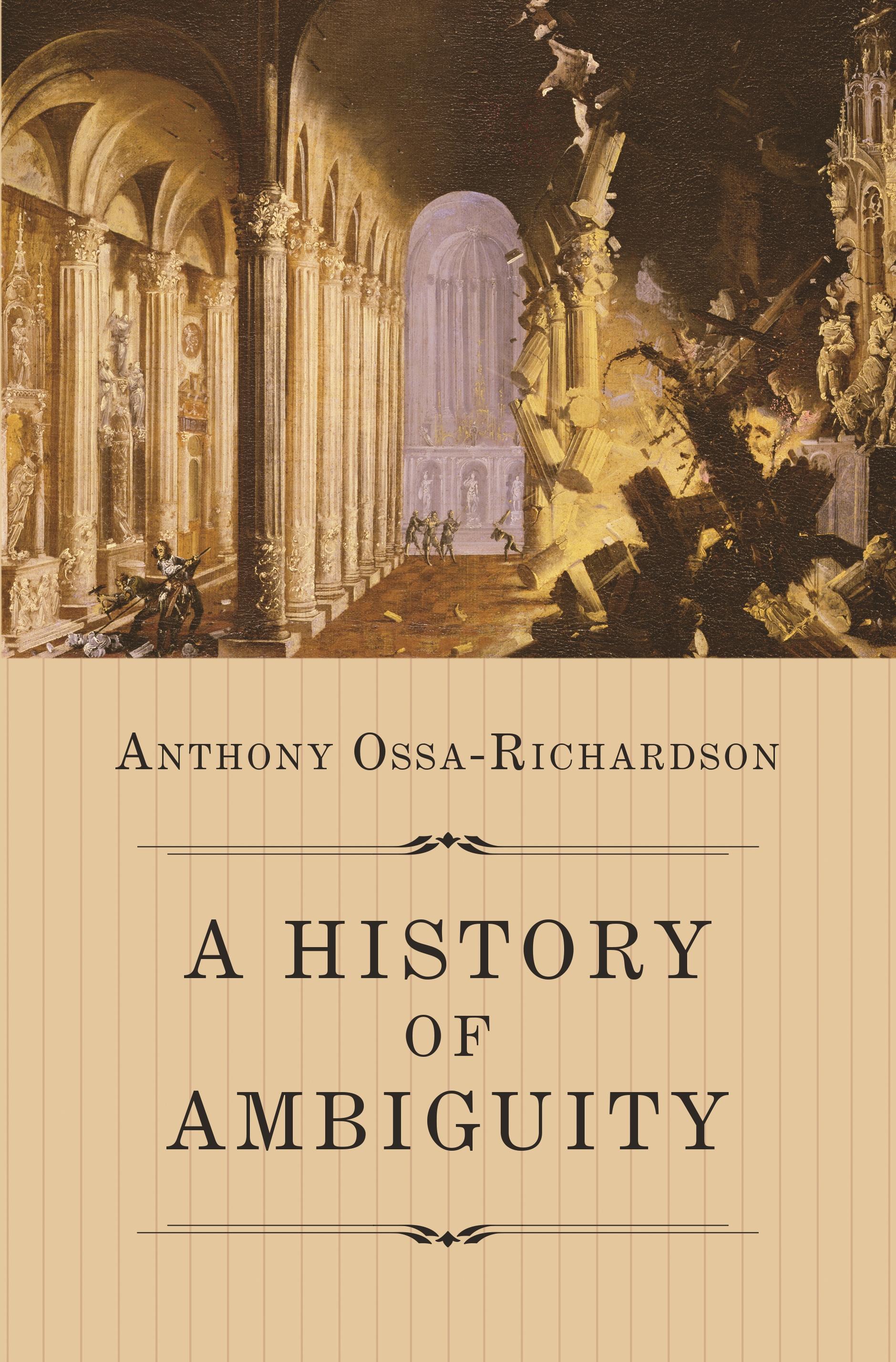
Ever since it was first published in 1930, William Empson’s Seven Types of Ambiguity has been perceived as a milestone in literary criticism—far from being an impediment to communication, ambiguity now seemed an index of poetic richness and expressive power. Little, however, has been written on the broader trajectory of Western thought about ambiguity before Empson; as a result, the nature of his innovation has been poorly understood.
A History of Ambiguity remedies this omission. Starting with classical grammar and rhetoric, and moving on to moral theology, law, biblical exegesis, German philosophy, and literary criticism, Anthony Ossa-Richardson explores the many ways in which readers and theorists posited, denied, conceptualised, and argued over the existence of multiple meanings in texts between antiquity and the twentieth century. This process took on a variety of interconnected forms, from the Renaissance delight in the ‘elegance’ of ambiguities in Horace, through the extraordinary Catholic claim that Scripture could contain multiple literal—and not just allegorical—senses, to the theory of dramatic irony developed in the nineteenth century, a theory intertwined with discoveries of the double meanings in Greek tragedy. Such narratives are not merely of antiquarian interest: rather, they provide an insight into the foundations of modern criticism, revealing deep resonances between acts of interpretation in disparate eras and contexts. A History of Ambiguity lays bare the long tradition of efforts to liberate language, and even a poet’s intention, from the strictures of a single meaning.
Before Memmo my notes were scattered across PDFs. Now a workspace pulls everything into one place — I see exactly what's still left to study.
Memmo's summaries are gold before exams. I don't have to re-read 800 pages two weeks before — just the important parts.
The AI chat has saved me the night before an exam more than once. I just keep asking until I get it — no waiting on a study group to reply.
The quizzes hit exactly what I need to know. Memmo tracks what I get stuck on — so I only practice what's worth it.
Flashcards with spaced repetition are magic. Memmo knows when I'm about to forget something and brings it back.
The AI podcasts are my favorite. I listen on my way to school and get a recap without sitting at a computer.

Handbok i kvalitativa metoder
281 kr

Hållbar utveckling: en introduktion för ingenjörer och andra problemlösare
334 kr

Brymans Samhällsvetenskapliga metoder
390 kr

Projektledning
491 kr

Den orättvisa hälsan: om socioekonomiska skillnader i hälsa och livslängd
326 kr

Vetenskapsteori för nybörjare
196 kr

Organizational Leadership
429 kr

På väg mot läraryrket
172 kr

Det sociala livet i skolan: Socialpsykologiska perspektiv
253 kr

Betygsättningens didaktik
151 kr

Personality
402 kr

Studying Leadership
404 kr

Managing Innovation
477 kr

Introduktion till samhällsvetenskaplig metod
347 kr

The Psychology of Sex and Gender
698 kr

Evidens och kunskap för socialt arbete
207 kr

Introduction to Leadership
605 kr