
Before Memmo my notes were scattered across PDFs. Now a workspace pulls everything into one place — I see exactly what's still left to study.
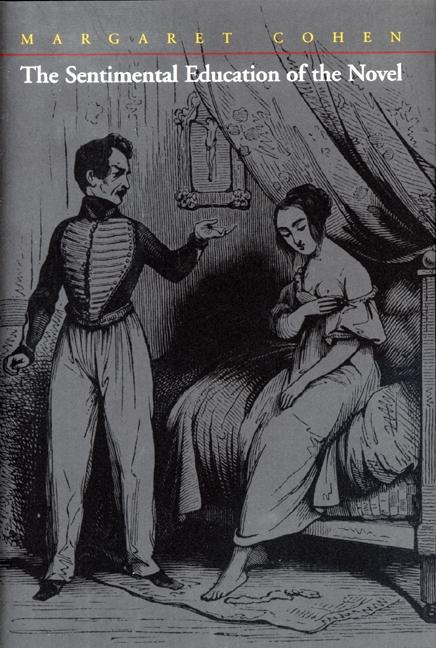
The nineteenth-century French novel has long been seen as the heroic production of great men, who confronted in their works the social consequences of the French Revolution. And it is true that French realism, especially as developed by Balzac and Stendhal, was one of the most influential novelistic forms ever invented. Margaret Cohen, however, challenges the traditional account of the genesis of realism by returning Balzac and Stendhal to the forgotten novelistic contexts of their time. Reconstructing a key formative period for the novel, she shows how realist codes emerged in a "hostile take-over" of a prestigious contemporary sentimental practice of the novel, which was almost completely dominated by women writers.
Cohen draws on impressive archival research, resurrecting scores of forgotten nineteenth-century novels, to demonstrate that the codes most closely identified with realism were actually the invention of sentimentality, a powerful aesthetic of emerging liberal-democratic society, although Balzac and Stendhal trivialized sentimental works by associating them with "frivolous" women writers and readers. Attention to these gendered struggles over genre explains why women were not pioneers of realism in France during the nineteenth century, a situation that contrasts with England, where women writers played a formative role in inventing the modern realist novel. Cohen argues that to understand how literary codes respond to material factors, it is imperative to see how such factors take shape within the literary field as well as within society as a whole. The book also proposes that attention to literature as a social institution will help critics resolve the current, vital question of how to practice literary history in the wake of poststructuralism.
Before Memmo my notes were scattered across PDFs. Now a workspace pulls everything into one place — I see exactly what's still left to study.
Memmo's summaries are gold before exams. I don't have to re-read 800 pages two weeks before — just the important parts.
The AI chat has saved me the night before an exam more than once. I just keep asking until I get it — no waiting on a study group to reply.
The quizzes hit exactly what I need to know. Memmo tracks what I get stuck on — so I only practice what's worth it.
Flashcards with spaced repetition are magic. Memmo knows when I'm about to forget something and brings it back.
The AI podcasts are my favorite. I listen on my way to school and get a recap without sitting at a computer.

Handbok i kvalitativa metoder
281 kr

Hållbar utveckling: en introduktion för ingenjörer och andra problemlösare
334 kr

Brymans Samhällsvetenskapliga metoder
390 kr

Projektledning
491 kr

Den orättvisa hälsan: om socioekonomiska skillnader i hälsa och livslängd
326 kr

Vetenskapsteori för nybörjare
196 kr

Organizational Leadership
429 kr

På väg mot läraryrket
172 kr

Det sociala livet i skolan: Socialpsykologiska perspektiv
253 kr

Betygsättningens didaktik
151 kr

Personality
402 kr

Studying Leadership
404 kr

Managing Innovation
477 kr

Introduktion till samhällsvetenskaplig metod
347 kr

The Psychology of Sex and Gender
698 kr

Evidens och kunskap för socialt arbete
207 kr

Introduction to Leadership
605 kr