
Before Memmo my notes were scattered across PDFs. Now a workspace pulls everything into one place — I see exactly what's still left to study.
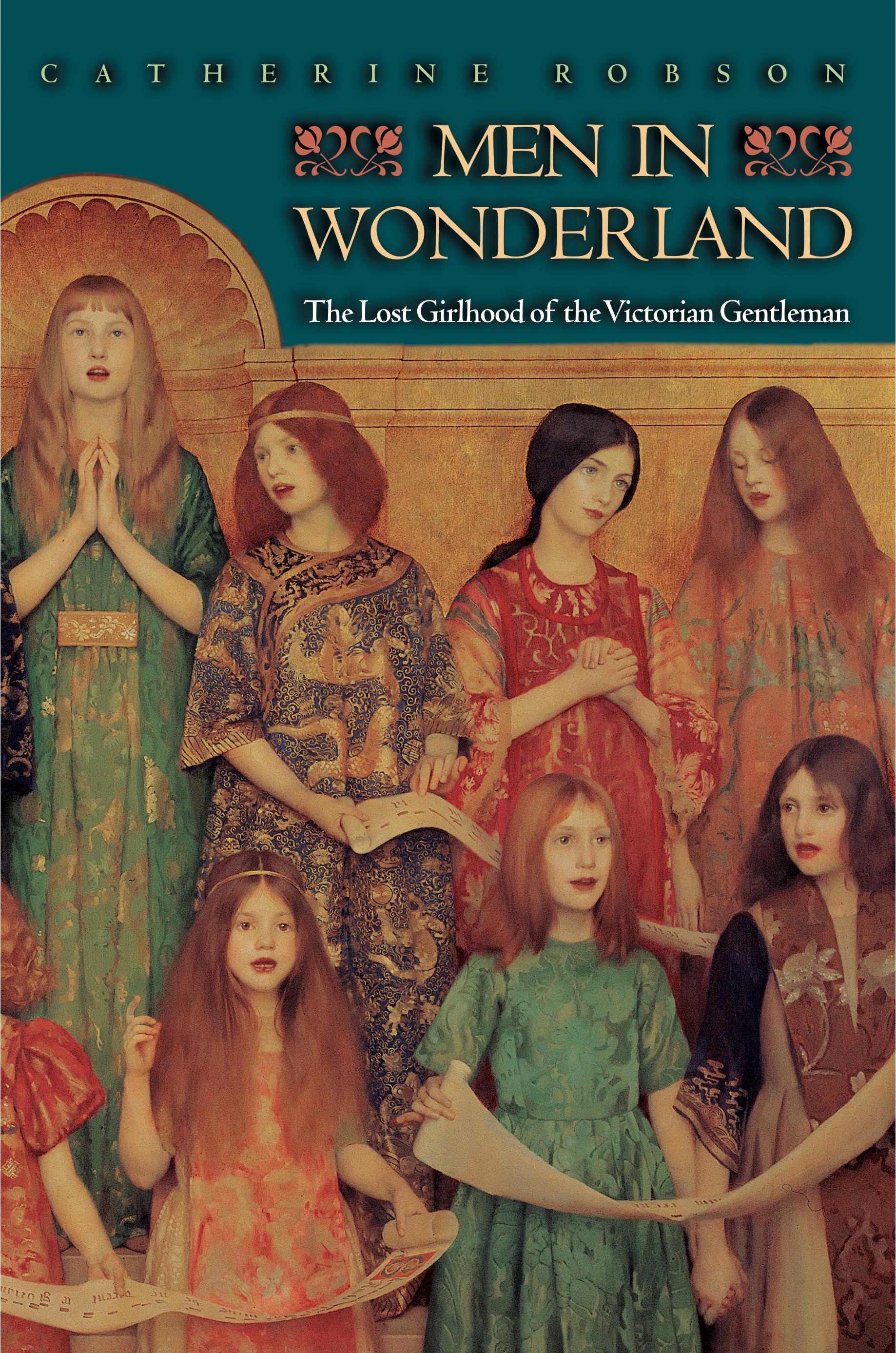
Fascination with little girls pervaded Victorian culture. For many, girls represented the true essence of childhood or bygone times of innocence; but for middle-class men, especially writers, the interest ran much deeper. In Men in Wonderland, Catherine Robson explores the ways in which various nineteenth-century British male authors constructed girlhood, and analyzes the nature of their investment in the figure of the girl. In so doing, she reveals the link between the idealization of little girls and a widespread fantasy of male development--a myth suggesting that men become masculine only after an initial feminine stage, lived out in the protective environment of the nursery. Little girls, argues Robson, thus offer an adult male the best opportunity to reconnect with his own lost self.
Tracing the beginnings of this myth in the writings of Romantics Wordsworth and De Quincey, Robson identifies the consolidation of this paradigm in numerous Victorian artifacts, ranging from literary works by Dickens and Barrett Browning, to paintings by Frith and Millais, to reports of the Royal Commission on Children's Employment. She analyzes Ruskin and Carroll's "high noon" of girl worship and investigates the destruction of the fantasy in the closing decades of the century, when social concerns about the working girl sexualized the image of young females.
Men in Wonderland contributes to a growing interest in the nineteenth century's construction of childhood, sexuality, and masculinity, and illuminates their complex interconnections with a startlingly different light. Not only does it complicate the narratives of pedophilic desire that are generally used to explain figures like Ruskin and Carroll, but it offers a new understanding of the Victorian era's obsession with loss, its rampant sentimentality, and its intense valorization of the little girl at the expense of mature femininity.
Before Memmo my notes were scattered across PDFs. Now a workspace pulls everything into one place — I see exactly what's still left to study.
Memmo's summaries are gold before exams. I don't have to re-read 800 pages two weeks before — just the important parts.
The AI chat has saved me the night before an exam more than once. I just keep asking until I get it — no waiting on a study group to reply.
The quizzes hit exactly what I need to know. Memmo tracks what I get stuck on — so I only practice what's worth it.
Flashcards with spaced repetition are magic. Memmo knows when I'm about to forget something and brings it back.
The AI podcasts are my favorite. I listen on my way to school and get a recap without sitting at a computer.

Handbok i kvalitativa metoder
281 kr

Hållbar utveckling: en introduktion för ingenjörer och andra problemlösare
334 kr

Brymans Samhällsvetenskapliga metoder
390 kr

Projektledning
491 kr

Den orättvisa hälsan: om socioekonomiska skillnader i hälsa och livslängd
326 kr

Vetenskapsteori för nybörjare
196 kr

Organizational Leadership
429 kr

På väg mot läraryrket
172 kr

Det sociala livet i skolan: Socialpsykologiska perspektiv
253 kr

Betygsättningens didaktik
151 kr

Personality
402 kr

Studying Leadership
404 kr

Managing Innovation
477 kr

Introduktion till samhällsvetenskaplig metod
347 kr

The Psychology of Sex and Gender
698 kr

Evidens och kunskap för socialt arbete
207 kr

Introduction to Leadership
605 kr