
Before Memmo my notes were scattered across PDFs. Now a workspace pulls everything into one place — I see exactly what's still left to study.
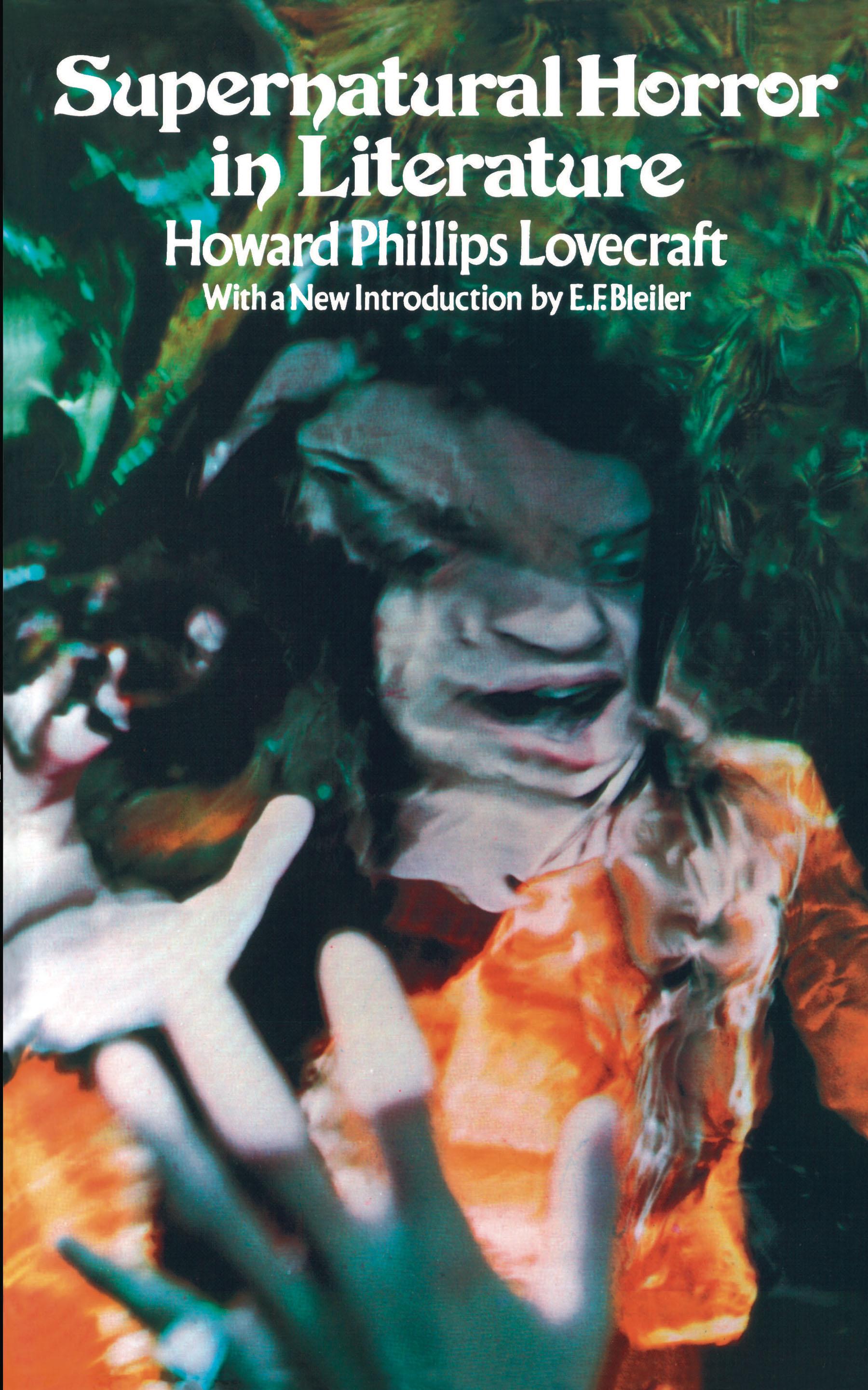
H. P. Lovecraft (1890–1937), the most important American supernaturalist since Poe, has had an incalculable influence on all the horror-story writing of recent decades. Although his supernatural fiction has of late been enjoying an unprecedented fame, it is still not widely known that he wrote a critical history of supernatural horror in literature that has yet to be superseded as the finest historical discussion of the genre. This extraordinary work is presented in this volume in its final, revised text.
With incisive penetration and power, Lovecraft here formulates the aesthetics of supernatural horror, and summarizes in masterful fashion the range of its literary expression from primitive folklore to the tales of his own 20th-century masters. Following a discussion of terror-literature in ancient, medieval and renaissance culture, he launches on a critical survey of the whole history of horror fiction from the Gothic school of the 18th century (when supernatural horror finally found its own genre) to the time of De la Mare and M. R. James. The Castle of Otranto, Radcliffe, "Monk" Lewis, Fathek, Charles Brockden Brown, Melmoth the Wanderer, Frankenstein, Bulwer-Lytton, Fongué's Undine, Wuthering Heights, Poe (an entire chapter), The House of the Seven Gables, de Maupassant's Horla, Bierce, The Turn of the Screw, M. P. Shiel, W. H. Hodgson, Machen, Blackwood, and Dunsany are among the authors and works discussed in depth. Lovecraft also notices a host of lesser supernatural writers — enough to draw up an extensive reading list.
By charting so completely the background for his own concepts of horror and literary techniques, Lovecraft throws light on his own fiction as well as on the horror literature which has followed in his influential wake. For this reason this book will be especially intriguing to those who have read and enjoyed Lovecraft's fiction as an isolated phenomenon. These and other readers, searching for a guide through the inadequately marked region of literary horror, need search no further. New introduction by E. F. Bleiler.
Before Memmo my notes were scattered across PDFs. Now a workspace pulls everything into one place — I see exactly what's still left to study.
Memmo's summaries are gold before exams. I don't have to re-read 800 pages two weeks before — just the important parts.
The AI chat has saved me the night before an exam more than once. I just keep asking until I get it — no waiting on a study group to reply.
The quizzes hit exactly what I need to know. Memmo tracks what I get stuck on — so I only practice what's worth it.
Flashcards with spaced repetition are magic. Memmo knows when I'm about to forget something and brings it back.
The AI podcasts are my favorite. I listen on my way to school and get a recap without sitting at a computer.

Handbok i kvalitativa metoder
281 kr

Hållbar utveckling: en introduktion för ingenjörer och andra problemlösare
334 kr

Brymans Samhällsvetenskapliga metoder
390 kr

Projektledning
491 kr

Den orättvisa hälsan: om socioekonomiska skillnader i hälsa och livslängd
326 kr

Organizational Leadership
429 kr

Vetenskapsteori för nybörjare
196 kr

På väg mot läraryrket
172 kr

Det sociala livet i skolan: Socialpsykologiska perspektiv
253 kr

Betygsättningens didaktik
151 kr

Personality
402 kr

Studying Leadership
404 kr

Managing Innovation
477 kr

Introduktion till samhällsvetenskaplig metod
347 kr

The Psychology of Sex and Gender
698 kr

Evidens och kunskap för socialt arbete
207 kr

Introduction to Leadership
605 kr