
Before Memmo my notes were scattered across PDFs. Now a workspace pulls everything into one place — I see exactly what's still left to study.
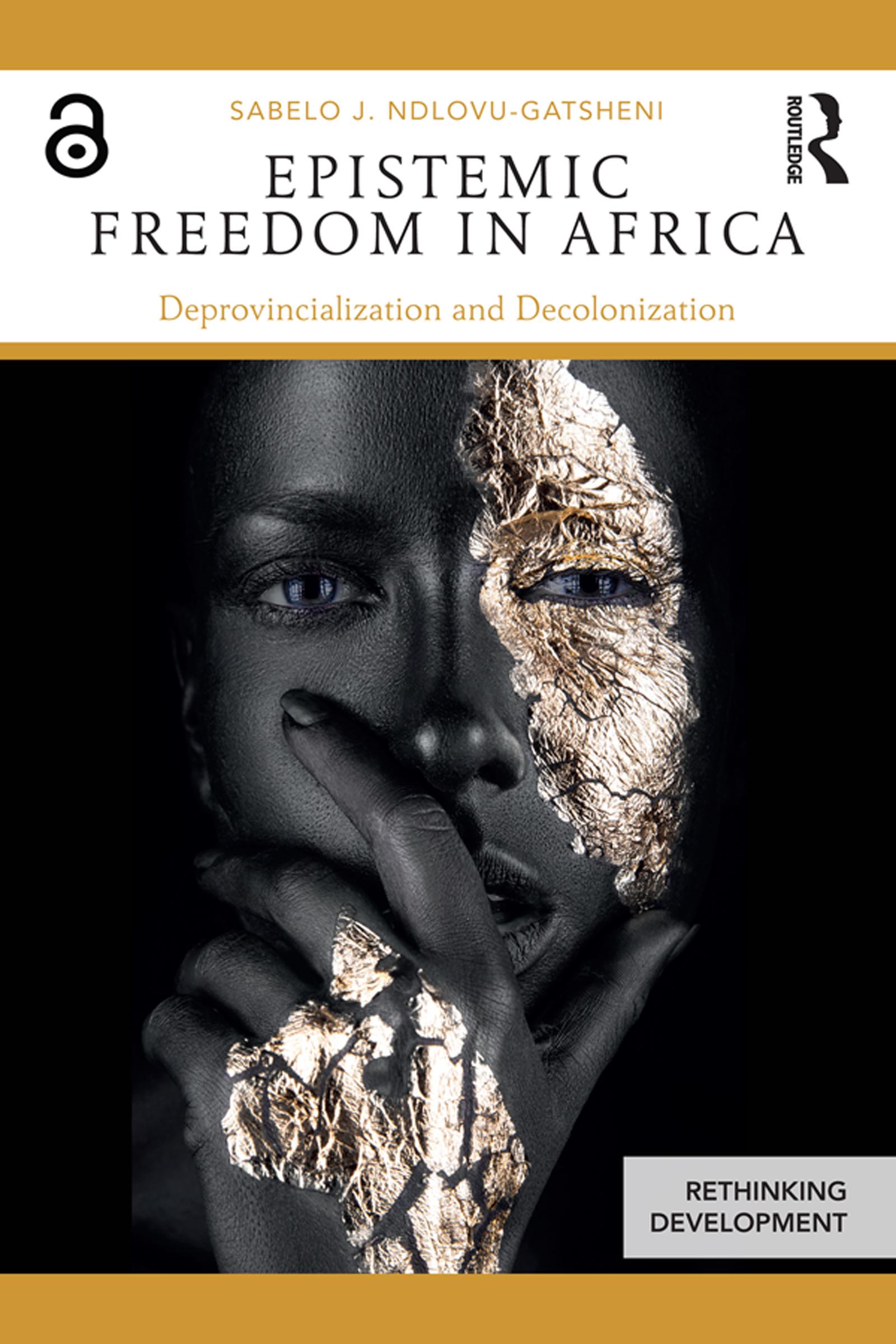
Epistemic Freedom in Africa is about the struggle for African people to think, theorize, interpret the world and write from where they are located, unencumbered by Eurocentrism. The imperial denial of common humanity to some human beings meant that in turn their knowledges and experiences lost their value, their epistemic virtue. Now, in the twenty-first century, descendants of enslaved, displaced, colonized, and racialized peoples have entered academies across the world, proclaiming loudly that they are human beings, their lives matter and they were born into valid and legitimate knowledge systems that are capable of helping humanity to transcend the current epistemic and systemic crises. Together, they are engaging in diverse struggles for cognitive justice, fighting against the epistemic line which haunts the twenty-first century.
The renowned historian and decolonial theorist Sabelo J. Ndlovu-Gatsheni offers a penetrating and well-argued case for centering Africa as a legitimate historical unit of analysis and epistemic site from which to interpret the world, whilst simultaneously making an equally strong argument for globalizing knowledge from Africa so as to attain ecologies of knowledges. This is a dual process of both deprovincializing Africa, and in turn provincializing Europe. The book highlights how the mental universe of Africa was invaded and colonized, the long-standing struggles for 'an African university', and the trajectories of contemporary decolonial movements such as Rhodes Must Fall and Fees Must Fall in South Africa. This landmark work underscores the fact that only once the problem of epistemic freedom has been addressed can Africa achieve political, cultural, economic and other freedoms.
This groundbreaking new book is accessible to students and scholars across Education, History, Philosophy, Ethics, African Studies, Development Studies, Politics, International Relations, Sociology, Postcolonial Studies and the emerging field of Decolonial Studies.
The Open Access versions Chapter 1 and Chapter 9, available at https://doi.org/10.4324/9780429492204 have been made available under a Creative Commons Attribution-Non Commercial-No Derivatives 4.0 license.
Before Memmo my notes were scattered across PDFs. Now a workspace pulls everything into one place — I see exactly what's still left to study.
Memmo's summaries are gold before exams. I don't have to re-read 800 pages two weeks before — just the important parts.
The AI chat has saved me the night before an exam more than once. I just keep asking until I get it — no waiting on a study group to reply.
The quizzes hit exactly what I need to know. Memmo tracks what I get stuck on — so I only practice what's worth it.
Flashcards with spaced repetition are magic. Memmo knows when I'm about to forget something and brings it back.
The AI podcasts are my favorite. I listen on my way to school and get a recap without sitting at a computer.

Handbok i kvalitativa metoder
281 kr

Hållbar utveckling: en introduktion för ingenjörer och andra problemlösare
334 kr

Brymans Samhällsvetenskapliga metoder
390 kr

Projektledning
491 kr

Den orättvisa hälsan: om socioekonomiska skillnader i hälsa och livslängd
326 kr

Vetenskapsteori för nybörjare
196 kr

Organizational Leadership
429 kr

På väg mot läraryrket
172 kr

Det sociala livet i skolan: Socialpsykologiska perspektiv
253 kr

Betygsättningens didaktik
151 kr

Personality
402 kr

Studying Leadership
404 kr

Managing Innovation
477 kr

Introduktion till samhällsvetenskaplig metod
347 kr

The Psychology of Sex and Gender
698 kr

Evidens och kunskap för socialt arbete
207 kr

Introduction to Leadership
605 kr