
Before Memmo my notes were scattered across PDFs. Now a workspace pulls everything into one place — I see exactly what's still left to study.
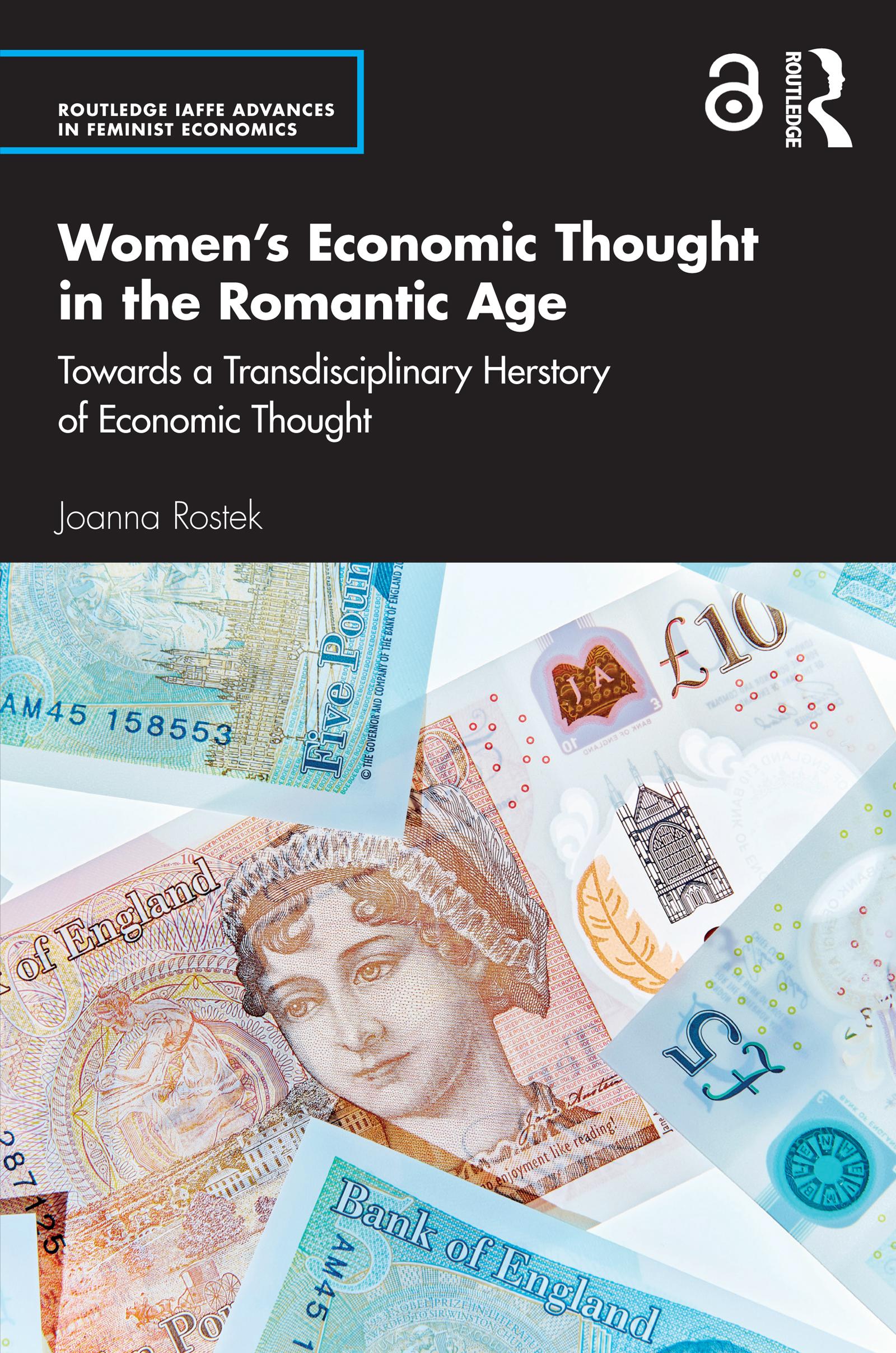
This book examines the writings of seven English women economists from the period 1735–1811. It reveals that contrary to what standard accounts of the history of economic thought suggest, eighteenth- and early nineteenth-century women intellectuals were undertaking incisive and gender-sensitive analyses of the economy.
Women’s Economic Thought in the Romantic Age argues that established notions of what constitutes economic enquiry, topics, and genres of writing have for centuries marginalised the perspectives and experiences of women and obscured the knowledge they recorded in novels, memoirs, or pamphlets. This has led to an underrepresentation of women in the canon of economic theory. Using insights from literary studies, cultural studies, gender studies, and feminist economics, the book develops a transdisciplinary methodology that redresses this imbalance and problematises the distinction between literary and economic texts. In its in-depth readings of selected writings by Sarah Chapone, Mary Wollstonecraft, Mary Hays, Mary Robinson, Priscilla Wakefield, Mary Ann Radcliffe, and Jane Austen, this book uncovers the originality and topicality of their insights on the economics of marriage, women and paid work, and moral economics.
Combining historical analysis with conceptual revision, Women’s Economic Thought in the Romantic Age retrieves women’s overlooked intellectual contributions and radically breaks down the barriers between literature and economics. It will be of interest to researchers and students from across the humanities and social sciences, in particular the history of economic thought, English literary and cultural studies, gender studies, economics, eighteenth-century and Romantic studies, social history, and the history of ideas.
The Open Access version of this book, available at http://www.taylorfrancis.com, has been made available under a Creative Commons Attribution-Non Commercial-No Derivatives (CC-BY-NC-ND) 4.0 license.
Before Memmo my notes were scattered across PDFs. Now a workspace pulls everything into one place — I see exactly what's still left to study.
Memmo's summaries are gold before exams. I don't have to re-read 800 pages two weeks before — just the important parts.
The AI chat has saved me the night before an exam more than once. I just keep asking until I get it — no waiting on a study group to reply.
The quizzes hit exactly what I need to know. Memmo tracks what I get stuck on — so I only practice what's worth it.
Flashcards with spaced repetition are magic. Memmo knows when I'm about to forget something and brings it back.
The AI podcasts are my favorite. I listen on my way to school and get a recap without sitting at a computer.

Handbok i kvalitativa metoder
281 kr

Hållbar utveckling: en introduktion för ingenjörer och andra problemlösare
334 kr

Brymans Samhällsvetenskapliga metoder
390 kr

Projektledning
491 kr

Den orättvisa hälsan: om socioekonomiska skillnader i hälsa och livslängd
326 kr

Vetenskapsteori för nybörjare
196 kr

Organizational Leadership
429 kr

På väg mot läraryrket
172 kr

Det sociala livet i skolan: Socialpsykologiska perspektiv
253 kr

Betygsättningens didaktik
151 kr

Personality
402 kr

Studying Leadership
404 kr

Managing Innovation
477 kr

Introduktion till samhällsvetenskaplig metod
347 kr

The Psychology of Sex and Gender
698 kr

Evidens och kunskap för socialt arbete
207 kr

Introduction to Leadership
605 kr