
Before Memmo my notes were scattered across PDFs. Now a workspace pulls everything into one place — I see exactly what's still left to study.
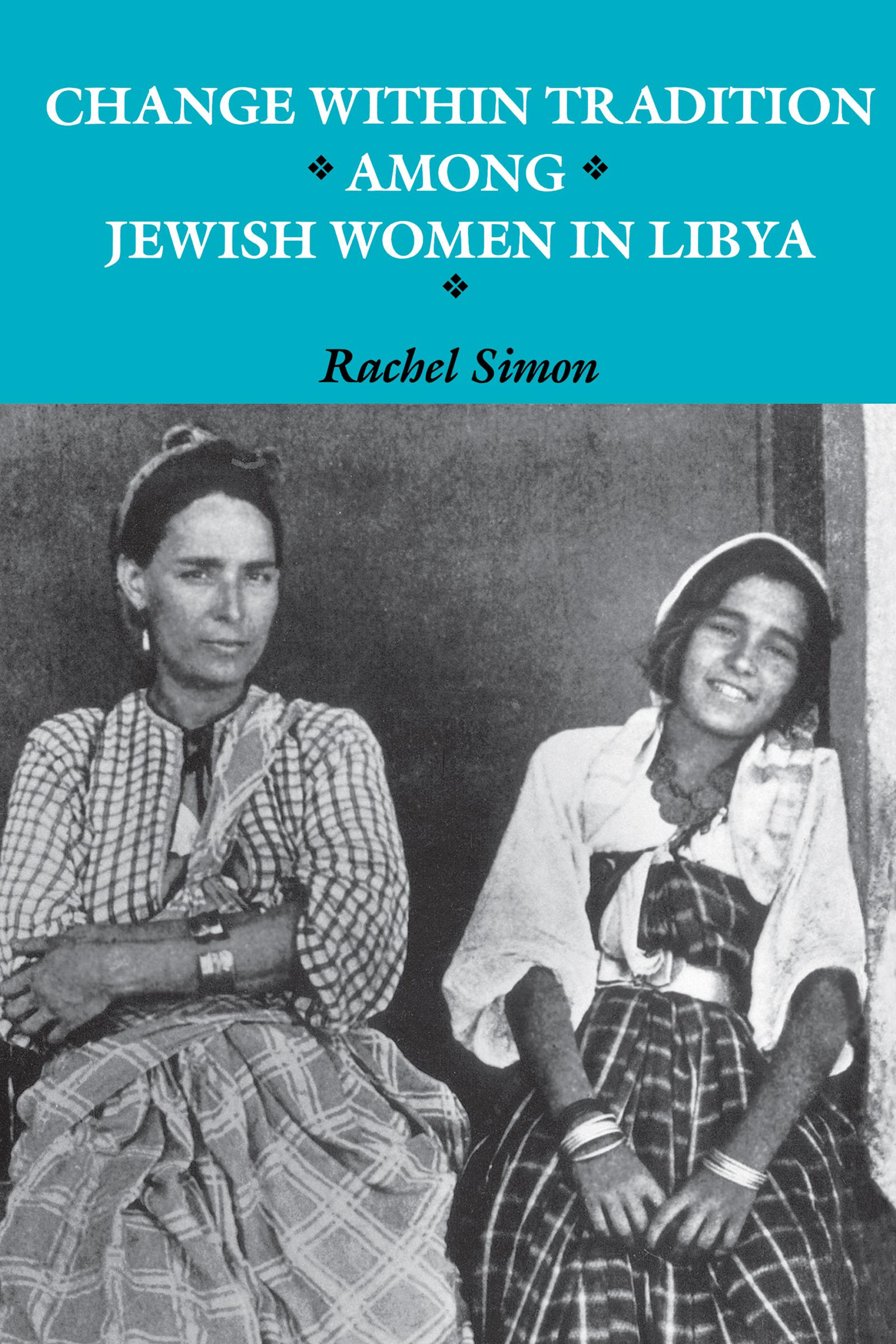
In the first major study of women in an Arab country’s Jewish community, Rachel Simon examines the changing status of Jewish women in Libya from the second half of the nineteenth century until 1967, when most Jews left the country. Simon shows how social, economic, and political changes in Libyan society as a whole affected its Jewish minority and analyzes the developments in women’s social position, family life, work, education, and participation in public life.
Jews lived in Libya for more than two thousand years. As a result of their isolation from other Jewish centers and their extended coexistence with Berber and Arab Muslims, the Jews of Libya were strongly influenced by the manners, customs, regulations, and beliefs of the Muslim majority. The late nineteenth century witnessed a growing European cultural and economic penetration of Ottoman Liibya, which increased after the Italian occupation of Libya in 1911. Italian rule continued until a British Military Administration was established in 1942-43. Libya became independent in late 1951. The changing political regimes presented the Jewish minority with different models of social and cultural behavior. These changes in the foci of inspiration and imitation had significant implications for the position of Jewish women, as Jewish traditional society was exposed to modernizing and Westernizing influences.
Economic factors had a strong impact on the position of women. Because of recurring economic crises in the late nineteenth century, Jewish families became willing to allow women to work outside the home. Some families also allowed their daughters to pursue vocational training and thus exposed them also to academic studies, especially at schools operated by representatives of European Jewish organizations.
Although economic and educational opportunities for women increased, the Jewish community as a whole remained traditional in its social structure, worldview, and approach to interpersonal relations. The principles upon which the community operated did not change drastically, and the male power structure did not alter in either the private or the public domain. Thus the position of women changed little within these spheres, despite the expansion of opportunities for women in education and economic life. Change was slow, evolutionary, and within the framework of traditional society.
Before Memmo my notes were scattered across PDFs. Now a workspace pulls everything into one place — I see exactly what's still left to study.
Memmo's summaries are gold before exams. I don't have to re-read 800 pages two weeks before — just the important parts.
The AI chat has saved me the night before an exam more than once. I just keep asking until I get it — no waiting on a study group to reply.
The quizzes hit exactly what I need to know. Memmo tracks what I get stuck on — so I only practice what's worth it.
Flashcards with spaced repetition are magic. Memmo knows when I'm about to forget something and brings it back.
The AI podcasts are my favorite. I listen on my way to school and get a recap without sitting at a computer.

Handbok i kvalitativa metoder
281 kr

Hållbar utveckling: en introduktion för ingenjörer och andra problemlösare
334 kr

Brymans Samhällsvetenskapliga metoder
390 kr

Projektledning
491 kr

Den orättvisa hälsan: om socioekonomiska skillnader i hälsa och livslängd
326 kr

Vetenskapsteori för nybörjare
196 kr

Organizational Leadership
429 kr

På väg mot läraryrket
172 kr

Det sociala livet i skolan: Socialpsykologiska perspektiv
253 kr

Betygsättningens didaktik
151 kr

Personality
402 kr

Studying Leadership
404 kr

Managing Innovation
477 kr

Introduktion till samhällsvetenskaplig metod
347 kr

The Psychology of Sex and Gender
698 kr

Evidens och kunskap för socialt arbete
207 kr

Introduction to Leadership
605 kr