
Before Memmo my notes were scattered across PDFs. Now a workspace pulls everything into one place — I see exactly what's still left to study.
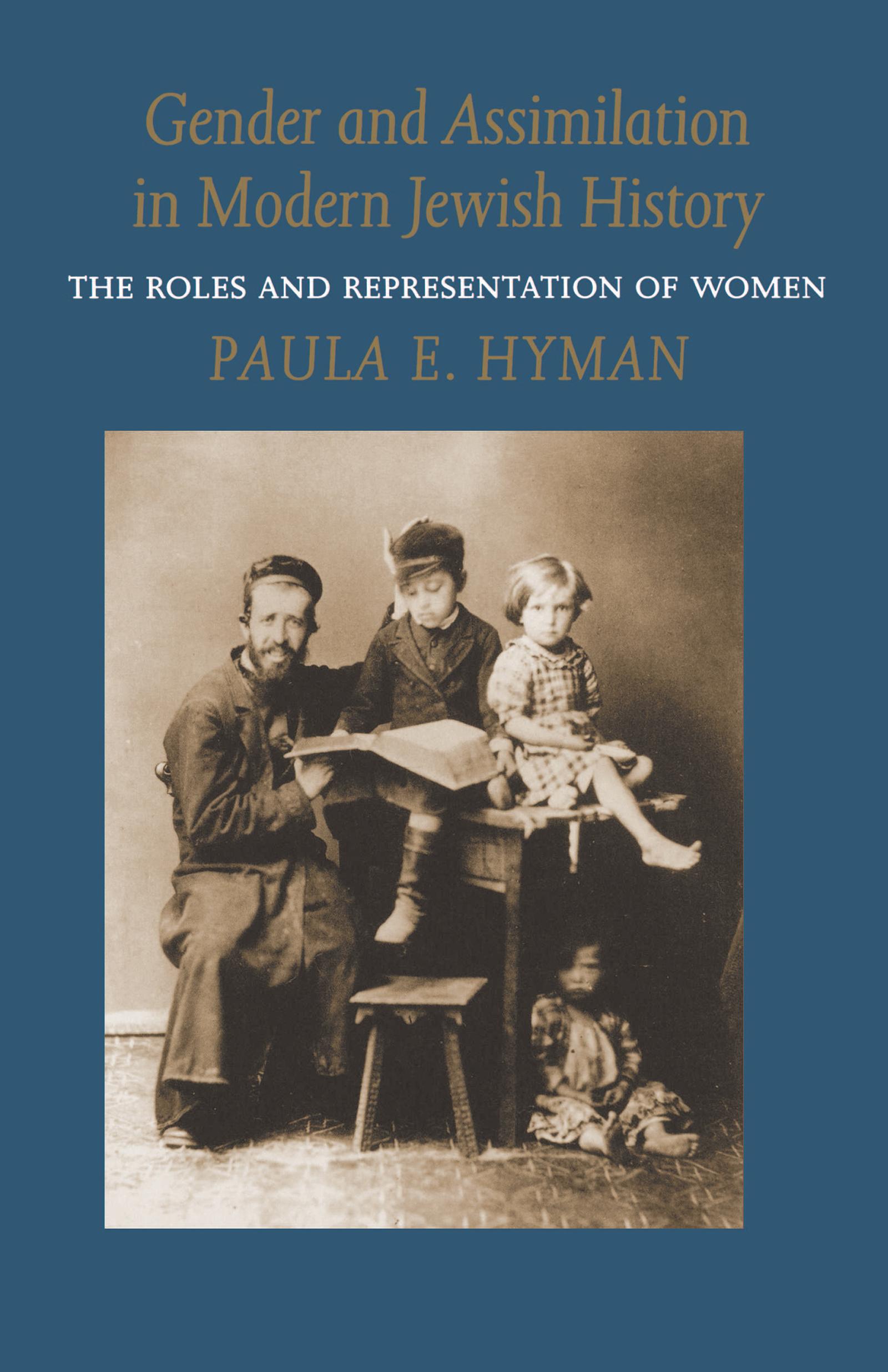
Paula Hyman broadens and revises earlier analyses of Jewish assimilation, which depicted “the Jews” as though they were all men, by focusing on women and the domestic as well as the public realms. Surveying Jewish accommodations to new conditions in Europe and the United States in the years between 1850 and 1950, she retrieves the experience of women as reflected in their writings--memoirs, newspaper and journal articles, and texts of speeches--and finds that Jewish women’s patterns of assimilation differed from men’s and that an examination of those differences exposes the tensions inherent in the project of Jewish assimilation.
Patterns of assimilation varied not only between men and women but also according to geographical locale and social class. Germany, France, England, and the United States offered some degree of civic equality to their Jewish populations, and by the last third of the nineteenth century, their relatively small Jewish communities were generally defined by their middle-class characteristics. In contrast, the eastern European nations contained relatively large and overwhelmingly non-middle-class Jewish population. Hyman considers how these differences between East and West influenced gender norms, which in turn shaped Jewish women’s responses to the changing conditions of the modern world, and how they merged in the large communities of eastern European Jewish immigrants in the United States.
The book concludes with an exploration of the sexual politics of Jewish identity. Hyman argues that the frustration of Jewish men at their “feminization” in societies in which they had achieved political equality and economic success was manifested in their criticism of, and distancing from, Jewish women.
The book integrates a wide range of primary and secondary sources to incorporate Jewish women’s history into one of the salient themes in modern Jewish history, that of assimilation. The book is addressed to a wide audience: those with an interest in modern Jewish history, in women’s history, and in ethnic studies and all who are concerned with the experience and identity of Jews in the modern world.
Before Memmo my notes were scattered across PDFs. Now a workspace pulls everything into one place — I see exactly what's still left to study.
Memmo's summaries are gold before exams. I don't have to re-read 800 pages two weeks before — just the important parts.
The AI chat has saved me the night before an exam more than once. I just keep asking until I get it — no waiting on a study group to reply.
The quizzes hit exactly what I need to know. Memmo tracks what I get stuck on — so I only practice what's worth it.
Flashcards with spaced repetition are magic. Memmo knows when I'm about to forget something and brings it back.
The AI podcasts are my favorite. I listen on my way to school and get a recap without sitting at a computer.

Handbok i kvalitativa metoder
281 kr

Hållbar utveckling: en introduktion för ingenjörer och andra problemlösare
334 kr

Brymans Samhällsvetenskapliga metoder
390 kr

Projektledning
491 kr

Den orättvisa hälsan: om socioekonomiska skillnader i hälsa och livslängd
326 kr

Vetenskapsteori för nybörjare
196 kr

Organizational Leadership
429 kr

På väg mot läraryrket
172 kr

Det sociala livet i skolan: Socialpsykologiska perspektiv
253 kr

Betygsättningens didaktik
151 kr

Personality
402 kr

Studying Leadership
404 kr

Managing Innovation
477 kr

Introduktion till samhällsvetenskaplig metod
347 kr

The Psychology of Sex and Gender
698 kr

Evidens och kunskap för socialt arbete
207 kr

Introduction to Leadership
605 kr