
Before Memmo my notes were scattered across PDFs. Now a workspace pulls everything into one place — I see exactly what's still left to study.
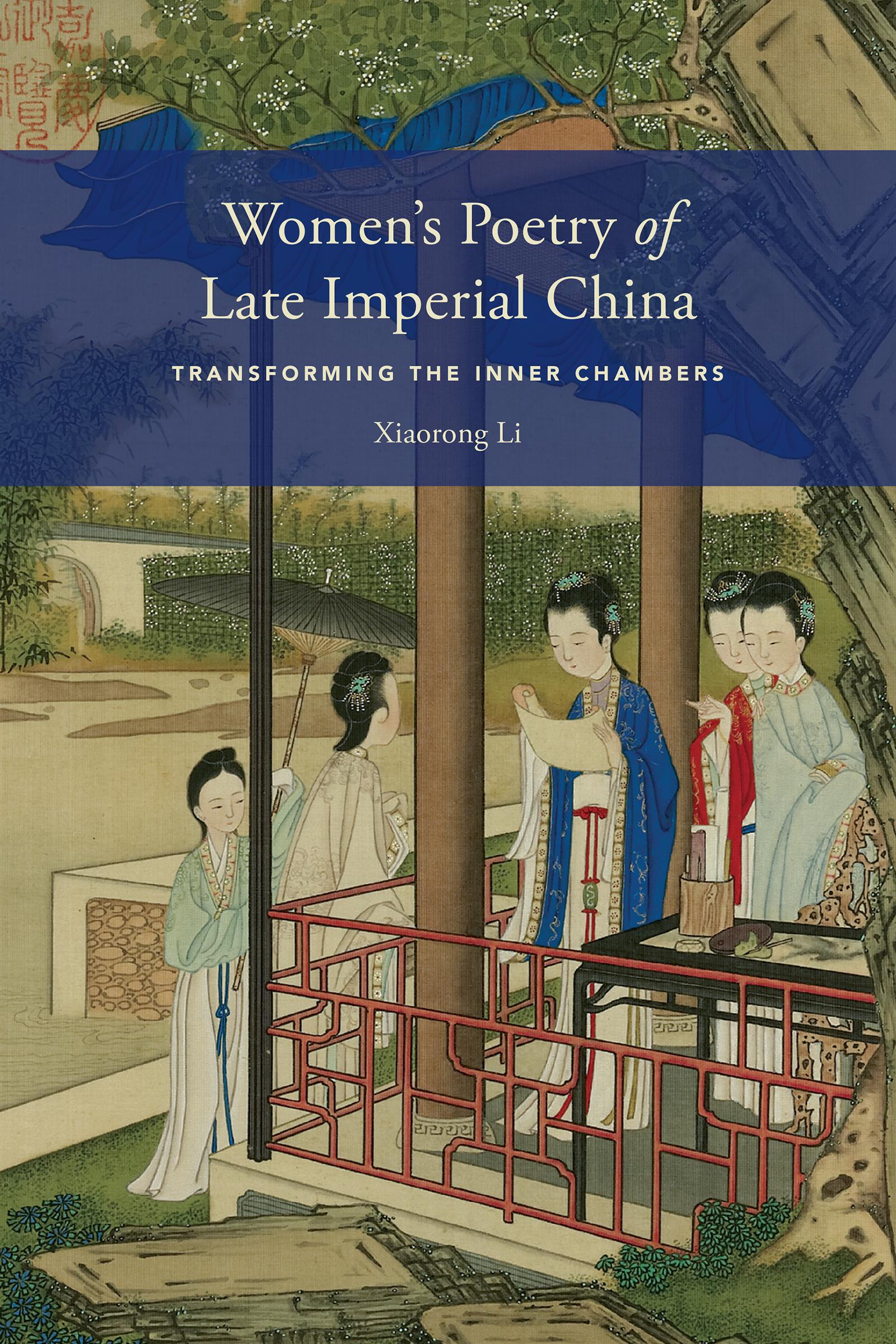
This study of poetry by women in late imperial China examines the metamorphosis of the trope of the "inner chambers" (gui), to which women were confined in traditional Chinese households, and which in literature were both a real and an imaginary place. Originally popularized in sixth-century "palace style" poetry, the inner chambers were used by male writers as a setting in which to celebrate female beauty, to lament the loneliness of abandoned women, and by extension, to serve as a political allegory for the exile of loyal and upright male ministers spurned by the imperial court. Female writers of lyric poetry (ci) soon adopted the theme, beginning its transition from male fantasy to multidimensional representation of women and their place in society, and eventually its manifestation in other poetic genres as well.
Emerging from the role of sexual objects within poetry, late imperial women were agents of literary change in their expansion and complication of the boudoir theme. While some take ownership and de-eroticizing its imagery for their own purposes, adding voices of children and older women, and filling the inner chambers with purposeful activity such as conversation, teaching, religious ritual, music, sewing, childcare, and chess-playing, some simply want to escape from their confinement and protest gender restrictions imposed on women. Women's Poetry of Late Imperial China traces this evolution across centuries, providing and analyzing examples of poetic themes, motifs, and imagery associated with the inner chambers, and demonstrating the complication and nuancing of the gui theme by increasingly aware and sophisticated women writers.
Before Memmo my notes were scattered across PDFs. Now a workspace pulls everything into one place — I see exactly what's still left to study.
Memmo's summaries are gold before exams. I don't have to re-read 800 pages two weeks before — just the important parts.
The AI chat has saved me the night before an exam more than once. I just keep asking until I get it — no waiting on a study group to reply.
The quizzes hit exactly what I need to know. Memmo tracks what I get stuck on — so I only practice what's worth it.
Flashcards with spaced repetition are magic. Memmo knows when I'm about to forget something and brings it back.
The AI podcasts are my favorite. I listen on my way to school and get a recap without sitting at a computer.

Handbok i kvalitativa metoder
281 kr

Hållbar utveckling: en introduktion för ingenjörer och andra problemlösare
334 kr

Brymans Samhällsvetenskapliga metoder
390 kr

Projektledning
491 kr

Den orättvisa hälsan: om socioekonomiska skillnader i hälsa och livslängd
326 kr

Vetenskapsteori för nybörjare
196 kr

Organizational Leadership
429 kr

På väg mot läraryrket
172 kr

Det sociala livet i skolan: Socialpsykologiska perspektiv
253 kr

Betygsättningens didaktik
151 kr

Personality
402 kr

Studying Leadership
404 kr

Managing Innovation
477 kr

Introduktion till samhällsvetenskaplig metod
347 kr

The Psychology of Sex and Gender
698 kr

Evidens och kunskap för socialt arbete
207 kr

Introduction to Leadership
605 kr