
Before Memmo my notes were scattered across PDFs. Now a workspace pulls everything into one place — I see exactly what's still left to study.
Winner of a 2006 Choice Magazine Outstanding Academic Title Award
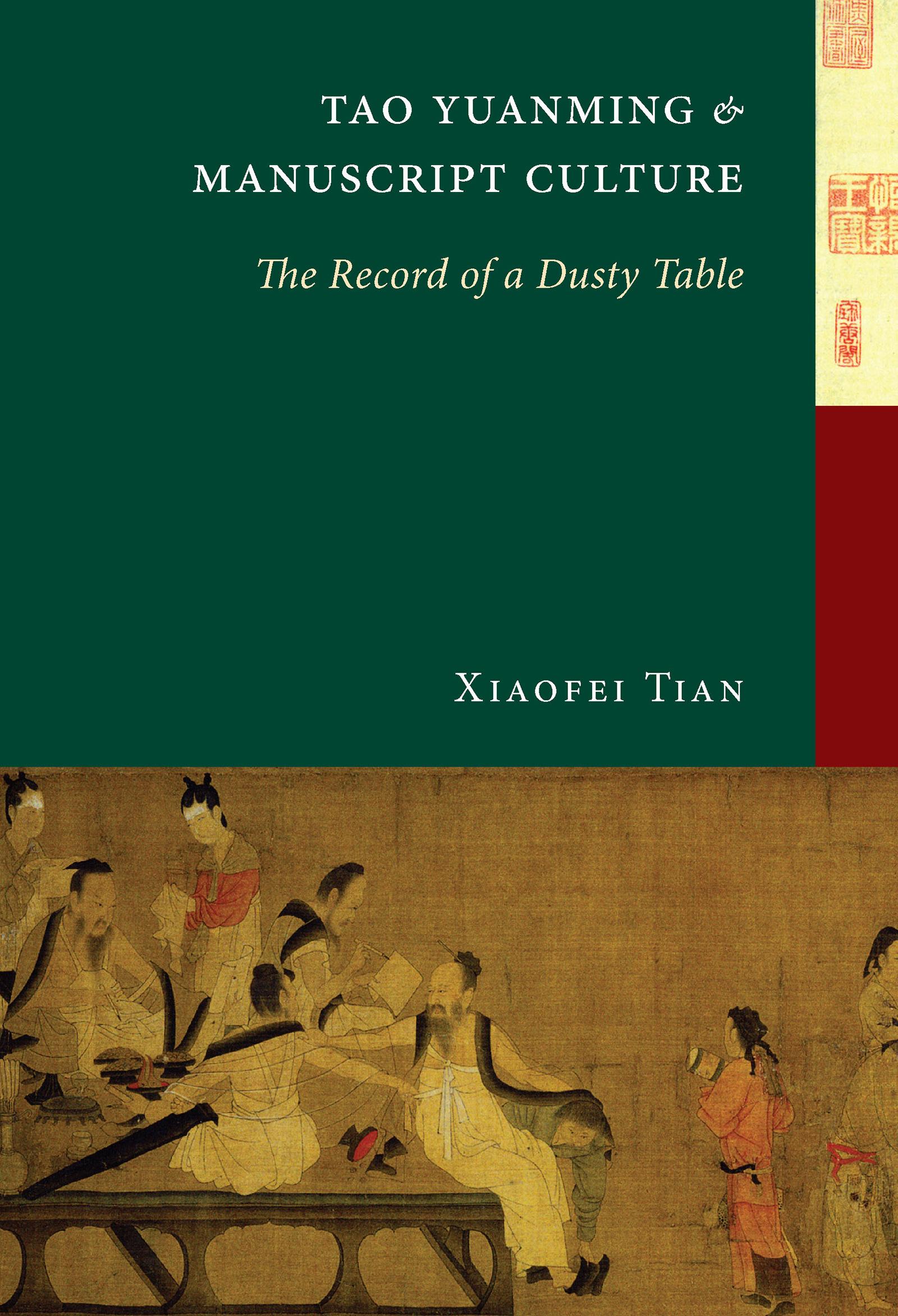
As medieval Chinese manuscripts were copied and recopied through the centuries, both mistakes and deliberate editorial changes were introduced, thereby affecting readers' impressions of the author's intent. In Tao Yuanming and Manuscript Culture, Xiaofei Tian shows how readers not only experience authors but produce them by shaping texts to their interpretation. Tian examines the mechanics and history of textual transmission in China by focusing on the evolution over the centuries of the reclusive poet Tao Yuanming into a figure of epic stature.
Considered emblematic of the national character, Tao Yuanming (also known as Tao Qian, 365?-427 c.e.) is admired for having turned his back on active government service and city life to live a simple rural life of voluntary poverty. The artlessness of his poetic style is held as the highest literary and moral ideal, and literary critics have taken great pains to demonstrate perfect consistency between Tao Yuanming's life and poetry. Earlier work on Tao Yuanming has tended to accept this image, interpreting the poems to confirm the image.
Tao Yuanming and Manuscript Culture is a study of how this cultural icon was produced and of the elusive traces of another, historical Tao Yuanming behind the icon. By comparing four early biographies of the poet, Tian shows how these are in large measure constructed out of Tao Yuanming's self-image as projected in his poetry and prose. Drawing on work in European medieval literature, she demonstrates the fluidity of the Chinese medieval textual world and how its materials were historically reconfigured for later purposes.
Tian finds in Tao's poetic corpus not one essentialized Tao Yuanming, but multiple texts continuously produced long after the author's physical demise. Her provocative look at the influence of manuscript culture on literary perceptions transcends its immediate subject and has special resonance today, when the transition from print to electronic media is shaking the literary world in a way not unlike the transition from handwritten to print media in medieval China.
Before Memmo my notes were scattered across PDFs. Now a workspace pulls everything into one place — I see exactly what's still left to study.
Memmo's summaries are gold before exams. I don't have to re-read 800 pages two weeks before — just the important parts.
The AI chat has saved me the night before an exam more than once. I just keep asking until I get it — no waiting on a study group to reply.
The quizzes hit exactly what I need to know. Memmo tracks what I get stuck on — so I only practice what's worth it.
Flashcards with spaced repetition are magic. Memmo knows when I'm about to forget something and brings it back.
The AI podcasts are my favorite. I listen on my way to school and get a recap without sitting at a computer.

Handbok i kvalitativa metoder
281 kr

Hållbar utveckling: en introduktion för ingenjörer och andra problemlösare
334 kr

Brymans Samhällsvetenskapliga metoder
390 kr

Projektledning
491 kr

Den orättvisa hälsan: om socioekonomiska skillnader i hälsa och livslängd
326 kr

Vetenskapsteori för nybörjare
196 kr

Organizational Leadership
429 kr

På väg mot läraryrket
172 kr

Det sociala livet i skolan: Socialpsykologiska perspektiv
253 kr

Betygsättningens didaktik
151 kr

Personality
402 kr

Studying Leadership
404 kr

Managing Innovation
477 kr

Introduktion till samhällsvetenskaplig metod
347 kr

The Psychology of Sex and Gender
698 kr

Evidens och kunskap för socialt arbete
207 kr

Introduction to Leadership
605 kr