
Before Memmo my notes were scattered across PDFs. Now a workspace pulls everything into one place — I see exactly what's still left to study.
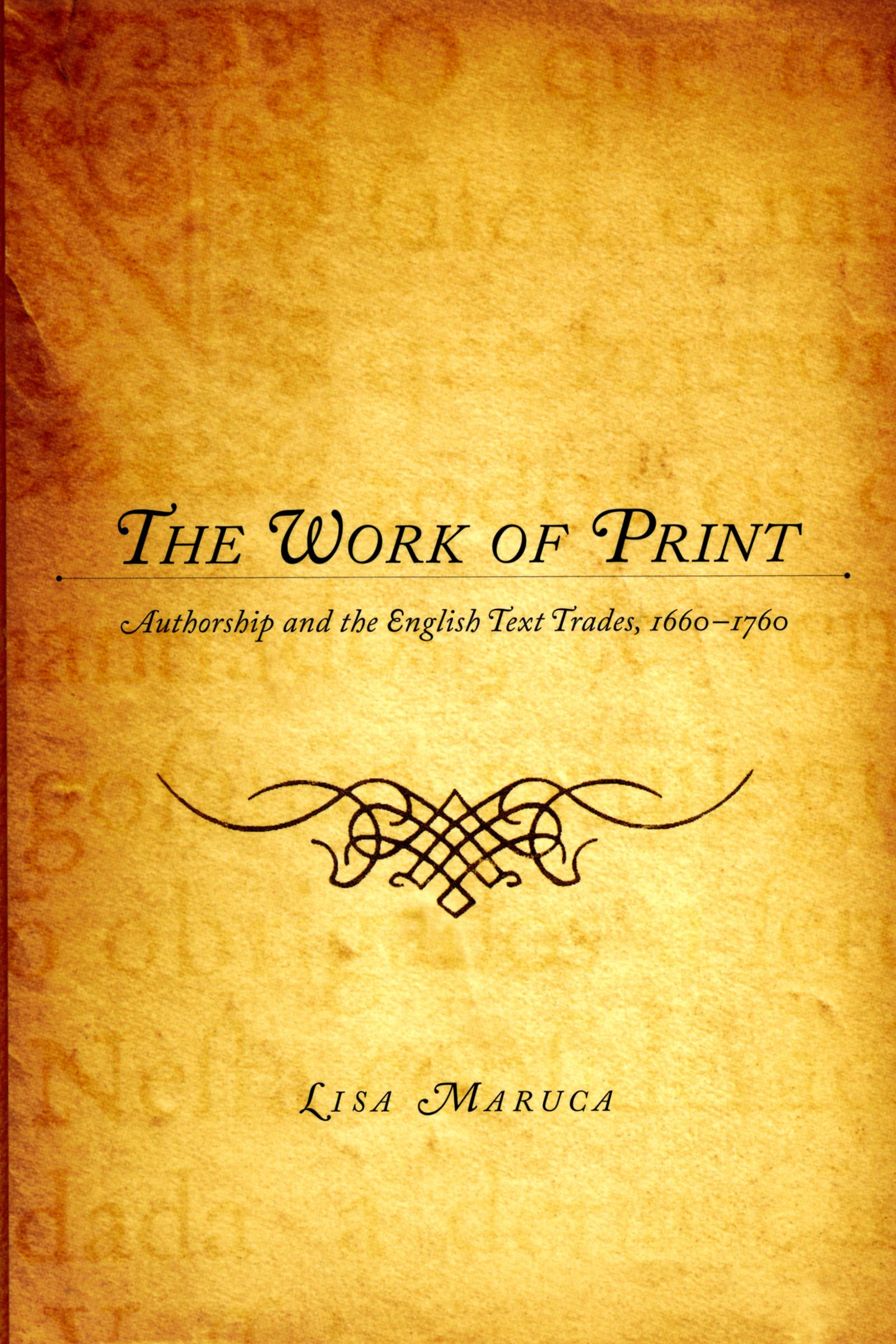
The Work of Print traces a shift in the very definition of literature, from one that encompasses the material conditions of the production and distribution of books to the more familiar emphasis on the solitary author's ownership of an abstract text. Drawing on contemporary accounts of those involved in the trade - printers, booksellers, publishers, and distributors - Lisa Maruca examines attitudes about the creative process and approaches to the commodification of writing. The "work of print" describes the labors through which literature was produced: both the physical labor of making books and the underlying cultural work performed by a set of ideologies about who counted as a maker of texts.
Printers' manuals, tracts on typography, legal documents, and booksellers' autobiographies reveal that print workers conceived of their roles as central to the production of literature. Maruca's insightful readings of these documents alongside traditional works of fiction and authors' correspondence show that the claims of print workers and booksellers were part of a struggle for ownership and control as the concept of author as proprietor of his or her intellectual property began to take hold in the mid-1700s, gradually eclipsing print workers' contributions to the process of textual creation.
The print trade asserted its authority using a rhetoric of hierarchical and binary sexuality and gender, which affected women working in the industry and limited the type of work they were allowed to perform. In response, women developed strategies to redeploy conventional ideas of gender to gain concessions for themselves as publishers and distributors of printed material, strategies that formed a foundation for the rise of female authorship later in the eighteenth century.
Encompassing the histories of literature, labor, technology, publishing, and gender, The Work of Print ultimately offers significant insights into the ideology of authorship and intellectual property and our understanding of textuality and print in the digital age.
Before Memmo my notes were scattered across PDFs. Now a workspace pulls everything into one place — I see exactly what's still left to study.
Memmo's summaries are gold before exams. I don't have to re-read 800 pages two weeks before — just the important parts.
The AI chat has saved me the night before an exam more than once. I just keep asking until I get it — no waiting on a study group to reply.
The quizzes hit exactly what I need to know. Memmo tracks what I get stuck on — so I only practice what's worth it.
Flashcards with spaced repetition are magic. Memmo knows when I'm about to forget something and brings it back.
The AI podcasts are my favorite. I listen on my way to school and get a recap without sitting at a computer.

Handbok i kvalitativa metoder
281 kr

Hållbar utveckling: en introduktion för ingenjörer och andra problemlösare
334 kr

Brymans Samhällsvetenskapliga metoder
390 kr

Projektledning
491 kr

Den orättvisa hälsan: om socioekonomiska skillnader i hälsa och livslängd
326 kr

Vetenskapsteori för nybörjare
196 kr

Organizational Leadership
429 kr

På väg mot läraryrket
172 kr

Det sociala livet i skolan: Socialpsykologiska perspektiv
253 kr

Betygsättningens didaktik
151 kr

Personality
402 kr

Studying Leadership
404 kr

Managing Innovation
477 kr

Introduktion till samhällsvetenskaplig metod
347 kr

The Psychology of Sex and Gender
698 kr

Evidens och kunskap för socialt arbete
207 kr

Introduction to Leadership
605 kr