
Before Memmo my notes were scattered across PDFs. Now a workspace pulls everything into one place — I see exactly what's still left to study.
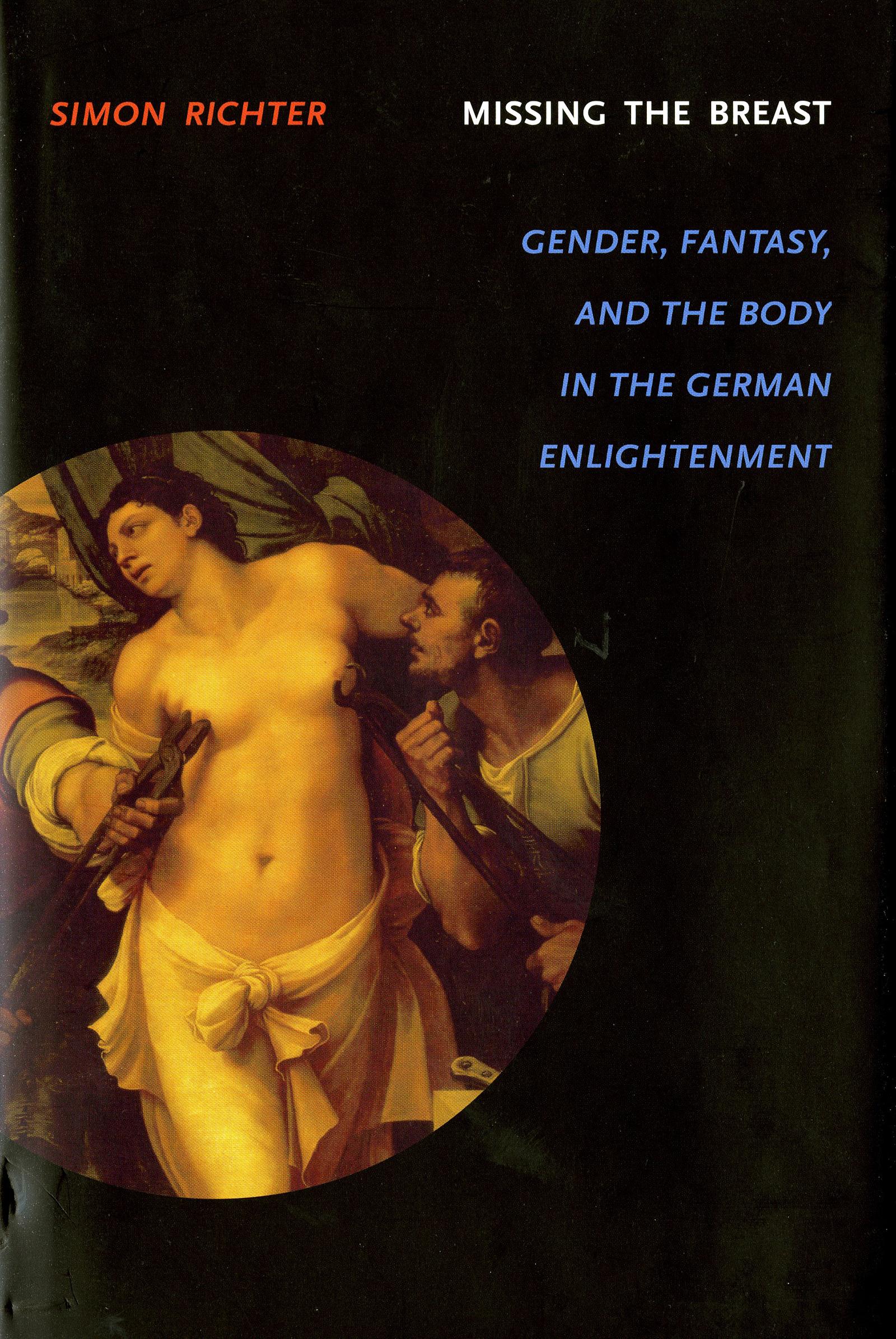
The cult of the female breast in contemporary American and European society is as pervasive as it is notorious. Our current fascination merely updates a long-standing obsession with the breast, which over the past twenty years has also become a subject of scholarly attention. Most historians and cultural theorists have focused on England and France, with virtually all research starting from the simple assumption that the breast is a signifier of the feminine and the female. With Missing the Breast, Simon Richter uses the texts of Enlightenment-era Germany to challenge that assumption, engaging instead the complexity of culturally constructed notions of the breast.
Using the tools of medicine, literary theory, psychology, psychoanalysis, and etymology, Richter probes the breast-related fantasies underlying German culture and literature in the second half of the eighteenth century. His study reveals that, whereas in England and France and in the public imagination generally, the breast has been associated with the feminine and with abundance, the inherent “logic of the breast” in German culture unexpectedly pushes the breast toward masculinity and lack. Richter’s tour de force of textual and cultural analysis brings together the work of important German poets, writers, and dramatists, as well as major psychoanalysts and their critics, and writers and artists of the English-speaking world, to explore the tension between the plenitude of the breast and the implications of its absence. His engaging study draws the reader ineluctably toward a revolutionary possibility: the breast as an “unruly and uncontainable signifier,” the equal and more of what Lacan called the phallus.
Missing the Breast will be an indispensable addition to the libraries of those interested in German textual studies, the history of sexuality, and theories of psychoanalysis. Its groundbreaking perspective will make a significant contribution to the fields of literary studies, gender studies, and women’s studies.
Before Memmo my notes were scattered across PDFs. Now a workspace pulls everything into one place — I see exactly what's still left to study.
Memmo's summaries are gold before exams. I don't have to re-read 800 pages two weeks before — just the important parts.
The AI chat has saved me the night before an exam more than once. I just keep asking until I get it — no waiting on a study group to reply.
The quizzes hit exactly what I need to know. Memmo tracks what I get stuck on — so I only practice what's worth it.
Flashcards with spaced repetition are magic. Memmo knows when I'm about to forget something and brings it back.
The AI podcasts are my favorite. I listen on my way to school and get a recap without sitting at a computer.

Handbok i kvalitativa metoder
281 kr

Hållbar utveckling: en introduktion för ingenjörer och andra problemlösare
334 kr

Brymans Samhällsvetenskapliga metoder
390 kr

Projektledning
491 kr

Den orättvisa hälsan: om socioekonomiska skillnader i hälsa och livslängd
326 kr

Organizational Leadership
429 kr

Vetenskapsteori för nybörjare
196 kr

På väg mot läraryrket
172 kr

Det sociala livet i skolan: Socialpsykologiska perspektiv
253 kr

Betygsättningens didaktik
151 kr

Personality
402 kr

Studying Leadership
404 kr

Managing Innovation
477 kr

Introduktion till samhällsvetenskaplig metod
347 kr

The Psychology of Sex and Gender
698 kr

Evidens och kunskap för socialt arbete
207 kr

Introduction to Leadership
605 kr