
Before Memmo my notes were scattered across PDFs. Now a workspace pulls everything into one place — I see exactly what's still left to study.
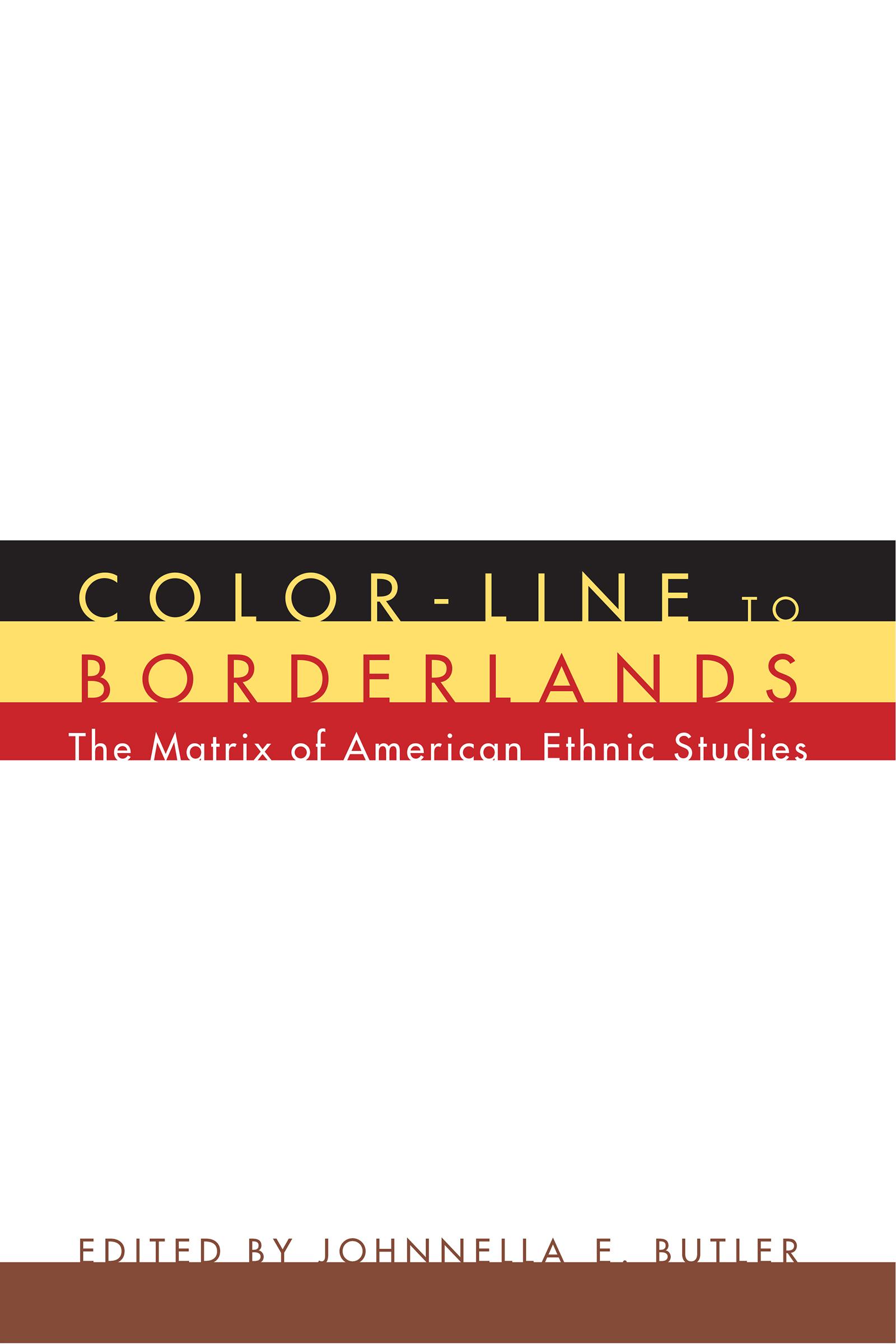
"Ethnic Studies . . . has drawn higher education, usually kicking and screaming, into the borderlands of scholarship, pedagogy, faculty collegiality, and institutional development," Johnnella E. Butler writes in her Introduction to this collection of lively and insightful essays. Some of the most prominent scholars in Ethnic Studies today explore varying approaches, multiple methodologies, and contrasting perspectives within the field. Essays trace the historical development of Ethnic Studies, its place in American universities and the curriculum, and new directions in contemporary scholarship. The legitimation of the field, the need for institutional support, and the changing relations between academic scholarship and community activism are also discussed.
The institutional structure of Ethnic Studies continues to be affected by national, regional, and local attitudes and events, and Ronald Takaki’s essay explores the contested terrains of these culture wars. Manning Marable delves into theoretical aspects of writing about race and ethnicity, while John C. Walter surveys the influence of African American history on U.S. history textbooks. Elizabeth Cook-Lynn and Craig Howe explain why American Indian Studies does not fit into the Ethnic Studies model, and Lauro H. Flores traces the historical development of Chicano/a Studies, forged from the student and community activism of the late 1960s.
Ethnic Studies is simultaneously discipline-based and interdisciplinary, self-containing and overlapping. This volume captures that dichotomy as contributors raise questions that traditional disciplines ignore. Essays include Lane Ryo Hirabayashi and Marilyn Caballero Alquizola on the gulf between postmodernism and political and institutional realities; Rhett S. Jones on the evolution of Africana Studies; and Judith Newton on the trajectories of Ethnic Studies and Women’s Studies and their relations with marginalized communities. Shirley Hune and Evelyn Hu-DeHart each make a case for the separation of Asian American Studies from Asian Studies, while Edna Acosta-Belén argues for a hemispheric approach to Latin American and U.S. Latino/a Studies. T. V. Reed rounds out the volume by offering through cultural studies bridges to the twenty-first century.
Before Memmo my notes were scattered across PDFs. Now a workspace pulls everything into one place — I see exactly what's still left to study.
Memmo's summaries are gold before exams. I don't have to re-read 800 pages two weeks before — just the important parts.
The AI chat has saved me the night before an exam more than once. I just keep asking until I get it — no waiting on a study group to reply.
The quizzes hit exactly what I need to know. Memmo tracks what I get stuck on — so I only practice what's worth it.
Flashcards with spaced repetition are magic. Memmo knows when I'm about to forget something and brings it back.
The AI podcasts are my favorite. I listen on my way to school and get a recap without sitting at a computer.

Handbok i kvalitativa metoder
281 kr

Hållbar utveckling: en introduktion för ingenjörer och andra problemlösare
334 kr

Brymans Samhällsvetenskapliga metoder
390 kr

Projektledning
491 kr

Den orättvisa hälsan: om socioekonomiska skillnader i hälsa och livslängd
326 kr

Organizational Leadership
429 kr

Vetenskapsteori för nybörjare
196 kr

På väg mot läraryrket
172 kr

Det sociala livet i skolan: Socialpsykologiska perspektiv
253 kr

Betygsättningens didaktik
151 kr

Personality
402 kr

Studying Leadership
404 kr

Managing Innovation
477 kr

Introduktion till samhällsvetenskaplig metod
347 kr

The Psychology of Sex and Gender
698 kr

Evidens och kunskap för socialt arbete
207 kr

Introduction to Leadership
605 kr