
Before Memmo my notes were scattered across PDFs. Now a workspace pulls everything into one place — I see exactly what's still left to study.
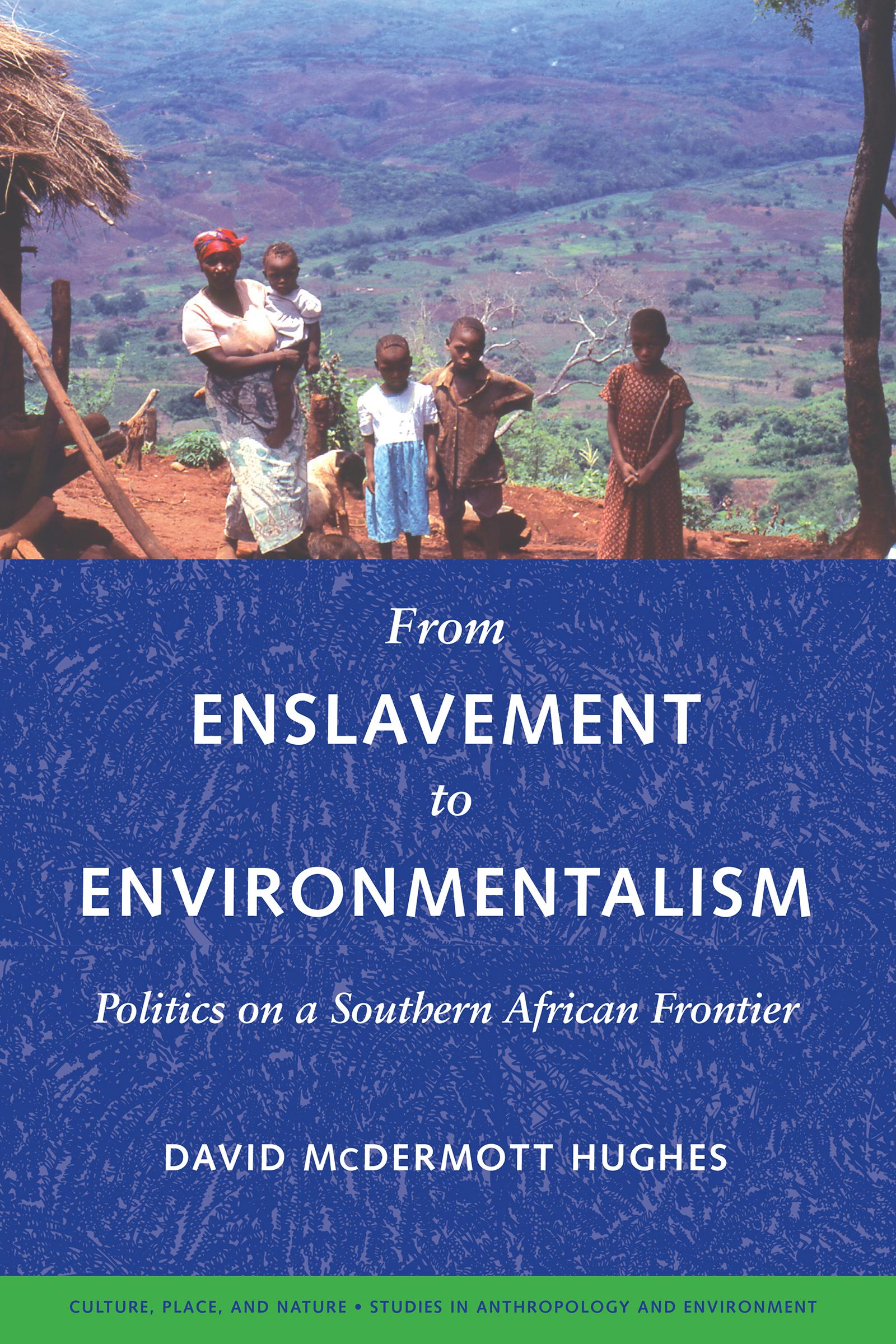
From Enslavement to Environmentalism takes a challenging ethnographic and historical look at the politics of eco-development in the Zimbabwe-Mozambique border zone. David Hughes argues that European colonization in southern Africa--essentially an unsuccessful effort to turn the region into another North America or Australia--has profoundly reshaped rural politics and culture and continues to do so, as neoliberal developers commoditize the lands of African peasants in the name of conservation and economic progress.
Hughes builds his engaging analysis around a sort of natural experiment: in the past, whites colonized British Zimbabwe but avoided Portuguese Mozambique almost entirely. In Zimbabwe, chiefdoms that had historically focused on controlling people began to follow the English example of consolidating political power by dividing and controlling land. Meanwhile, in Mozambique, Portugal perpetuated traditional practices of recruiting and distributing forced labor as the primary means of securing power. The territory remained unmapped. For almost the entire twentieth century, a sharp disjuncture in the politics of land, leadership, labor, and resource use marked the border zone.
In the late 1990s, as white South Africans began to establish timber plantations in Mozambique, that difference began to be effaced. Under the banner of environmentalism and economic progress, tourism firms were allowed to claim peasant farmland. The objectives of liberal conservationists and developers, though high-minded, led them to commoditize ancestral lands. Southern African policymakers supported this new form of colonization as a form of racial integration between white investors and black peasants, paving the way for an ironic and contentious situation in which ethnic tolerance, gentrification, and land-grabbing have gone hand in hand.
From Enslavement to Environmentalism engages topics central to current debates in anthropology, resource politics, and development policy, and will be of interest to both regional specialists and generalists.
Before Memmo my notes were scattered across PDFs. Now a workspace pulls everything into one place — I see exactly what's still left to study.
Memmo's summaries are gold before exams. I don't have to re-read 800 pages two weeks before — just the important parts.
The AI chat has saved me the night before an exam more than once. I just keep asking until I get it — no waiting on a study group to reply.
The quizzes hit exactly what I need to know. Memmo tracks what I get stuck on — so I only practice what's worth it.
Flashcards with spaced repetition are magic. Memmo knows when I'm about to forget something and brings it back.
The AI podcasts are my favorite. I listen on my way to school and get a recap without sitting at a computer.

Handbok i kvalitativa metoder
281 kr

Hållbar utveckling: en introduktion för ingenjörer och andra problemlösare
334 kr

Brymans Samhällsvetenskapliga metoder
390 kr

Projektledning
491 kr

Den orättvisa hälsan: om socioekonomiska skillnader i hälsa och livslängd
326 kr

Organizational Leadership
429 kr

Vetenskapsteori för nybörjare
196 kr

På väg mot läraryrket
172 kr

Det sociala livet i skolan: Socialpsykologiska perspektiv
253 kr

Betygsättningens didaktik
151 kr

Personality
402 kr

Studying Leadership
404 kr

Managing Innovation
477 kr

Introduktion till samhällsvetenskaplig metod
347 kr

The Psychology of Sex and Gender
698 kr

Evidens och kunskap för socialt arbete
207 kr

Introduction to Leadership
605 kr