
Before Memmo my notes were scattered across PDFs. Now a workspace pulls everything into one place — I see exactly what's still left to study.
Selected by Choice as an Outstanding Academic Title for 2003
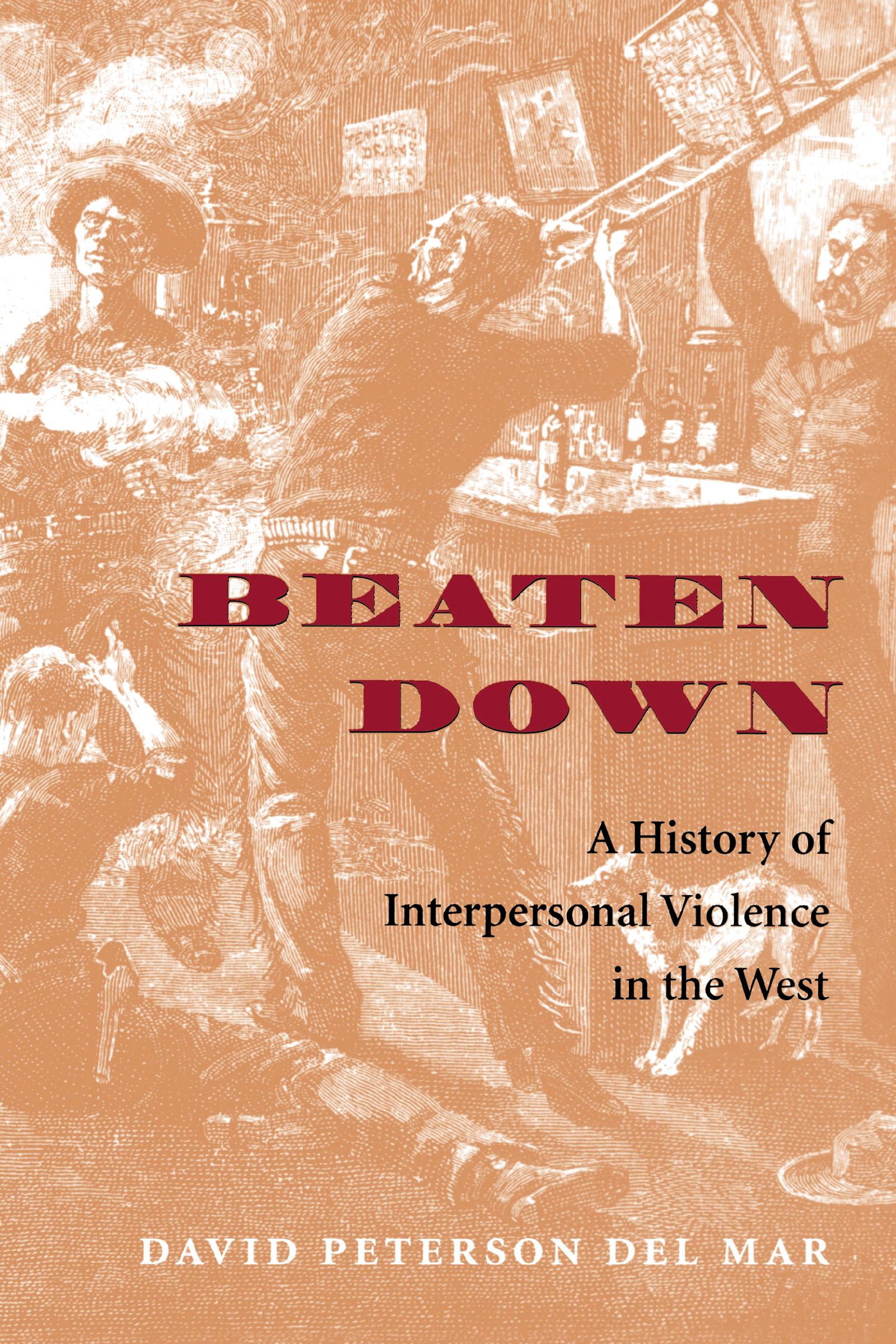
The word “violence” conjures up images of terrorism, bombings, and lynchings. Beaten Down is concerned with more prosaic acts of physical force—a husband slapping his wife, a parent taking a birch branch to a child, a pair of drunken friends squaring off to establish who was the “better man.” David Peterson del Mar accounts for the social relations of power that lie behind this intimate form of violence, this “white noise” that has always been with us, humming quietly between more explosive acts of violence.
Broad in its chronological and cultural sweep, Beaten Down examines interpersonal violence in Washington, Oregon, and British Columbia beginning with Native American cultures before colonization and continuing into the mid-twentieth century. It contrasts the disparate ways of practicing and punishing interpersonal violence on each side of the U.S.-Canadian border. Del Mar concludes that we cannot comprehend the causes and moral consequences of a violent act without considering larger social relations of power, whether between colonizers and original inhabitants, between spouses, between parents and children, or between and among different ethnic groups.
The author has drawn on a vast array of vivid sources, including newspaper accounts, autobiographies, novels, oral histories, historical and ethnographic publications, and hundreds of detailed court cases to account for not only the relative frequency of different forms of violence, but also the shifting definitions and perceptions of what constitutes violence. This is a thoughtful and probing account of how and why people have hit each other and the manner in which opinion makers and ordinary citizens have censured, defended, or celebrated such acts. Del Mar’s conclusions have important implications for an understanding of violence and perceptions of violence in contemporary society.
Before Memmo my notes were scattered across PDFs. Now a workspace pulls everything into one place — I see exactly what's still left to study.
Memmo's summaries are gold before exams. I don't have to re-read 800 pages two weeks before — just the important parts.
The AI chat has saved me the night before an exam more than once. I just keep asking until I get it — no waiting on a study group to reply.
The quizzes hit exactly what I need to know. Memmo tracks what I get stuck on — so I only practice what's worth it.
Flashcards with spaced repetition are magic. Memmo knows when I'm about to forget something and brings it back.
The AI podcasts are my favorite. I listen on my way to school and get a recap without sitting at a computer.

Handbok i kvalitativa metoder
281 kr

Hållbar utveckling: en introduktion för ingenjörer och andra problemlösare
334 kr

Brymans Samhällsvetenskapliga metoder
390 kr

Projektledning
491 kr

Den orättvisa hälsan: om socioekonomiska skillnader i hälsa och livslängd
326 kr

Vetenskapsteori för nybörjare
196 kr

Organizational Leadership
429 kr

På väg mot läraryrket
172 kr

Det sociala livet i skolan: Socialpsykologiska perspektiv
253 kr

Betygsättningens didaktik
151 kr

Personality
402 kr

Studying Leadership
404 kr

Managing Innovation
477 kr

Introduktion till samhällsvetenskaplig metod
347 kr

The Psychology of Sex and Gender
698 kr

Evidens och kunskap för socialt arbete
207 kr

Introduction to Leadership
605 kr