
Before Memmo my notes were scattered across PDFs. Now a workspace pulls everything into one place — I see exactly what's still left to study.
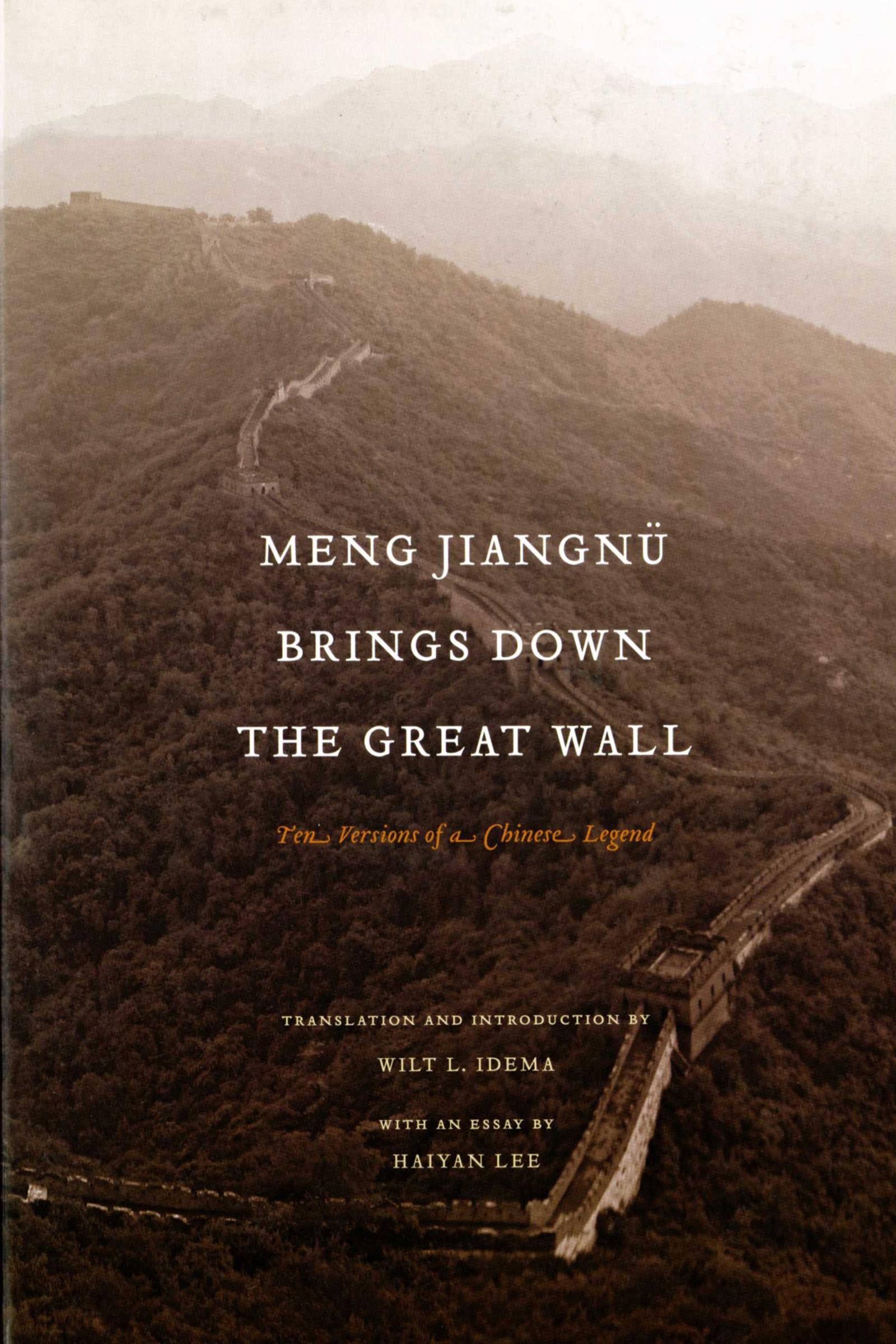
Meng Jiangnü Brings Down the Great Wall brings together ten versions of a popular Chinese legend that has intrigued readers and listeners for hundreds of years. Elements of the story date back to the early centuries B.C.E. and are an intrinsic part of Chinese literary history. Major themes and subtle nuances of the legend are illuminated here by Wilt L. Idema's new translations and pairings.
In this classic story, a young woman named Meng Jiang makes a long, solitary journey to deliver winter clothes to her husband, a drafted laborer on the grandiose Great Wall construction project of the notorious First Emperor of the Qin dynasty (BCE 221-208). But her travels end in tragedy when, upon arrival, she learns that her husband has died under the harsh working conditions and been entombed in the wall. Her tears of grief cause the wall to collapse and expose his bones, which she collects for proper burial. In some versions, she tricks the lecherous emperor, who wants to marry her, into providing a stately funeral for her husband and then takes her own life.
The versions presented here are ballads and chantefables (alternating chanted verse and recited prose), five from urban printed texts from the late Imperial and early Republican periods, and five from oral performances and partially reconstructed texts collected in rural areas in recent decades. They represent a wide range of genres, regional styles, dates, and content. From one version to another, different elements of the story--the circumstances of Meng Jiangnu's marriage, her relationship with her parents-in-law, the journey to the wall, her grief, her defiance of the emperor--are elaborated upon, downplayed, or left out altogether depending on the particular moral lessons that tale authors wished to impart.
Idema brings together his considerable translation skills and broad knowledge of Chinese literature to present an assortment of tales and insightful commentary that will be a gold mine of information for scholars in a number of disciplines. Haiyan Lee's essay discusses the appeal of the Meng Jiangnü story to twentieth-century literary reformers, and the interpretations they imposed on the material they collected.
Before Memmo my notes were scattered across PDFs. Now a workspace pulls everything into one place — I see exactly what's still left to study.
Memmo's summaries are gold before exams. I don't have to re-read 800 pages two weeks before — just the important parts.
The AI chat has saved me the night before an exam more than once. I just keep asking until I get it — no waiting on a study group to reply.
The quizzes hit exactly what I need to know. Memmo tracks what I get stuck on — so I only practice what's worth it.
Flashcards with spaced repetition are magic. Memmo knows when I'm about to forget something and brings it back.
The AI podcasts are my favorite. I listen on my way to school and get a recap without sitting at a computer.

Handbok i kvalitativa metoder
281 kr

Hållbar utveckling: en introduktion för ingenjörer och andra problemlösare
334 kr

Brymans Samhällsvetenskapliga metoder
390 kr

Projektledning
491 kr

Den orättvisa hälsan: om socioekonomiska skillnader i hälsa och livslängd
326 kr

Vetenskapsteori för nybörjare
196 kr

Organizational Leadership
429 kr

På väg mot läraryrket
172 kr

Det sociala livet i skolan: Socialpsykologiska perspektiv
253 kr

Betygsättningens didaktik
151 kr

Personality
402 kr

Studying Leadership
404 kr

Managing Innovation
477 kr

Introduktion till samhällsvetenskaplig metod
347 kr

The Psychology of Sex and Gender
698 kr

Evidens och kunskap för socialt arbete
207 kr

Introduction to Leadership
605 kr