
Before Memmo my notes were scattered across PDFs. Now a workspace pulls everything into one place — I see exactly what's still left to study.
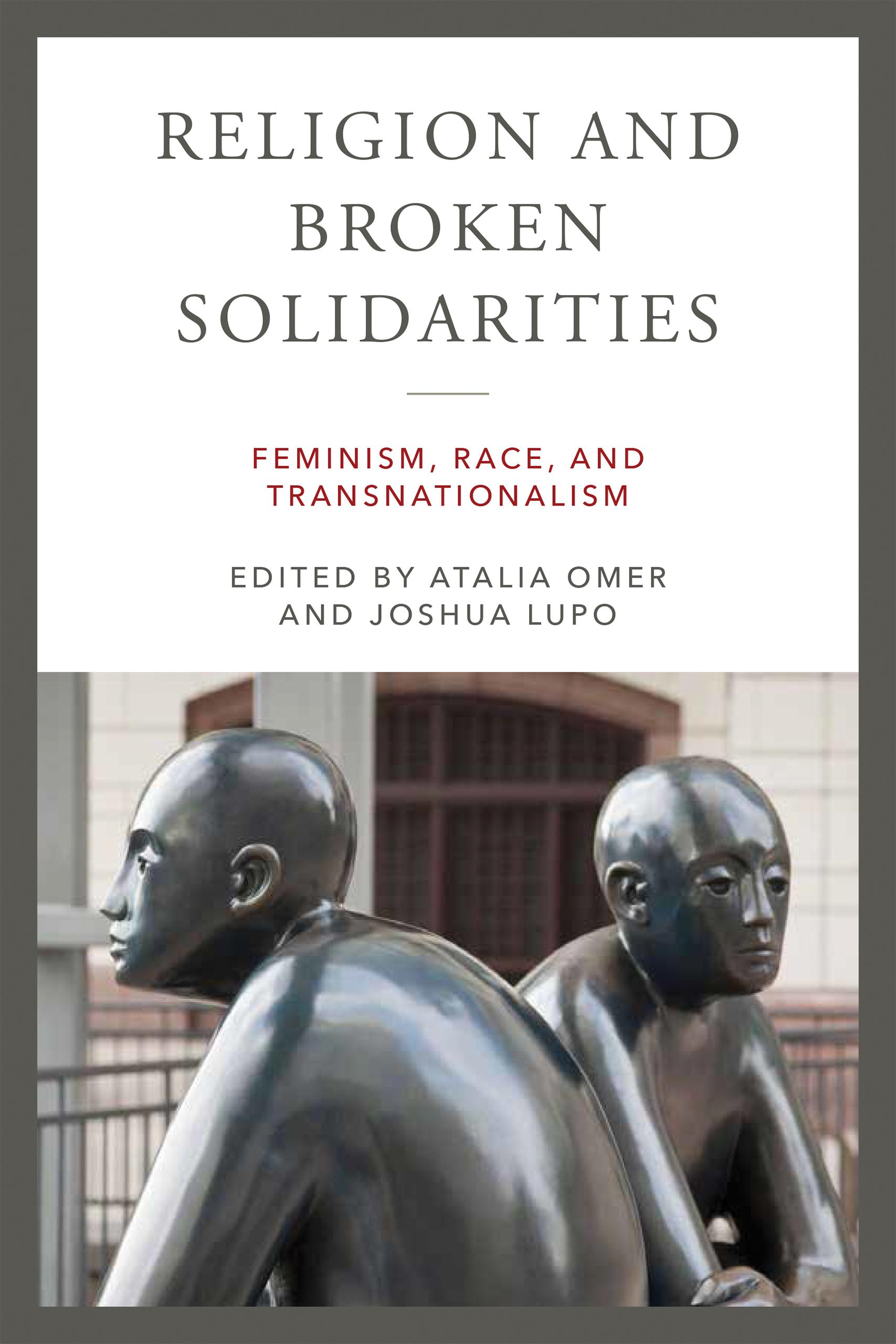
The contributors to this original volume provide a new and nuanced approach to studying how discourses of religion shape public domains in sites of political contestation and “broken solidarities.”
Our public discourse is saturated with intractable debates about religion, race, gender, and nationalism. Examples range from Muslim women and headscarves to Palestine/Israel and to global anti-Black racism, along with other pertinent issues. We need fresh thinking to navigate the questions that these debates raise for social justice and solidarity across lines of difference. In Religion and Broken Solidarities, the contributors provide powerful reflections and wisdom to guide how we can approach these questions with deep ethical commitments, intersectional sensibilities, and intellectual rigor.
Religion and Broken Solidarities traces the role of religious discourse in unrealized moments of solidarity between marginalized groups who ostensibly share similar aims. Religion, the contributors contend, cannot be separated from national, racial, gendered, and other ways of belonging. These modes of belonging make it difficult for different minoritized groups to see how their struggles might benefit from engagement with one another. The four chapters, which interpret historical and contemporary events with a sharp and critical lens, examine accusations of antisemitism and anti-Muslim racism in the Women’s March in Washington, DC; the failure of feminists in Iran and Turkey to realize a common cause because of nationalist discourse concerning religiosity and secularity; Black Catholics seeking to overcome the problems of modernity in the West; and the disjunction between the Palestinian and Mizrahi cause in Palestine/Israel. Together these analyses show that overcoming constraints to solidarity requires alternative imaginaries to that of the modern nation-state.
Contributors: Atalia Omer, Joshua Lupo, Perin E. Gürel, Juliane Hammer, Ruth Carmi, Brenna Moore, and Melani McAlister.
Before Memmo my notes were scattered across PDFs. Now a workspace pulls everything into one place — I see exactly what's still left to study.
Memmo's summaries are gold before exams. I don't have to re-read 800 pages two weeks before — just the important parts.
The AI chat has saved me the night before an exam more than once. I just keep asking until I get it — no waiting on a study group to reply.
The quizzes hit exactly what I need to know. Memmo tracks what I get stuck on — so I only practice what's worth it.
Flashcards with spaced repetition are magic. Memmo knows when I'm about to forget something and brings it back.
The AI podcasts are my favorite. I listen on my way to school and get a recap without sitting at a computer.

Handbok i kvalitativa metoder
281 kr

Hållbar utveckling: en introduktion för ingenjörer och andra problemlösare
334 kr

Brymans Samhällsvetenskapliga metoder
390 kr

Projektledning
491 kr

Den orättvisa hälsan: om socioekonomiska skillnader i hälsa och livslängd
326 kr

Vetenskapsteori för nybörjare
196 kr

Organizational Leadership
429 kr

På väg mot läraryrket
172 kr

Det sociala livet i skolan: Socialpsykologiska perspektiv
253 kr

Betygsättningens didaktik
151 kr

Personality
402 kr

Studying Leadership
404 kr

Managing Innovation
477 kr

Introduktion till samhällsvetenskaplig metod
347 kr

The Psychology of Sex and Gender
698 kr

Evidens och kunskap för socialt arbete
207 kr

Introduction to Leadership
605 kr