
Before Memmo my notes were scattered across PDFs. Now a workspace pulls everything into one place — I see exactly what's still left to study.
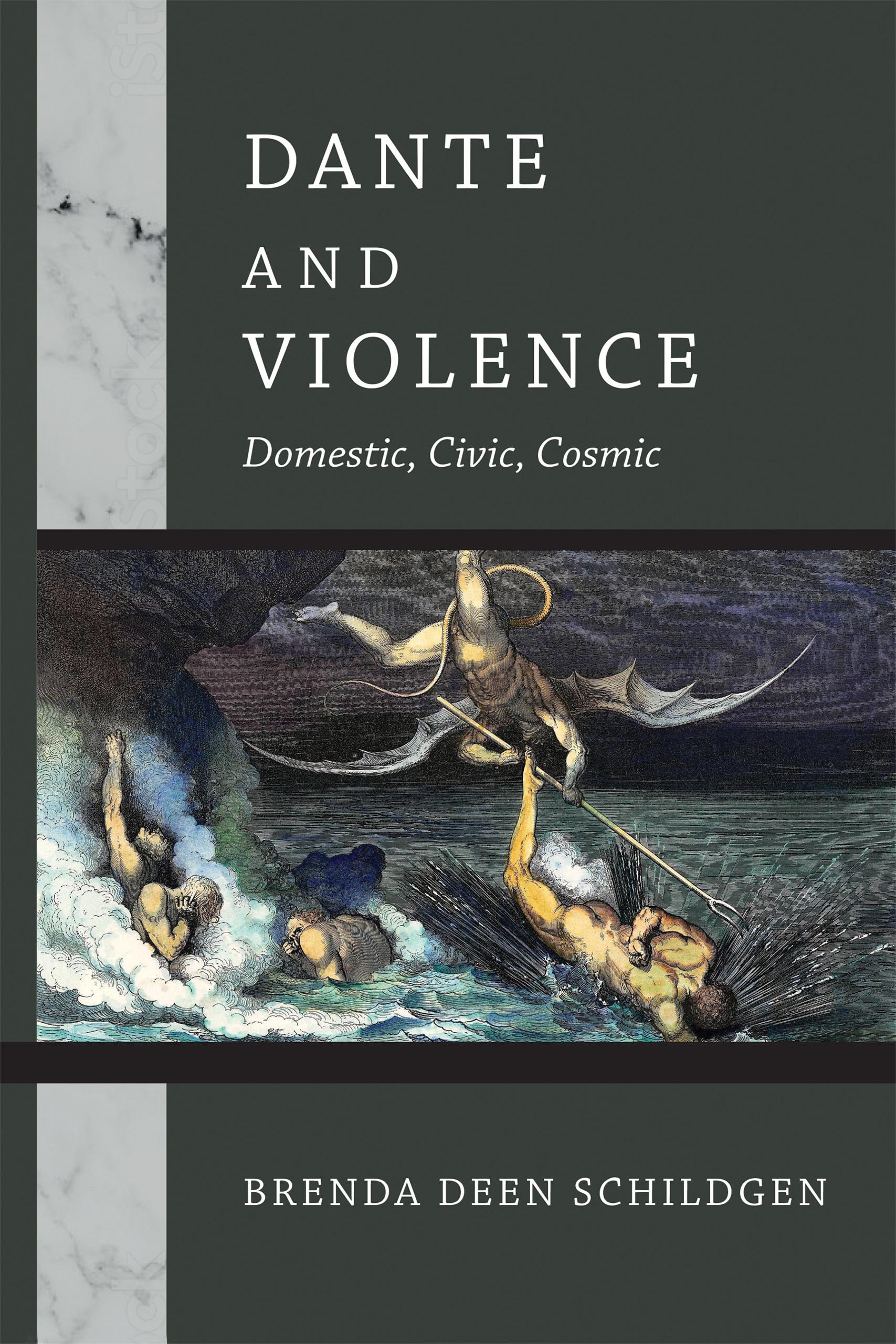
This study explores how Dante represents violence in the Comedy and reveals the connection between contemporary private and public violence and civic and canon law violations.
Although a number of articles have addressed particular aspects of violence in discrete parts of Dante’s oeuvre, a systematic treatment of violence in the Commedia is lacking. This ambitious overview of violence in Dante’s literary works and his world examines cases of violence in the domestic, communal, and cosmic spheres while taking into account medieval legal approaches to rights and human freedom that resonate with the economy of justice developed in the Commedia. Exploring medieval concerns with violence both in the home and in just war theory, as well as the Christian theology of the Incarnation and Redemption, Brenda Deen Schildgen examines violence in connection to the natural rights theory expounded by canon lawyers beginning in the twelfth century. Partially due to the increased attention to its Greco-Roman cultural legacy, the twelfth-century Renaissance produced a number of startling intellectual developments, including the emergence of codified canon law and a renewed interest in civil law based on Justinian’s sixth-century Corpus juris civilis. Schildgen argues that, in addition to “divine justice,” Dante explores how the human system of justice, as exemplified in both canon and civil law and based on natural law and legal concepts of human freedom, was consistently violated in the society of his era. At the same time, the redemptive violence of the Crucifixion, understood by Dante as the free act of God in choosing the Incarnation and death on the cross, provides the model for self-sacrifice for the communal good. This study, primarily focused on Dante’s representation of his contemporary reality, demonstrates that the punishments and rewards in Dante’s heaven and hell, while ostensibly a staging of his vision of eternal justice, may in fact be a direct appeal to his readers to recognize the crimes that pervade their own world.
Dante and Violence will have a wide readership, including students and scholars of Dante, medieval culture, violence, and peace studies.
Before Memmo my notes were scattered across PDFs. Now a workspace pulls everything into one place — I see exactly what's still left to study.
Memmo's summaries are gold before exams. I don't have to re-read 800 pages two weeks before — just the important parts.
The AI chat has saved me the night before an exam more than once. I just keep asking until I get it — no waiting on a study group to reply.
The quizzes hit exactly what I need to know. Memmo tracks what I get stuck on — so I only practice what's worth it.
Flashcards with spaced repetition are magic. Memmo knows when I'm about to forget something and brings it back.
The AI podcasts are my favorite. I listen on my way to school and get a recap without sitting at a computer.

Handbok i kvalitativa metoder
281 kr

Hållbar utveckling: en introduktion för ingenjörer och andra problemlösare
334 kr

Brymans Samhällsvetenskapliga metoder
390 kr

Projektledning
491 kr

Den orättvisa hälsan: om socioekonomiska skillnader i hälsa och livslängd
326 kr

Vetenskapsteori för nybörjare
196 kr

Organizational Leadership
429 kr

På väg mot läraryrket
172 kr

Det sociala livet i skolan: Socialpsykologiska perspektiv
253 kr

Betygsättningens didaktik
151 kr

Personality
402 kr

Studying Leadership
404 kr

Managing Innovation
477 kr

Introduktion till samhällsvetenskaplig metod
347 kr

The Psychology of Sex and Gender
698 kr

Evidens och kunskap för socialt arbete
207 kr

Introduction to Leadership
605 kr