
Before Memmo my notes were scattered across PDFs. Now a workspace pulls everything into one place — I see exactly what's still left to study.
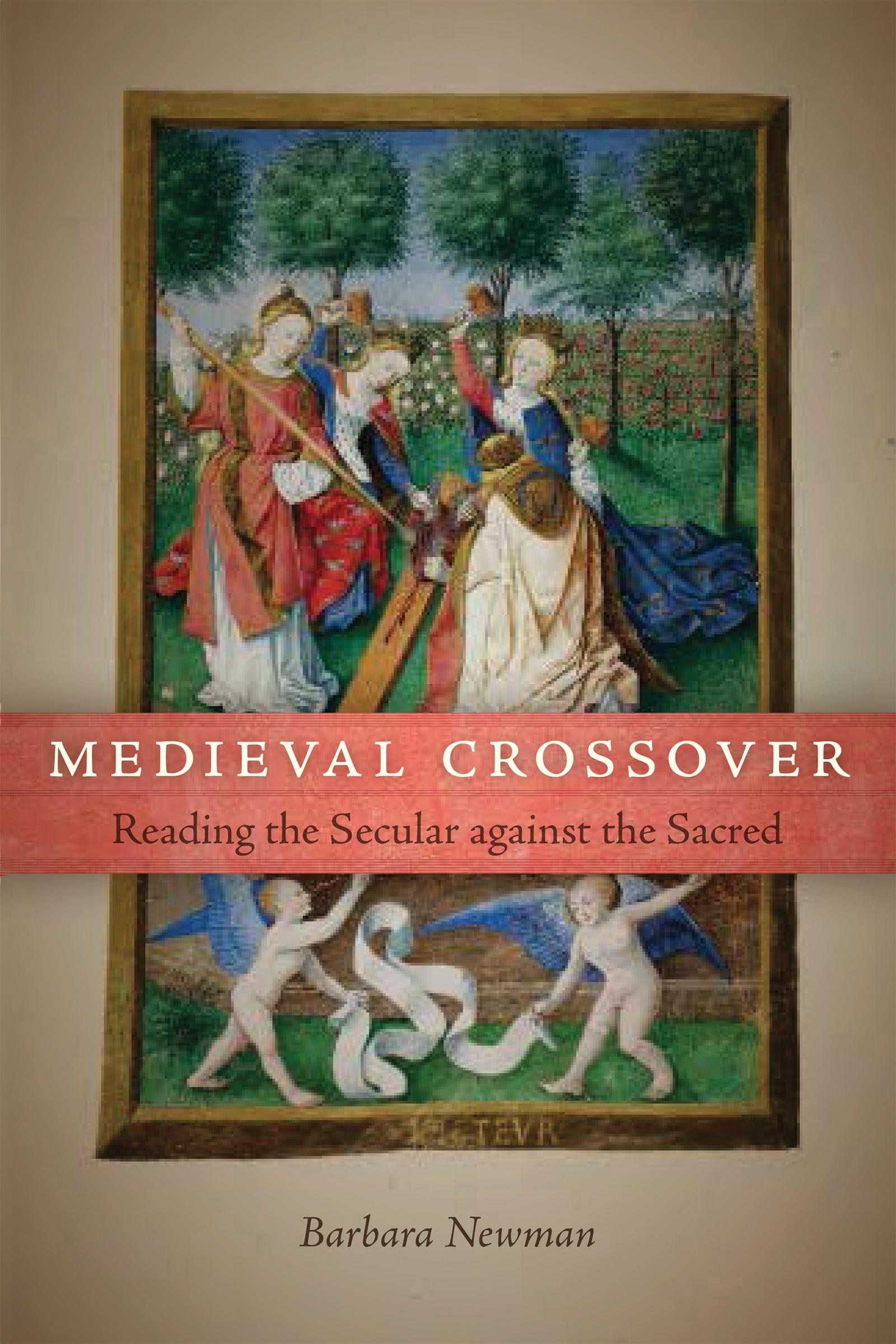
The sacred and the secular in medieval literature have too often been perceived as opposites, or else relegated to separate but unequal spheres. In Medieval Crossover: Reading the Secular against the Sacred, Barbara Newman offers a new approach to the many ways that sacred and secular interact in medieval literature, arguing that (in contrast to our own cultural situation) the sacred was the normative, unmarked default category against which the secular always had to define itself and establish its niche. Newman refers to this dialectical relationship as "crossover"—which is not a genre in itself, but a mode of interaction, an openness to the meeting or even merger of sacred and secular in a wide variety of forms. Newman sketches a few of the principles that shape their interaction: the hermeneutics of "both/and," the principle of double judgment, the confluence of pagan material and Christian meaning in Arthurian romance, the rule of convergent idealism in hagiographic romance, and the double-edged sword in parody.
Medieval Crossover explores a wealth of case studies in French, English, and Latin texts that concentrate on instances of paradox, collision, and convergence. Newman convincingly and with great clarity demonstrates the widespread applicability of the crossover concept as an analytical tool, examining some very disparate works. These include French and English romances about Lancelot and the Grail; the mystical writing of Marguerite Porete (placed in the context of lay spirituality, lyric traditions, and the Romance of the Rose); multiple examples of parody (sexually obscene, shockingly anti-Semitic, or cleverly litigious); and René of Anjou's two allegorical dream visions. Some of these texts are scarcely known to medievalists; others are rarely studied together. Newman's originality in her choice of these primary works will inspire new questions and set in motion new fields of exploration for medievalists working in a large variety of disciplines, including literature, religious studies, history, and cultural studies.
Before Memmo my notes were scattered across PDFs. Now a workspace pulls everything into one place — I see exactly what's still left to study.
Memmo's summaries are gold before exams. I don't have to re-read 800 pages two weeks before — just the important parts.
The AI chat has saved me the night before an exam more than once. I just keep asking until I get it — no waiting on a study group to reply.
The quizzes hit exactly what I need to know. Memmo tracks what I get stuck on — so I only practice what's worth it.
Flashcards with spaced repetition are magic. Memmo knows when I'm about to forget something and brings it back.
The AI podcasts are my favorite. I listen on my way to school and get a recap without sitting at a computer.

Handbok i kvalitativa metoder
281 kr

Hållbar utveckling: en introduktion för ingenjörer och andra problemlösare
334 kr

Brymans Samhällsvetenskapliga metoder
390 kr

Projektledning
491 kr

Den orättvisa hälsan: om socioekonomiska skillnader i hälsa och livslängd
326 kr

Organizational Leadership
429 kr

Vetenskapsteori för nybörjare
196 kr

På väg mot läraryrket
172 kr

Det sociala livet i skolan: Socialpsykologiska perspektiv
253 kr

Betygsättningens didaktik
151 kr

Personality
402 kr

Studying Leadership
404 kr

Managing Innovation
477 kr

Introduktion till samhällsvetenskaplig metod
347 kr

The Psychology of Sex and Gender
698 kr

Evidens och kunskap för socialt arbete
207 kr

Introduction to Leadership
605 kr