
Before Memmo my notes were scattered across PDFs. Now a workspace pulls everything into one place — I see exactly what's still left to study.
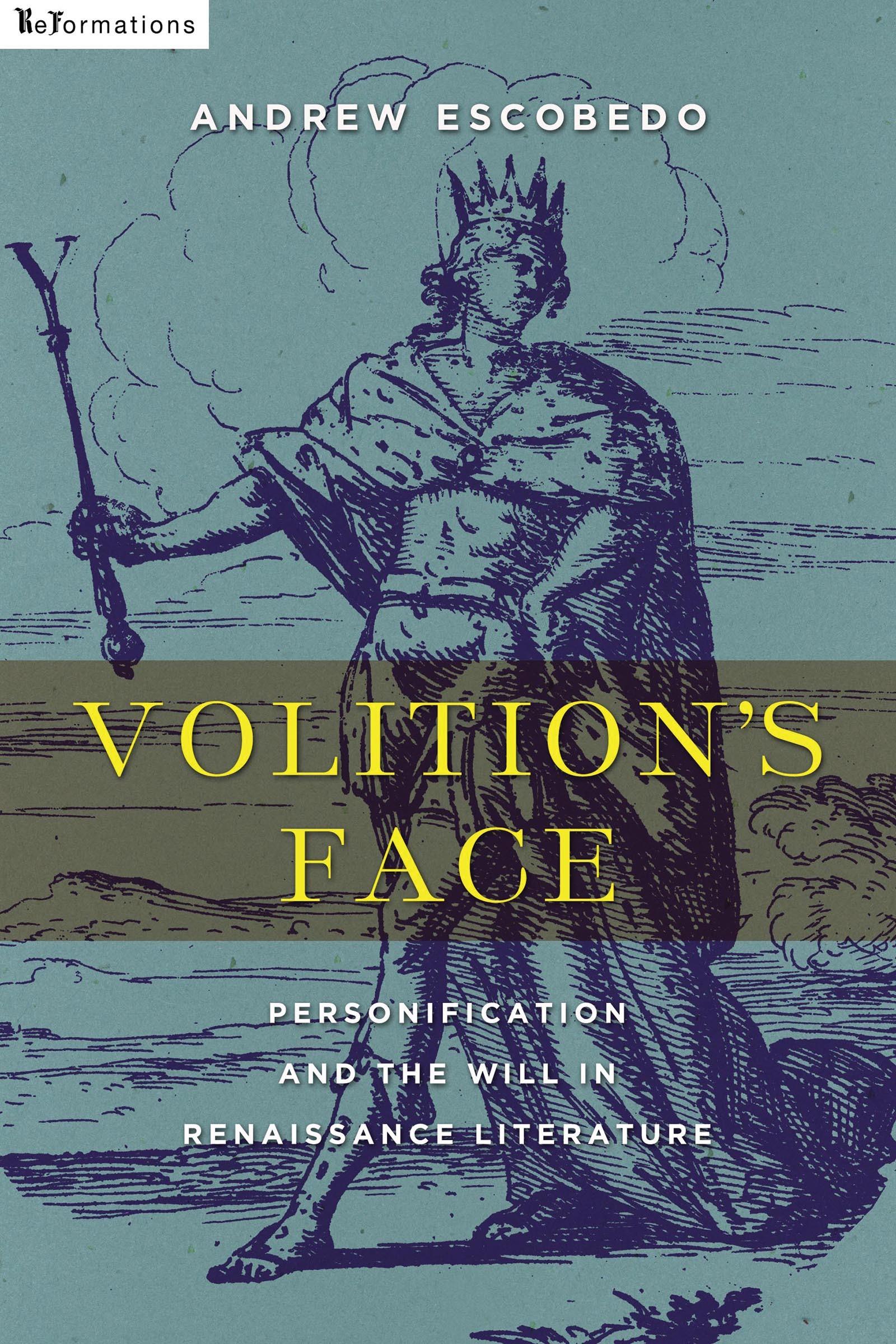
Modern readers and writers find it natural to contrast the agency of realistic fictional characters to the constrained range of action typical of literary personifications. Yet no commentator before the eighteenth century suggests that prosopopoeia signals a form of reduced agency. Andrew Escobedo argues that premodern writers, including Spenser, Marlowe, and Milton, understood personification as a literary expression of will, an essentially energetic figure that depicted passion or concept transforming into action. As the will emerged as an isolatable faculty in the Christian Middle Ages, it was seen not only as the instrument of human agency but also as perversely independent of other human capacities, for example, intellect and moral character. Renaissance accounts of the will conceived of volition both as the means to self-creation and the faculty by which we lose control of ourselves. After offering a brief history of the will that isolates the distinctive features of the faculty in medieval and Renaissance thought, Escobedo makes his case through an examination of several personified figures in Renaissance literature: Conscience in the Tudor interludes, Despair in Doctor Faustus and book I of The Faerie Queen, Love in books III and IV of The Faerie Queen, and Sin in Paradise Lost. These examples demonstrate that literary personification did not amount to a dim reflection of “realistic” fictional character, but rather that it provided a literary means to explore the numerous conundrums posed by the premodern notion of the human will. This book will be of great interest to faculty and graduate students interested in medieval studies and Renaissance literature.
Before Memmo my notes were scattered across PDFs. Now a workspace pulls everything into one place — I see exactly what's still left to study.
Memmo's summaries are gold before exams. I don't have to re-read 800 pages two weeks before — just the important parts.
The AI chat has saved me the night before an exam more than once. I just keep asking until I get it — no waiting on a study group to reply.
The quizzes hit exactly what I need to know. Memmo tracks what I get stuck on — so I only practice what's worth it.
Flashcards with spaced repetition are magic. Memmo knows when I'm about to forget something and brings it back.
The AI podcasts are my favorite. I listen on my way to school and get a recap without sitting at a computer.

Handbok i kvalitativa metoder
281 kr

Hållbar utveckling: en introduktion för ingenjörer och andra problemlösare
334 kr

Brymans Samhällsvetenskapliga metoder
390 kr

Projektledning
491 kr

Den orättvisa hälsan: om socioekonomiska skillnader i hälsa och livslängd
326 kr

Vetenskapsteori för nybörjare
196 kr

Organizational Leadership
429 kr

På väg mot läraryrket
172 kr

Det sociala livet i skolan: Socialpsykologiska perspektiv
253 kr

Betygsättningens didaktik
151 kr

Personality
402 kr

Studying Leadership
404 kr

Managing Innovation
477 kr

Introduktion till samhällsvetenskaplig metod
347 kr

The Psychology of Sex and Gender
698 kr

Evidens och kunskap för socialt arbete
207 kr

Introduction to Leadership
605 kr