
Before Memmo my notes were scattered across PDFs. Now a workspace pulls everything into one place — I see exactly what's still left to study.
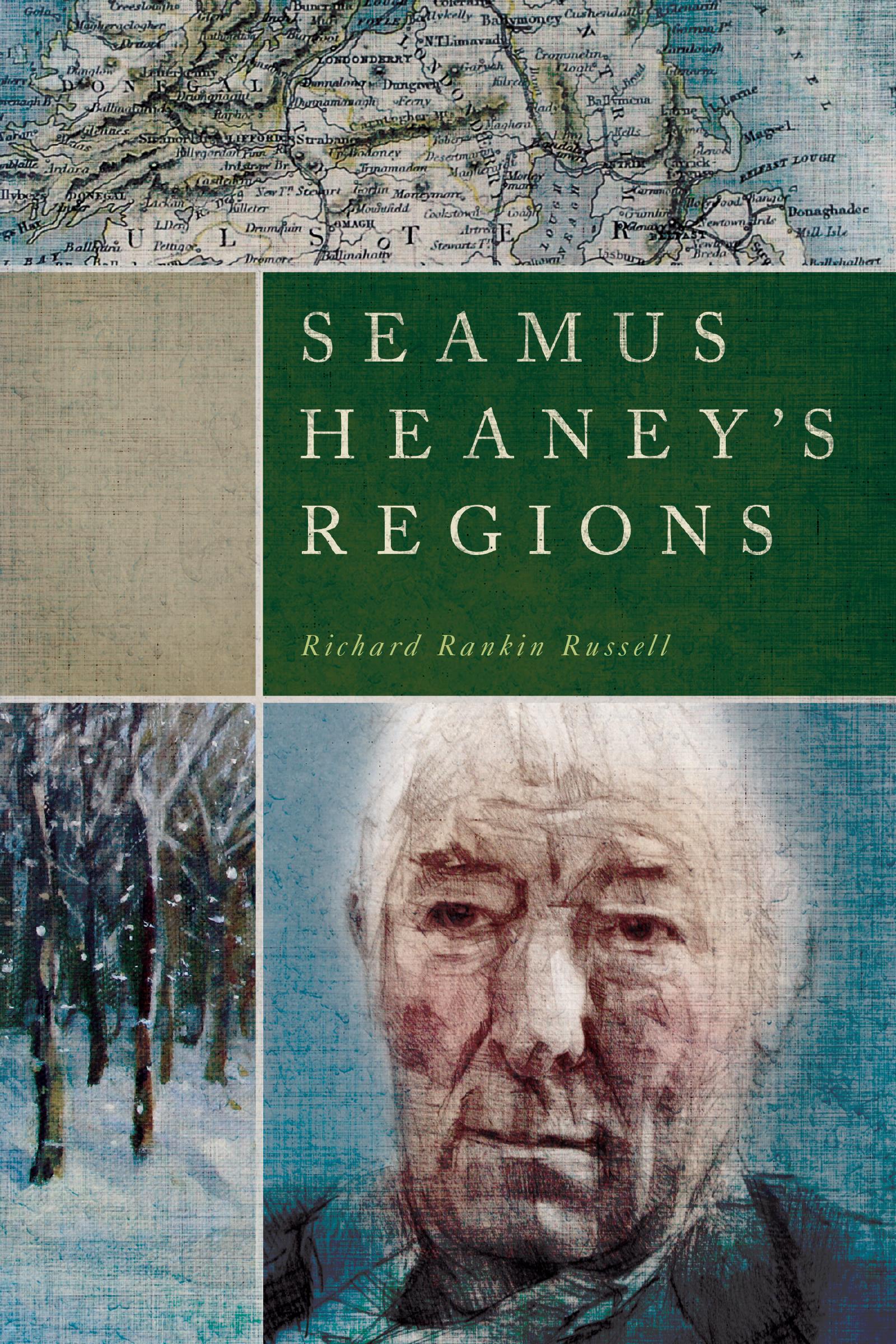
Regional voices from England, Ireland, and Scotland inspired Seamus Heaney, the 1995 Nobel prize-winner, to become a poet, and his home region of Northern Ireland provided the subject matter for much of his poetry. In his work, Heaney explored, recorded, and preserved both the disappearing agrarian life of his origins and the dramatic rise of sectarianism and the subsequent outbreak of the Northern Irish “Troubles” beginning in the late 1960s. At the same time, Heaney consistently imagined a new region of Northern Ireland where the conflicts that have long beset it and, by extension, the relationship between Ireland and the United Kingdom might be synthesized and resolved. Finally, there is a third region Heaney committed himself to explore and map—the spirit region, that world beyond our ken.
In Seamus Heaney’s Regions, Richard Rankin Russell argues that Heaney’s regions—the first, geographic, historical, political, cultural, linguistic; the second, a future where peace, even reconciliation, might one day flourish; the third, the life beyond this one—offer the best entrance into and a unified understanding of Heaney’s body of work in poetry, prose, translations, and drama. As Russell shows, Heaney believed in the power of ideas—and the texts representing them—to begin resolving historical divisions. For Russell, Heaney’s regionalist poetry contains a “Hegelian synthesis” view of history that imagines potential resolutions to the conflicts that have plagued Ireland and Northern Ireland for centuries. Drawing on extensive archival and primary material by the poet, Seamus Heaney’s Regions examines Heaney’s work from before his first published poetry volume, Death of a Naturalist in 1966, to his most recent volume, the elegiac Human Chain in 2010, to provide the most comprehensive treatment of the poet’s work to date.
Before Memmo my notes were scattered across PDFs. Now a workspace pulls everything into one place — I see exactly what's still left to study.
Memmo's summaries are gold before exams. I don't have to re-read 800 pages two weeks before — just the important parts.
The AI chat has saved me the night before an exam more than once. I just keep asking until I get it — no waiting on a study group to reply.
The quizzes hit exactly what I need to know. Memmo tracks what I get stuck on — so I only practice what's worth it.
Flashcards with spaced repetition are magic. Memmo knows when I'm about to forget something and brings it back.
The AI podcasts are my favorite. I listen on my way to school and get a recap without sitting at a computer.

Handbok i kvalitativa metoder
281 kr

Hållbar utveckling: en introduktion för ingenjörer och andra problemlösare
334 kr

Brymans Samhällsvetenskapliga metoder
390 kr

Projektledning
491 kr

Den orättvisa hälsan: om socioekonomiska skillnader i hälsa och livslängd
326 kr

Vetenskapsteori för nybörjare
196 kr

Organizational Leadership
429 kr

På väg mot läraryrket
172 kr

Det sociala livet i skolan: Socialpsykologiska perspektiv
253 kr

Betygsättningens didaktik
151 kr

Personality
402 kr

Studying Leadership
404 kr

Managing Innovation
477 kr

Introduktion till samhällsvetenskaplig metod
347 kr

The Psychology of Sex and Gender
698 kr

Evidens och kunskap för socialt arbete
207 kr

Introduction to Leadership
605 kr