
Before Memmo my notes were scattered across PDFs. Now a workspace pulls everything into one place — I see exactly what's still left to study.
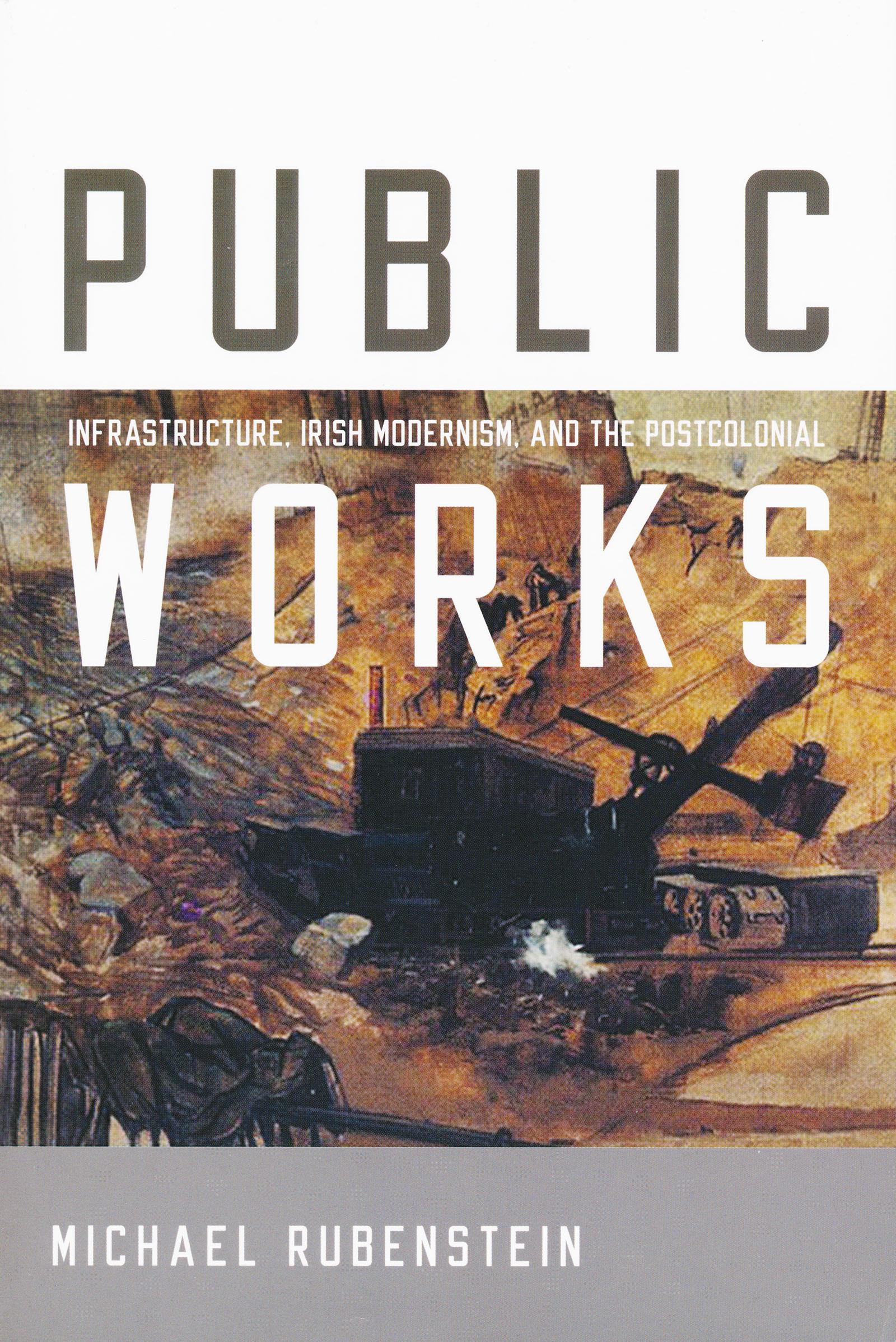
In Public Works: Infrastructure, Irish Modernism, and the Postcolonial, Michael Rubenstein documents the relationship between Irish modernism and a restricted segment of the material culture of the modern state known colloquially as “public utilities” or “water, gas, and electricity.” The water tap, the toilet, the gas jet, and the electrical light switch: these are all sites, in Irish modernism, of unexpected literary and linguistic intensities that burst through the routines of everyday life, defamiliarizing and reconceptualizing that which we might not normally consider worthy of literary attention. Such public utilities—material networks of power and provision, submission and entitlement—are taken up in Irish modernism not only as a nexus of anxieties about modern life, but also as a focal point for the hopes held out for the postcolonial Irish Free State. Public utilities figure a normative and utopian standard of modernity and modernization; they embody in Irish modernism and in other postcolonial literatures an ideal for the postcolonial state; and they figure a continuity between the material networks of the modern state and the abstract ideals of revolutionary republicanism (liberty, equality, and brotherhood). They define a new territory of contestation within the discourses of civil and human rights. Moreover, public utilities influence the formal qualities of both Irish modernist and postcolonial literature.
In analyses of literary works by James Joyce, Flann O’Brien, Elizabeth Bowen, Denis Johnston, Samuel Beckett, and Patrick Chamoiseau, Rubenstein asks us to think about the industrial networks of the twentieth century alongside self-consciously “national” literary works and to understand them as different but inherently related forms of public works. In doing so his book maps thematic and formal relationships between national infrastructure and national literature, revealing an intimate dialogue between the nation’s literary arts and the state’s engineering cultures.
Before Memmo my notes were scattered across PDFs. Now a workspace pulls everything into one place — I see exactly what's still left to study.
Memmo's summaries are gold before exams. I don't have to re-read 800 pages two weeks before — just the important parts.
The AI chat has saved me the night before an exam more than once. I just keep asking until I get it — no waiting on a study group to reply.
The quizzes hit exactly what I need to know. Memmo tracks what I get stuck on — so I only practice what's worth it.
Flashcards with spaced repetition are magic. Memmo knows when I'm about to forget something and brings it back.
The AI podcasts are my favorite. I listen on my way to school and get a recap without sitting at a computer.

Handbok i kvalitativa metoder
281 kr

Hållbar utveckling: en introduktion för ingenjörer och andra problemlösare
334 kr

Brymans Samhällsvetenskapliga metoder
390 kr

Projektledning
491 kr

Den orättvisa hälsan: om socioekonomiska skillnader i hälsa och livslängd
326 kr

Organizational Leadership
429 kr

Vetenskapsteori för nybörjare
196 kr

På väg mot läraryrket
172 kr

Det sociala livet i skolan: Socialpsykologiska perspektiv
253 kr

Betygsättningens didaktik
151 kr

Personality
402 kr

Studying Leadership
404 kr

Managing Innovation
477 kr

Introduktion till samhällsvetenskaplig metod
347 kr

The Psychology of Sex and Gender
698 kr

Evidens och kunskap för socialt arbete
207 kr

Introduction to Leadership
605 kr