
Before Memmo my notes were scattered across PDFs. Now a workspace pulls everything into one place — I see exactly what's still left to study.
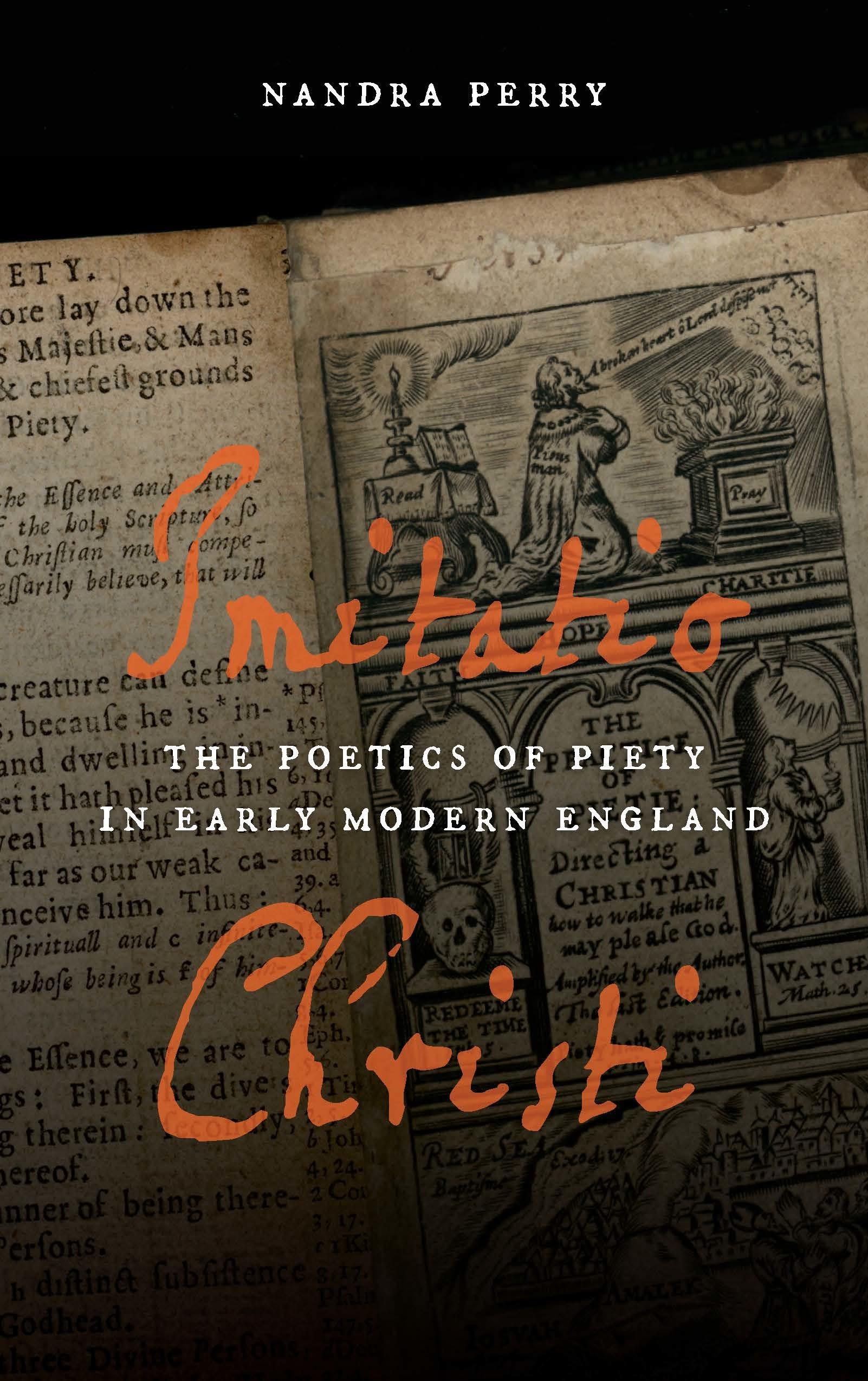
In Imitatio Christi: The Poetics of Piety in Early Modern England, Nandra Perry explores the relationship of the traditional devotional paradigm of imitatio Christi to the theory and practice of literary imitation in early modern England. While imitation has long been recognized as a central feature of the period’s pedagogy and poetics, the devotional practice of imitating Christ’s life and Passion has been historically regarded as a minor element in English Protestant piety. Perry reconsiders the role of the imitatio Christi not only within English devotional culture but within the broader culture of literary imitation. She traces continuities and discontinuities between sacred and secular notions of proper imitation, showing how imitation worked in both contexts to address anxieties, widespread after the Protestant Reformation, about the reliability of “fallen” human language and the epistemological value of the body and the material world.
The figure of Sir Philip Sidney—Elizabethan England’s premier defender of poetry and internationally recognized paragon of Christian knighthood—functions as a nexus for Perry’s treatment of a wide variety of contemporary literary and religious genres, all of them concerned in one way or another with the ethical and religious implications of imitation. Throughout the Elizabethan and early Stuart periods, the Sidney legacy was appropriated by men and women, Catholics and Protestants alike, making it an especially useful vehicle for tracing the complicated relationship of imitatio Christi to the various literary, confessional, and cultural contexts within and across which it often operated. Situating her project within a generously drawn version of the Sidney “circle” allows Perry to move freely across the boundaries that often delimit treatments of early modern English piety. Her book is a call for renewed attention to the imitation of Christ as a productive category of literary analysis, one that resists overly neat distinctions between Catholic and Protestant, sacred and secular, literary art and cultural artifact.
Before Memmo my notes were scattered across PDFs. Now a workspace pulls everything into one place — I see exactly what's still left to study.
Memmo's summaries are gold before exams. I don't have to re-read 800 pages two weeks before — just the important parts.
The AI chat has saved me the night before an exam more than once. I just keep asking until I get it — no waiting on a study group to reply.
The quizzes hit exactly what I need to know. Memmo tracks what I get stuck on — so I only practice what's worth it.
Flashcards with spaced repetition are magic. Memmo knows when I'm about to forget something and brings it back.
The AI podcasts are my favorite. I listen on my way to school and get a recap without sitting at a computer.

Handbok i kvalitativa metoder
281 kr

Hållbar utveckling: en introduktion för ingenjörer och andra problemlösare
334 kr

Brymans Samhällsvetenskapliga metoder
390 kr

Projektledning
491 kr

Den orättvisa hälsan: om socioekonomiska skillnader i hälsa och livslängd
326 kr

Vetenskapsteori för nybörjare
196 kr

Organizational Leadership
429 kr

På väg mot läraryrket
172 kr

Det sociala livet i skolan: Socialpsykologiska perspektiv
253 kr

Betygsättningens didaktik
151 kr

Personality
402 kr

Studying Leadership
404 kr

Managing Innovation
477 kr

Introduktion till samhällsvetenskaplig metod
347 kr

The Psychology of Sex and Gender
698 kr

Evidens och kunskap för socialt arbete
207 kr

Introduction to Leadership
605 kr