
Before Memmo my notes were scattered across PDFs. Now a workspace pulls everything into one place — I see exactly what's still left to study.
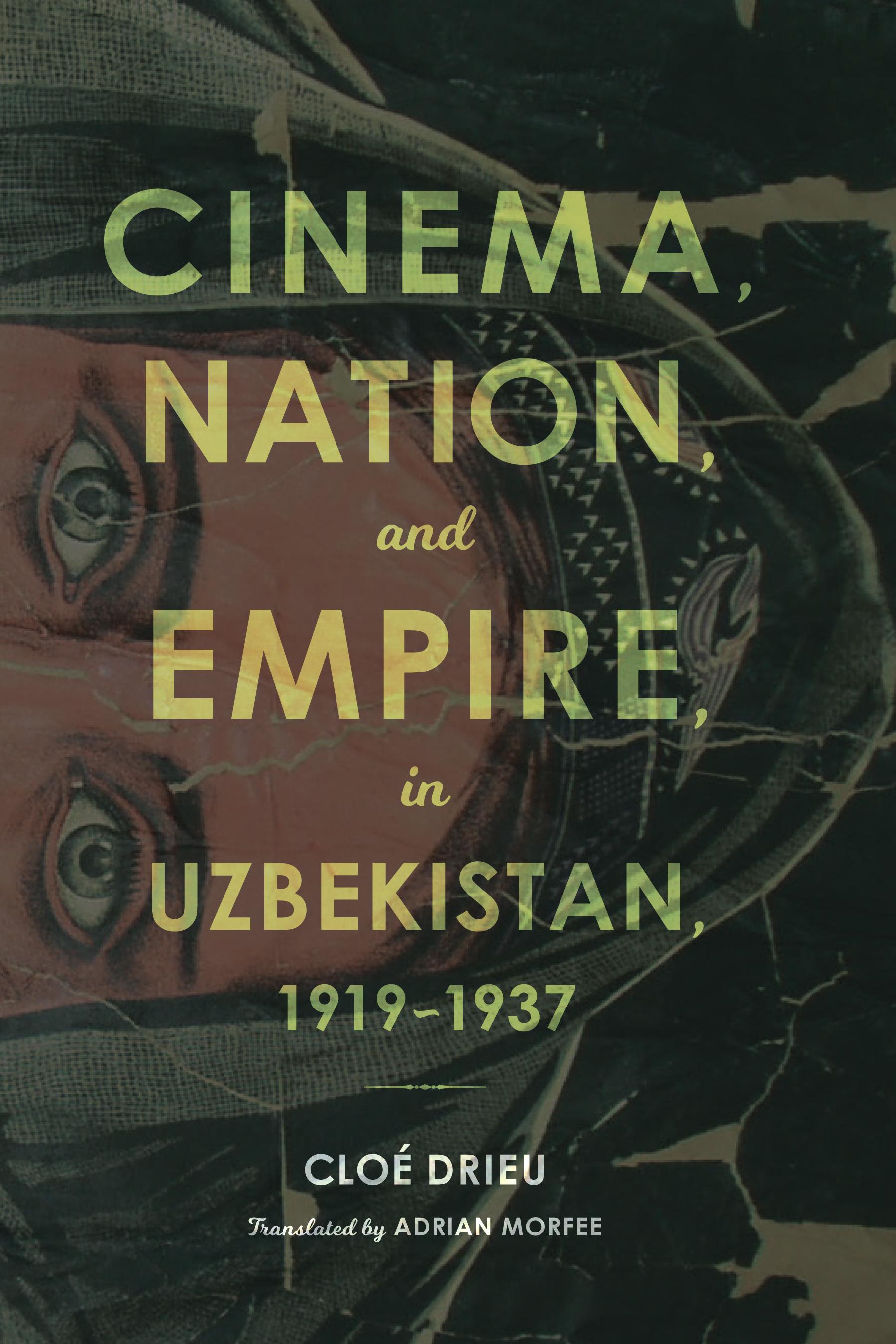
Between the founding of Soviet Uzbekistan in 1924 and the Stalinist Terror of the late 1930s, a nationalist cinema emerged in Uzbekistan giving rise to the first wave of national film production and an Uzbek cinematographic elite. In Cinema, Nation, and Empire in Uzbekistan Cloé Drieu uses Uzbek films as a lens to explore the creation of the Soviet State in Central Asia, starting from the collapse of the Russian Empire up through the eve of WWII. Drieu argues that cinema provides a perfect angle for viewing the complex history of domination, nationalism, and empire (here used to denote the centralization of power) within the Soviet sphere. By exploring all of film's dimensions as a socio-political phenomenon—including film production, film reception, and filmic discourse—Drieu reveals how nation and empire were built up as institutional realities and as imaginary constructs.
Based on archival research in the Uzbek and Russian State Archives and on in-depth analyses of 14 feature-length films, Drieu's work examines the lively debates within the totalitarian and so-called revisionist schools that invigorated Soviet historiography, positioning itself within contemporary discussions about the processes of state- and nation-building, and the emergence of nationalism more generally. Revised and expanded from the original French, Cinema, Nation, and Empire in Uzbekistan helps us to understand how Central Asia, formerly part of the Russian Empire, was decolonized, but later, in the run-up to the Stalinist period and repression of the late 1930s, suffered a new style of domination.
Before Memmo my notes were scattered across PDFs. Now a workspace pulls everything into one place — I see exactly what's still left to study.
Memmo's summaries are gold before exams. I don't have to re-read 800 pages two weeks before — just the important parts.
The AI chat has saved me the night before an exam more than once. I just keep asking until I get it — no waiting on a study group to reply.
The quizzes hit exactly what I need to know. Memmo tracks what I get stuck on — so I only practice what's worth it.
Flashcards with spaced repetition are magic. Memmo knows when I'm about to forget something and brings it back.
The AI podcasts are my favorite. I listen on my way to school and get a recap without sitting at a computer.

Handbok i kvalitativa metoder
281 kr

Hållbar utveckling: en introduktion för ingenjörer och andra problemlösare
334 kr

Brymans Samhällsvetenskapliga metoder
390 kr

Projektledning
491 kr

Den orättvisa hälsan: om socioekonomiska skillnader i hälsa och livslängd
326 kr

Organizational Leadership
429 kr

Vetenskapsteori för nybörjare
196 kr

På väg mot läraryrket
172 kr

Det sociala livet i skolan: Socialpsykologiska perspektiv
253 kr

Betygsättningens didaktik
151 kr

Personality
402 kr

Studying Leadership
404 kr

Managing Innovation
477 kr

Introduktion till samhällsvetenskaplig metod
347 kr

The Psychology of Sex and Gender
698 kr

Introduction to Leadership
605 kr

Evidens och kunskap för socialt arbete
207 kr