
Before Memmo my notes were scattered across PDFs. Now a workspace pulls everything into one place — I see exactly what's still left to study.
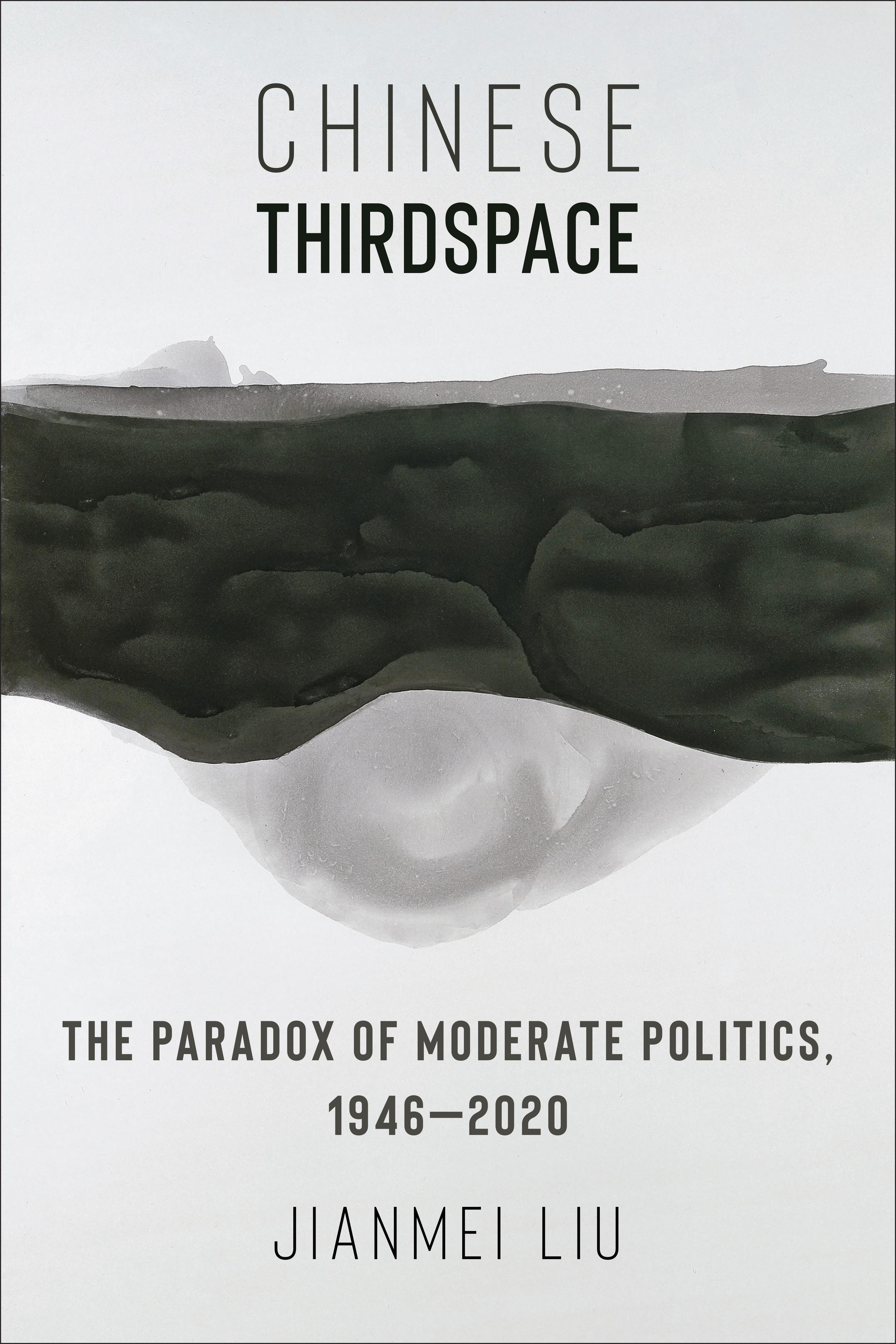
Chinese intellectuals have long chafed under the dominance of dualities—the sense that they are trapped between two diametrically opposed forces, with no choice but to pick one side or the other. Over the years, they have been driven into binary debates such as reform versus revolution, tradition versus modernity, the West versus the East, and left versus right. At the same time, a number of key thinkers have sought to transcend the extremes and find middle ground.
This book examines how a diverse set of Chinese intellectuals carved out in-between spaces beyond the poles of competing ideologies for greater openness, multiplicity, and pluralism. Reappropriating and rehistoricizing the concept of Thirdspace—theorized by Homi Bhabha and Edward Soja—Jianmei Liu traces how writers and artists, in different times and places, have explored and developed alternatives to either/or dichotomies. Chinese Thirdspace brings together an unexpected group of cases, including Zhang Dongsun’s political philosophy, Yin Haiguang’s “colorless thought,” Jin Yong’s martial arts fiction, Liu Zaifu’s fragmentary writing, Gao Xingjian’s transmedia cine-poems, Xi Xi’s hybrid works, Chi Zijian’s eulogy of shamanism, Chu Tien-Hsin’s various heterotopias, and Chan Koonchung’s speculative political novel, concluding with the controversy over Fang Fang’s Wuhan Diary. Their works offer new ways to grapple with the modern Chinese experience, and as Liu shows, they contain alternative possibilities for a future beyond the binary oppositions of our current era. Wide-ranging and theoretically rich, this interdisciplinary book demonstrates the pivotal role of Thirdspace in the intellectual history, politics, philosophy, literature, aesthetics, art, and film of modern China.
Before Memmo my notes were scattered across PDFs. Now a workspace pulls everything into one place — I see exactly what's still left to study.
Memmo's summaries are gold before exams. I don't have to re-read 800 pages two weeks before — just the important parts.
The AI chat has saved me the night before an exam more than once. I just keep asking until I get it — no waiting on a study group to reply.
The quizzes hit exactly what I need to know. Memmo tracks what I get stuck on — so I only practice what's worth it.
Flashcards with spaced repetition are magic. Memmo knows when I'm about to forget something and brings it back.
The AI podcasts are my favorite. I listen on my way to school and get a recap without sitting at a computer.

Handbok i kvalitativa metoder
281 kr

Hållbar utveckling: en introduktion för ingenjörer och andra problemlösare
334 kr

Brymans Samhällsvetenskapliga metoder
390 kr

Projektledning
491 kr

Den orättvisa hälsan: om socioekonomiska skillnader i hälsa och livslängd
326 kr

Vetenskapsteori för nybörjare
196 kr

Organizational Leadership
429 kr

På väg mot läraryrket
172 kr

Det sociala livet i skolan: Socialpsykologiska perspektiv
253 kr

Betygsättningens didaktik
151 kr

Personality
402 kr

Studying Leadership
404 kr

Managing Innovation
477 kr

Introduktion till samhällsvetenskaplig metod
347 kr

The Psychology of Sex and Gender
698 kr

Evidens och kunskap för socialt arbete
207 kr

Introduction to Leadership
605 kr