
Before Memmo my notes were scattered across PDFs. Now a workspace pulls everything into one place — I see exactly what's still left to study.
Honorable Mention, 2026 AAAS Book Award in Literary Studies, Association for Asian American Studies
Shortlisted, 2025 ASAP Book Prize, Association for the Study of the Arts of the Present
Shortlisted, 2023-2024 MELUS Book Award, Society for the Study of the Multi-Ethnic Literature of the United States
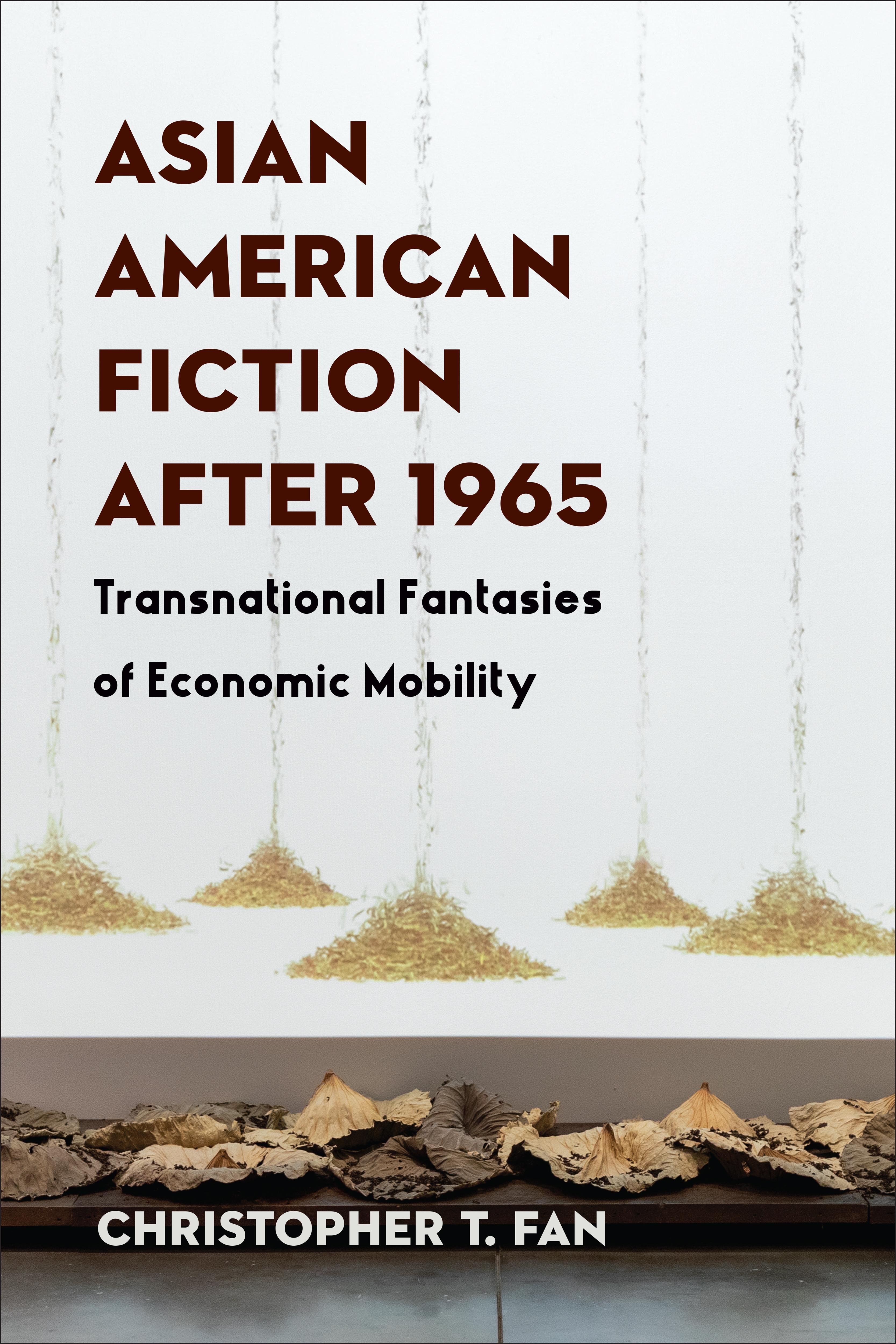
After the 1965 Immigration and Nationality Act loosened discriminatory restrictions, people from Northeast Asian countries such as South Korea, Taiwan, Japan, and eventually China immigrated to the United States in large numbers. Highly skilled Asian immigrants flocked to professional-managerial occupations, especially in science, technology, engineering, and math. Asian American literature is now overwhelmingly defined by this generation’s children, who often struggled with parental and social expectations that they would pursue lucrative careers on their way to becoming writers.
Christopher T. Fan offers a new way to understand Asian American fiction through the lens of the class and race formations that shaped its authors both in the United States and in Northeast Asia. In readings of writers including Ted Chiang, Chang-rae Lee, Ken Liu, Ling Ma, Ruth Ozeki, Kathy Wang, and Charles Yu, he examines how Asian American fiction maps the immigrant narrative of intergenerational conflict onto the “two cultures” conflict between the arts and sciences. Fan argues that the self-consciousness found in these writers’ works is a legacy of Japanese and American modernization projects that emphasized technical and scientific skills in service of rapid industrialization. He considers Asian American writers’ attraction to science fiction, the figure of the engineer and notions of the “postracial,” modernization theory and time travel, and what happens when the dream of a stable professional identity encounters the realities of deprofessionalization and proletarianization. Through a transnational and historical-materialist approach, this groundbreaking book illuminates what makes texts and authors “Asian American.”
Before Memmo my notes were scattered across PDFs. Now a workspace pulls everything into one place — I see exactly what's still left to study.
Memmo's summaries are gold before exams. I don't have to re-read 800 pages two weeks before — just the important parts.
The AI chat has saved me the night before an exam more than once. I just keep asking until I get it — no waiting on a study group to reply.
The quizzes hit exactly what I need to know. Memmo tracks what I get stuck on — so I only practice what's worth it.
Flashcards with spaced repetition are magic. Memmo knows when I'm about to forget something and brings it back.
The AI podcasts are my favorite. I listen on my way to school and get a recap without sitting at a computer.

Handbok i kvalitativa metoder
281 kr

Hållbar utveckling: en introduktion för ingenjörer och andra problemlösare
334 kr

Brymans Samhällsvetenskapliga metoder
390 kr

Projektledning
491 kr

Den orättvisa hälsan: om socioekonomiska skillnader i hälsa och livslängd
326 kr

Vetenskapsteori för nybörjare
196 kr

Organizational Leadership
429 kr

På väg mot läraryrket
172 kr

Det sociala livet i skolan: Socialpsykologiska perspektiv
253 kr

Betygsättningens didaktik
151 kr

Personality
402 kr

Studying Leadership
404 kr

Managing Innovation
477 kr

Introduktion till samhällsvetenskaplig metod
347 kr

The Psychology of Sex and Gender
698 kr

Evidens och kunskap för socialt arbete
207 kr

Introduction to Leadership
605 kr