
Before Memmo my notes were scattered across PDFs. Now a workspace pulls everything into one place — I see exactly what's still left to study.
Winner, Bronze Medal, 2026 Axiom Business Book Awards in the category of Human Resources / Employee Training
Shortlisted, 2025 Talent Award, Thinkers50
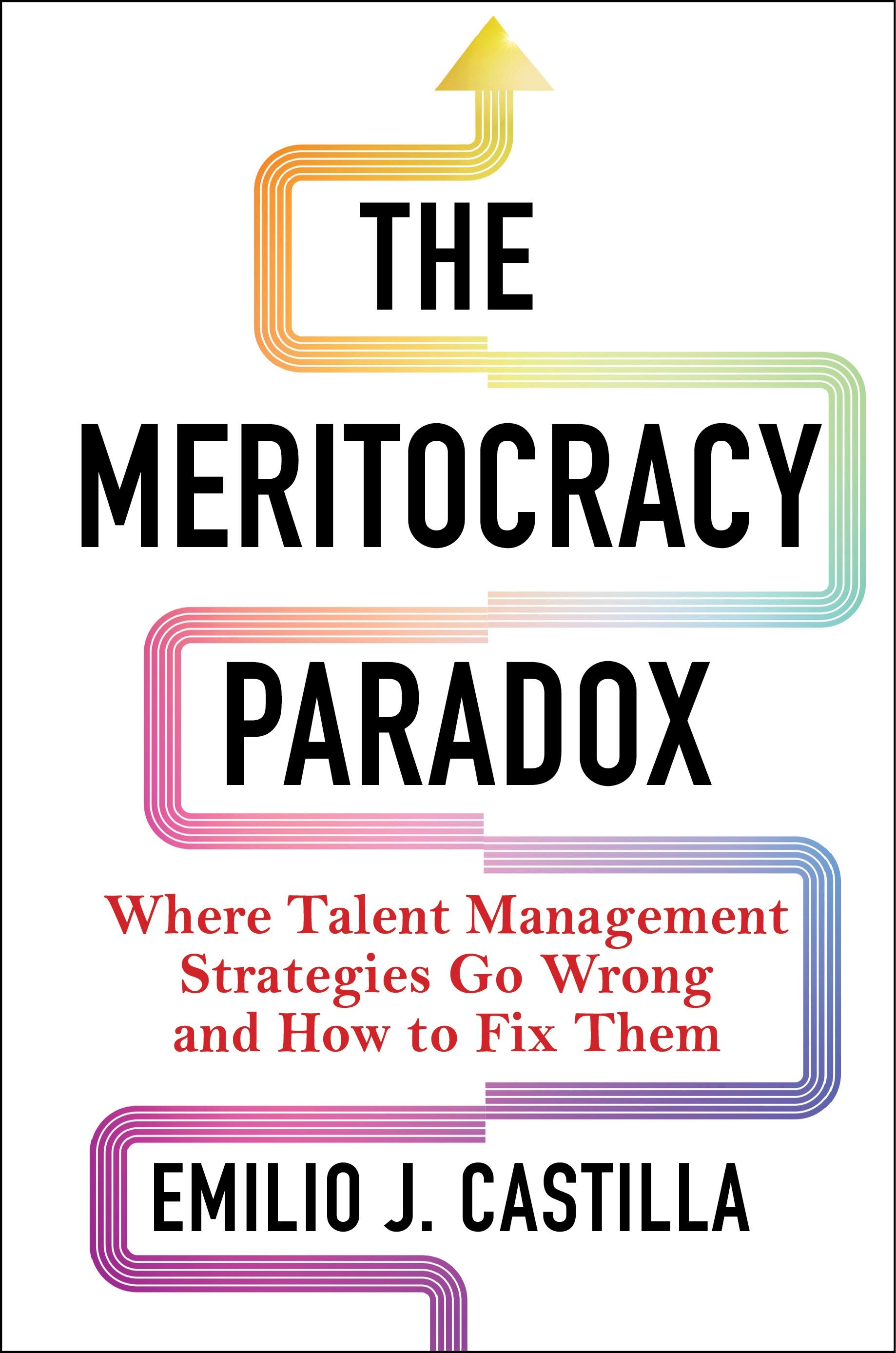
Meritocracy—the idea that individuals should be rewarded based on their talent and hard work—is one of the most widely celebrated ideals in education, business, and government. It shapes how organizations recruit, evaluate, and promote, promising a fair system where the best rise to the top. But meritocracy has increasingly come under criticism for deepening inequality and reinforcing bias. How did a once-progressive ideal meant to level the playing field end up contributing to unfairness and privilege? What happens when organizations treat merit as their guiding principle without questioning how it’s defined or applied? Most importantly, how can today’s leaders recognize and fix what’s gone wrong?
In The Meritocracy Paradox, Emilio J. Castilla offers timely new answers to these fundamental questions. He analyzes the structure and culture of meritocracy inside organizations, providing real-world examples—from hiring and merit-based bonuses in companies to admissions decisions at elite universities—to show how personal biases and social barriers can undermine the values and outcomes these systems are meant to uphold. Castilla provides practical, research-backed frameworks to help organizations achieve true fairness and opportunity for all. Drawing on successful data-based interventions, he presents concrete strategies for improving recruitment, selection, evaluation, promotion, and compensation processes—revealing how motivated leaders can identify and correct shortcomings with cost-effective, targeted solutions that deliver proven results.
The Meritocracy Paradox is essential reading for anyone seeking to understand and improve the intersection of merit, fairness, and equal opportunity in organizations.
Before Memmo my notes were scattered across PDFs. Now a workspace pulls everything into one place — I see exactly what's still left to study.
Memmo's summaries are gold before exams. I don't have to re-read 800 pages two weeks before — just the important parts.
The AI chat has saved me the night before an exam more than once. I just keep asking until I get it — no waiting on a study group to reply.
The quizzes hit exactly what I need to know. Memmo tracks what I get stuck on — so I only practice what's worth it.
Flashcards with spaced repetition are magic. Memmo knows when I'm about to forget something and brings it back.
The AI podcasts are my favorite. I listen on my way to school and get a recap without sitting at a computer.

Handbok i kvalitativa metoder
281 kr

Hållbar utveckling: en introduktion för ingenjörer och andra problemlösare
334 kr

Brymans Samhällsvetenskapliga metoder
390 kr

Projektledning
491 kr

Den orättvisa hälsan: om socioekonomiska skillnader i hälsa och livslängd
326 kr

Organizational Leadership
429 kr

Vetenskapsteori för nybörjare
196 kr

På väg mot läraryrket
172 kr

Det sociala livet i skolan: Socialpsykologiska perspektiv
253 kr

Betygsättningens didaktik
151 kr

Personality
402 kr

Studying Leadership
404 kr

Managing Innovation
477 kr

Introduktion till samhällsvetenskaplig metod
347 kr

The Psychology of Sex and Gender
698 kr

Evidens och kunskap för socialt arbete
207 kr

Introduction to Leadership
605 kr