
Before Memmo my notes were scattered across PDFs. Now a workspace pulls everything into one place — I see exactly what's still left to study.
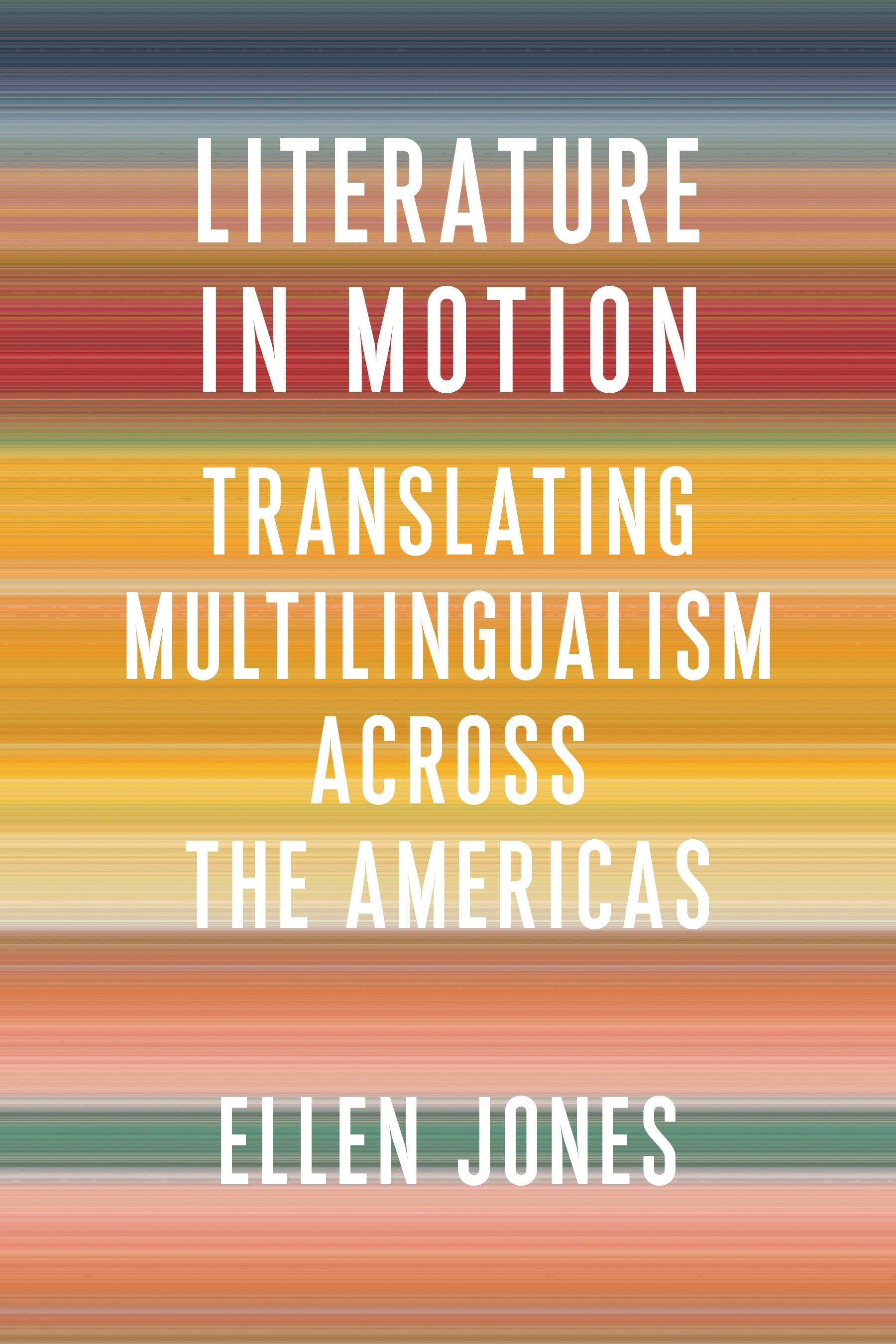
Literature is often assumed to be monolingual: publishing rights are sold on the basis of linguistic territories and translated books are assumed to move from one “original” language to another. Yet a wide range of contemporary literary works mix and meld two or more languages, incorporating translation into their composition. How are these multilingual works translated, and what are the cultural and political implications of doing so?
In Literature in Motion, Ellen Jones offers a new framework for understanding literary multilingualism, emphasizing how authors and translators can use its defamiliarizing and disruptive potential to resist conventions of form and dominant narratives about language and gender. Examining the connection between translation and multilingualism in contemporary literature, she considers its significance for the theory, practice, and publishing of literature in translation. Jones argues that translation does not conflict with multilingual writing’s subversive potential. Instead, we can understand multilingualism and translation as closely intertwined creative strategies through which other forms of textual and conceptual hybridity, fluidity, and disruption are explored.
Jones addresses both well-known and understudied writers from across the American hemisphere who explore the spaces between languages as well as genders, genres, and textual versions, reading their work alongside their translations. She focuses on U.S. Latinx authors Susana Chávez-Silverman, Junot Díaz, and Giannina Braschi, who write in different forms of “Spanglish,” as well as the Brazilian writer Wilson Bueno, who combines Portuguese and Spanish, or “Portunhol,” with the indigenous language Guarani, and whose writing is rendered into “Frenglish” by Canadian translator Erín Moure.
Before Memmo my notes were scattered across PDFs. Now a workspace pulls everything into one place — I see exactly what's still left to study.
Memmo's summaries are gold before exams. I don't have to re-read 800 pages two weeks before — just the important parts.
The AI chat has saved me the night before an exam more than once. I just keep asking until I get it — no waiting on a study group to reply.
The quizzes hit exactly what I need to know. Memmo tracks what I get stuck on — so I only practice what's worth it.
Flashcards with spaced repetition are magic. Memmo knows when I'm about to forget something and brings it back.
The AI podcasts are my favorite. I listen on my way to school and get a recap without sitting at a computer.

Handbok i kvalitativa metoder
281 kr

Hållbar utveckling: en introduktion för ingenjörer och andra problemlösare
334 kr

Brymans Samhällsvetenskapliga metoder
390 kr

Projektledning
491 kr

Den orättvisa hälsan: om socioekonomiska skillnader i hälsa och livslängd
326 kr

Vetenskapsteori för nybörjare
196 kr

Organizational Leadership
429 kr

På väg mot läraryrket
172 kr

Det sociala livet i skolan: Socialpsykologiska perspektiv
253 kr

Betygsättningens didaktik
151 kr

Personality
402 kr

Studying Leadership
404 kr

Managing Innovation
477 kr

Introduktion till samhällsvetenskaplig metod
347 kr

The Psychology of Sex and Gender
698 kr

Evidens och kunskap för socialt arbete
207 kr

Introduction to Leadership
605 kr