
Before Memmo my notes were scattered across PDFs. Now a workspace pulls everything into one place — I see exactly what's still left to study.
Winner, 2024 Haskins Medal, Medieval Academy of America
Winner, 2023 Margaret W. Rossiter History of Women in Science Prize, History of Science Society
Winner, 2022 Award for Excellence in the Study of Religion: Historical Studies, American Academy of Religion
Honorable Mention, 2023 John Boswell Prize, The Committee on Lesbian, Gay, Bisexual & Transgender History (CLGBTH)
Longlisted, 2022 Lambda Literary Award for LGBTQ Studies, Lambda Literary Awards
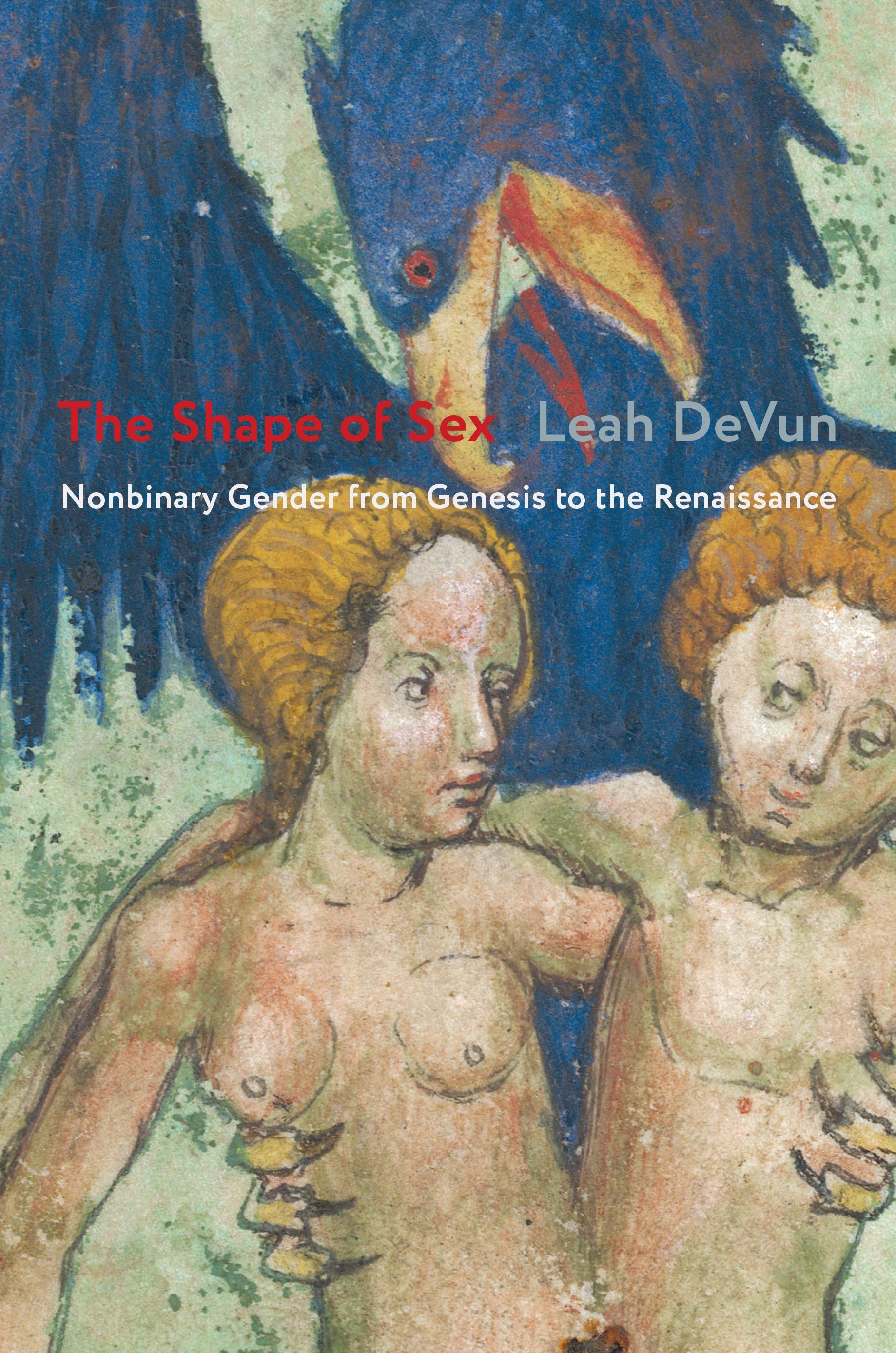
The Shape of Sex is a pathbreaking history of nonbinary sex, focusing on ideas and individuals who allegedly combined or crossed sex or gender categories from 200–1400 C.E. Ranging widely across premodern European thought and culture, Leah DeVun reveals how and why efforts to define “the human” so often hinged on ideas about nonbinary sex.
The Shape of Sex examines a host of thinkers—theologians, cartographers, natural philosophers, lawyers, poets, surgeons, and alchemists—who used ideas about nonbinary sex as conceptual tools to order their political, cultural, and natural worlds. DeVun reconstructs the cultural landscape navigated by individuals whose sex or gender did not fit the binary alongside debates about animality, sexuality, race, religion, and human nature. The Shape of Sex charts an embrace of nonbinary sex in early Christianity, its brutal erasure at the turn of the thirteenth century, and a new enthusiasm for nonbinary transformations at the dawn of the Renaissance. Along the way, DeVun explores beliefs that Adam and Jesus were nonbinary-sexed; images of “monstrous races” in encyclopedias, maps, and illuminated manuscripts; justifications for violence against purportedly nonbinary outsiders such as Jews and Muslims; and the surgical “correction” of bodies that seemed to flout binary divisions.
In a moment when questions about sex, gender, and identity have become incredibly urgent, The Shape of Sex casts new light on a complex and often contradictory past. It shows how premodern thinkers created a system of sex and embodiment that both anticipates and challenges modern beliefs about what it means to be male, female—and human.
Before Memmo my notes were scattered across PDFs. Now a workspace pulls everything into one place — I see exactly what's still left to study.
Memmo's summaries are gold before exams. I don't have to re-read 800 pages two weeks before — just the important parts.
The AI chat has saved me the night before an exam more than once. I just keep asking until I get it — no waiting on a study group to reply.
The quizzes hit exactly what I need to know. Memmo tracks what I get stuck on — so I only practice what's worth it.
Flashcards with spaced repetition are magic. Memmo knows when I'm about to forget something and brings it back.
The AI podcasts are my favorite. I listen on my way to school and get a recap without sitting at a computer.

Handbok i kvalitativa metoder
281 kr

Hållbar utveckling: en introduktion för ingenjörer och andra problemlösare
334 kr

Brymans Samhällsvetenskapliga metoder
390 kr

Projektledning
491 kr

Den orättvisa hälsan: om socioekonomiska skillnader i hälsa och livslängd
326 kr

Vetenskapsteori för nybörjare
196 kr

Organizational Leadership
429 kr

På väg mot läraryrket
172 kr

Det sociala livet i skolan: Socialpsykologiska perspektiv
253 kr

Betygsättningens didaktik
151 kr

Personality
402 kr

Studying Leadership
404 kr

Managing Innovation
477 kr

Introduktion till samhällsvetenskaplig metod
347 kr

The Psychology of Sex and Gender
698 kr

Evidens och kunskap för socialt arbete
207 kr

Introduction to Leadership
605 kr