
Before Memmo my notes were scattered across PDFs. Now a workspace pulls everything into one place — I see exactly what's still left to study.
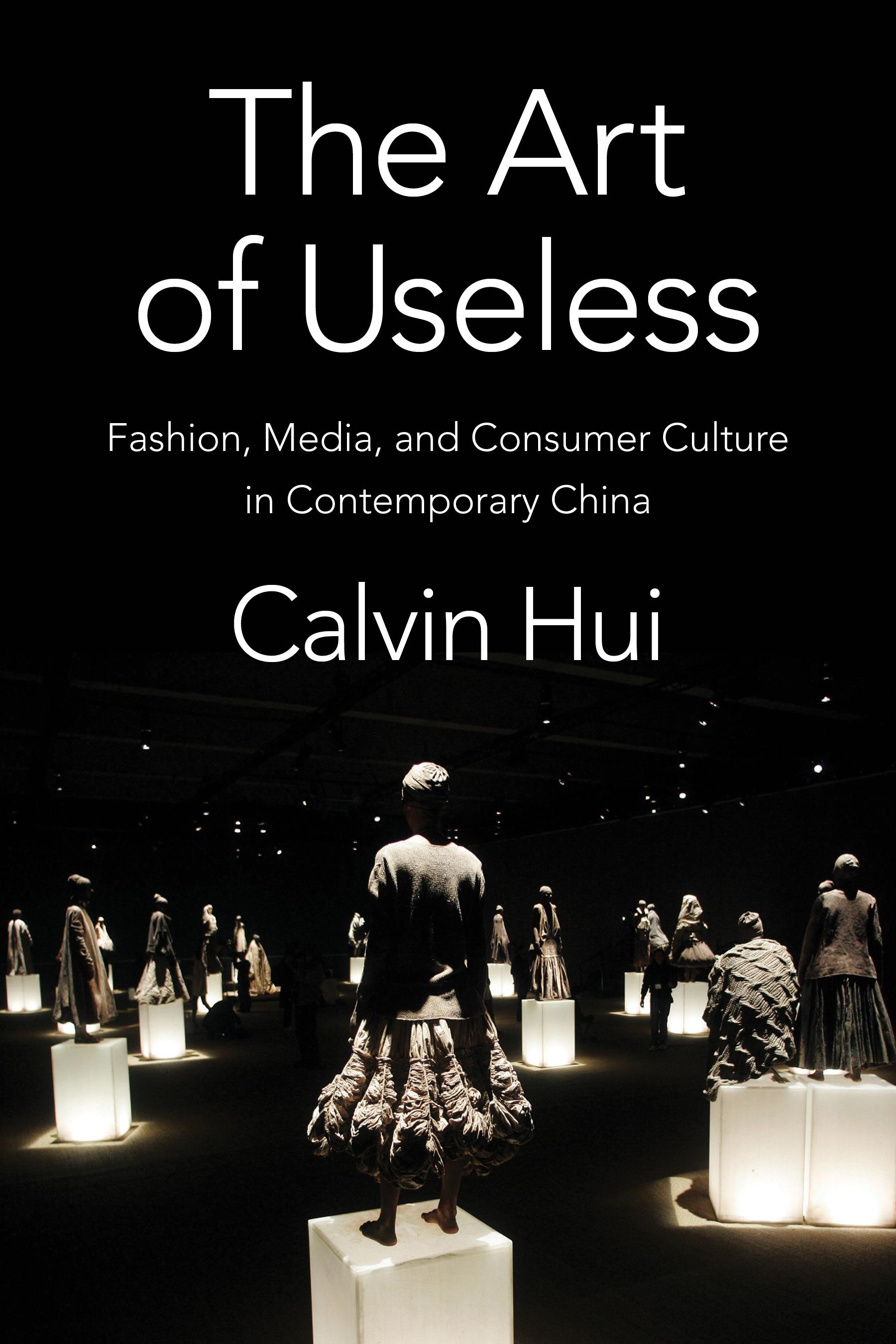
Since embarking on economic reforms in 1978, the People’s Republic of China has also undergone a sweeping cultural reorganization, from proletarian culture under Mao to middle-class consumer culture today. Under these circumstances, how has a Chinese middle class come into being, and how has consumerism become the dominant ideology of an avowedly socialist country? The Art of Useless offers an innovative way to understand China’s unprecedented political-economic, social, and cultural transformations, showing how consumer culture helps anticipate, produce, and shape a new middle-class subjectivity.
Examining changing representations of the production and consumption of fashion in documentaries and films, Calvin Hui traces how culture contributes to China’s changing social relations through the cultivation of new identities and sensibilities. He explores the commodity chain of fashion on a transnational scale, from production to consumption to disposal, as well as media portrayals of the intersections of clothing with class, gender, and ethnicity. Hui illuminates key cinematic narratives, such as a factory worker’s desire for a high-quality suit in the 1960s, an intellectual’s longing for fashionable clothes in the 1980s, and a white-collar woman’s craving for brand-name commodities in the 2000s. He considers how documentary films depict the undersides of consumption—exploited laborers who fantasize about the products they manufacture as well as the accumulation of waste and its disposal—revealing how global capitalism renders migrant factory workers, scavengers, and garbage invisible.
A highly interdisciplinary work that combines theoretical nuance with masterful close analyses, The Art of Useless is an innovative rethinking of the emergence of China’s middle-class consumer culture.
Before Memmo my notes were scattered across PDFs. Now a workspace pulls everything into one place — I see exactly what's still left to study.
Memmo's summaries are gold before exams. I don't have to re-read 800 pages two weeks before — just the important parts.
The AI chat has saved me the night before an exam more than once. I just keep asking until I get it — no waiting on a study group to reply.
The quizzes hit exactly what I need to know. Memmo tracks what I get stuck on — so I only practice what's worth it.
Flashcards with spaced repetition are magic. Memmo knows when I'm about to forget something and brings it back.
The AI podcasts are my favorite. I listen on my way to school and get a recap without sitting at a computer.

Handbok i kvalitativa metoder
281 kr

Hållbar utveckling: en introduktion för ingenjörer och andra problemlösare
334 kr

Brymans Samhällsvetenskapliga metoder
390 kr

Projektledning
491 kr

Den orättvisa hälsan: om socioekonomiska skillnader i hälsa och livslängd
326 kr

Organizational Leadership
429 kr

Vetenskapsteori för nybörjare
196 kr

På väg mot läraryrket
172 kr

Det sociala livet i skolan: Socialpsykologiska perspektiv
253 kr

Betygsättningens didaktik
151 kr

Personality
402 kr

Studying Leadership
404 kr

Managing Innovation
477 kr

Introduktion till samhällsvetenskaplig metod
347 kr

The Psychology of Sex and Gender
698 kr

Evidens och kunskap för socialt arbete
207 kr

Introduction to Leadership
605 kr