
Before Memmo my notes were scattered across PDFs. Now a workspace pulls everything into one place — I see exactly what's still left to study.
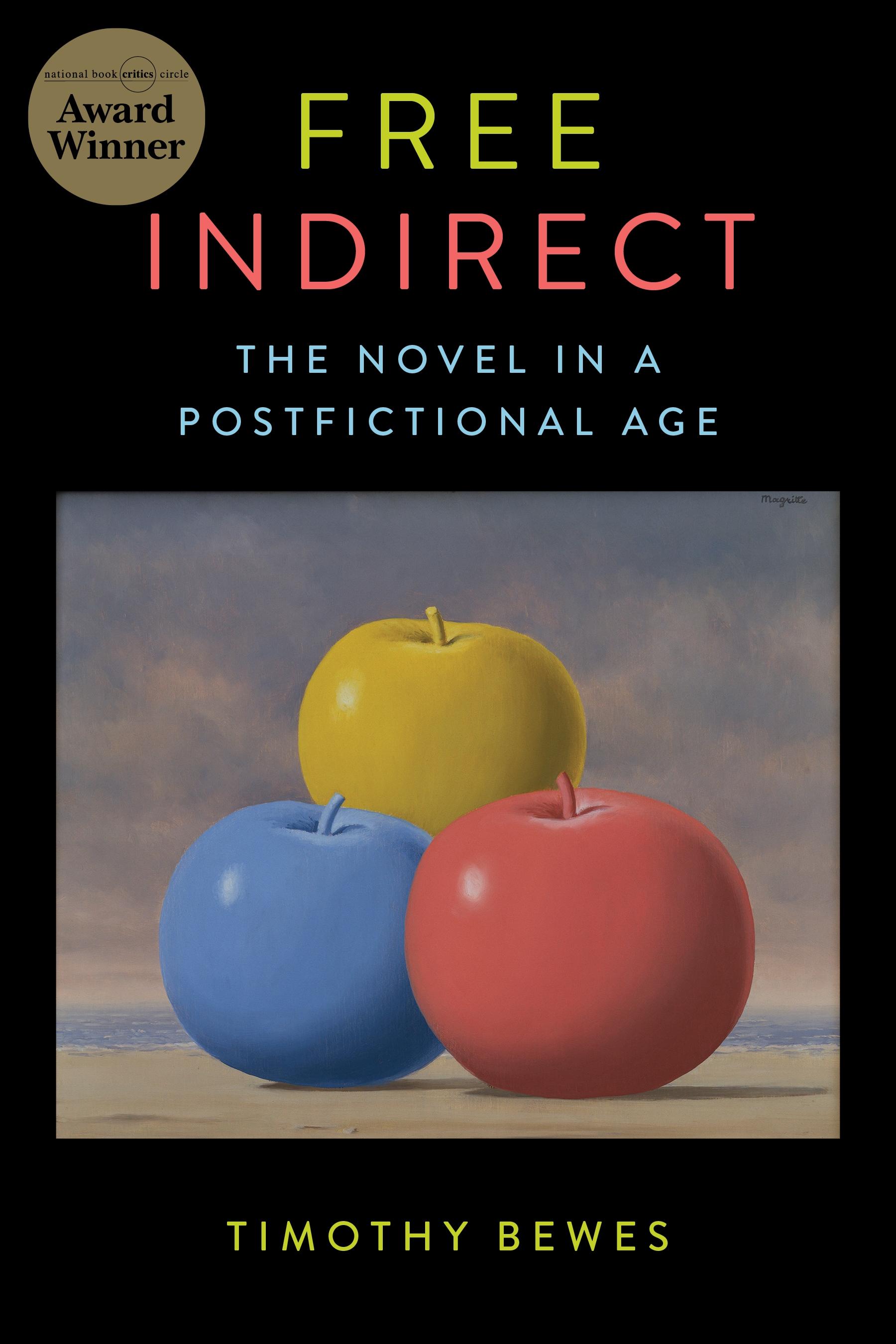
Everywhere today, we are urged to “connect.” Literary critics celebrate a new “honesty” in contemporary fiction or call for a return to “realism.” Yet such rhetoric is strikingly reminiscent of earlier theorizations. Two of the most famous injunctions of twentieth-century writing—E. M. Forster’s “Only connect . . .” and Fredric Jameson’s “Always historicize!”—helped establish connection as the purpose of the novel and its reconstruction as the task of criticism. But what if connection was not the novel’s modus operandi but the defining aesthetic ideology of our era—and its most monetizable commodity? What kind of thought is left for the novel when all ideas are acceptable as long as they can be fitted to a consumer profile?
This book develops a new theory of the novel for the twenty-first century. In the works of writers such as J. M. Coetzee, Rachel Cusk, James Kelman, W. G. Sebald, and Zadie Smith, Timothy Bewes identifies a mode of thought that he calls “free indirect,” in which the novel’s refusal of prevailing ideologies can be found. It is not situated in a character or a narrator and does not take a subjective or perceptual form. Far from heralding the arrival of a new literary genre, this development represents the rediscovery of a quality that has been largely ignored by theorists: thought at the limits of form. Free Indirect contends that this self-awakening of contemporary fiction represents the most promising solution to the problem of thought today.
Before Memmo my notes were scattered across PDFs. Now a workspace pulls everything into one place — I see exactly what's still left to study.
Memmo's summaries are gold before exams. I don't have to re-read 800 pages two weeks before — just the important parts.
The AI chat has saved me the night before an exam more than once. I just keep asking until I get it — no waiting on a study group to reply.
The quizzes hit exactly what I need to know. Memmo tracks what I get stuck on — so I only practice what's worth it.
Flashcards with spaced repetition are magic. Memmo knows when I'm about to forget something and brings it back.
The AI podcasts are my favorite. I listen on my way to school and get a recap without sitting at a computer.

Handbok i kvalitativa metoder
281 kr

Hållbar utveckling: en introduktion för ingenjörer och andra problemlösare
334 kr

Brymans Samhällsvetenskapliga metoder
390 kr

Projektledning
491 kr

Den orättvisa hälsan: om socioekonomiska skillnader i hälsa och livslängd
326 kr

Organizational Leadership
429 kr

Vetenskapsteori för nybörjare
196 kr

På väg mot läraryrket
172 kr

Det sociala livet i skolan: Socialpsykologiska perspektiv
253 kr

Betygsättningens didaktik
151 kr

Personality
402 kr

Studying Leadership
404 kr

Managing Innovation
477 kr

Introduktion till samhällsvetenskaplig metod
347 kr

The Psychology of Sex and Gender
698 kr

Evidens och kunskap för socialt arbete
207 kr

Introduction to Leadership
605 kr