
Before Memmo my notes were scattered across PDFs. Now a workspace pulls everything into one place — I see exactly what's still left to study.
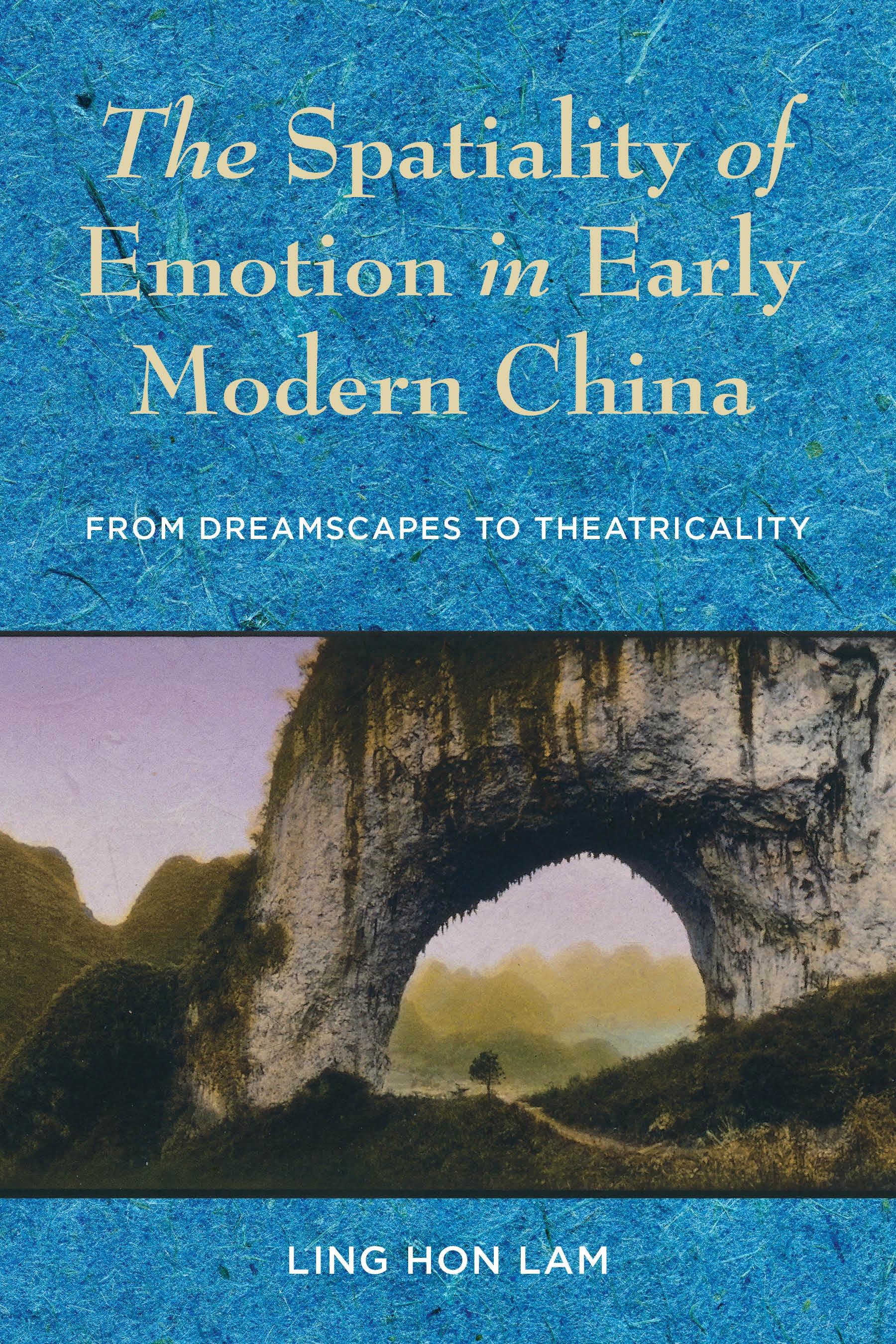
Emotion takes place. Rather than an interior state of mind in response to the outside world, emotion per se is spatial, at turns embedding us from without, transporting us somewhere else, or putting us ahead of ourselves. In this book, Ling Hon Lam gives a deeply original account of the history of emotions in Chinese literature and culture centered on the idea of emotion as space, which the Chinese call “emotion-realm” (qingjing).
Lam traces how the emotion-realm underwent significant transformations from the dreamscape to theatricality in sixteenth- to eighteenth-century China. Whereas medieval dreamscapes delivered the subject into one illusory mood after another, early modern theatricality turned the dreamer into a spectator who is no longer falling through endless oneiric layers but pausing in front of the dream. Through the lens of this genealogy of emotion-realms, Lam remaps the Chinese histories of morals, theater, and knowledge production, which converge at the emergence of sympathy, redefined as the dissonance among the dimensions of the emotion-realm pertaining to theatricality.The book challenges the conventional reading of Chinese literature as premised on interior subjectivity, examines historical changes in the spatial logic of performance through media and theater archaeologies, and ultimately uncovers the different trajectories that brought China and the West to the convergence point of theatricality marked by self-deception and mutual misreading. A major rethinking of key terms in Chinese culture from a comparative perspective, The Spatiality of Emotion in Early Modern China develops a new critical vocabulary to conceptualize history and existence.
Before Memmo my notes were scattered across PDFs. Now a workspace pulls everything into one place — I see exactly what's still left to study.
Memmo's summaries are gold before exams. I don't have to re-read 800 pages two weeks before — just the important parts.
The AI chat has saved me the night before an exam more than once. I just keep asking until I get it — no waiting on a study group to reply.
The quizzes hit exactly what I need to know. Memmo tracks what I get stuck on — so I only practice what's worth it.
Flashcards with spaced repetition are magic. Memmo knows when I'm about to forget something and brings it back.
The AI podcasts are my favorite. I listen on my way to school and get a recap without sitting at a computer.

Handbok i kvalitativa metoder
281 kr

Hållbar utveckling: en introduktion för ingenjörer och andra problemlösare
334 kr

Brymans Samhällsvetenskapliga metoder
390 kr

Projektledning
491 kr

Den orättvisa hälsan: om socioekonomiska skillnader i hälsa och livslängd
326 kr

Vetenskapsteori för nybörjare
196 kr

Organizational Leadership
429 kr

På väg mot läraryrket
172 kr

Det sociala livet i skolan: Socialpsykologiska perspektiv
253 kr

Betygsättningens didaktik
151 kr

Personality
402 kr

Studying Leadership
404 kr

Managing Innovation
477 kr

Introduktion till samhällsvetenskaplig metod
347 kr

The Psychology of Sex and Gender
698 kr

Evidens och kunskap för socialt arbete
207 kr

Introduction to Leadership
605 kr