
Before Memmo my notes were scattered across PDFs. Now a workspace pulls everything into one place — I see exactly what's still left to study.
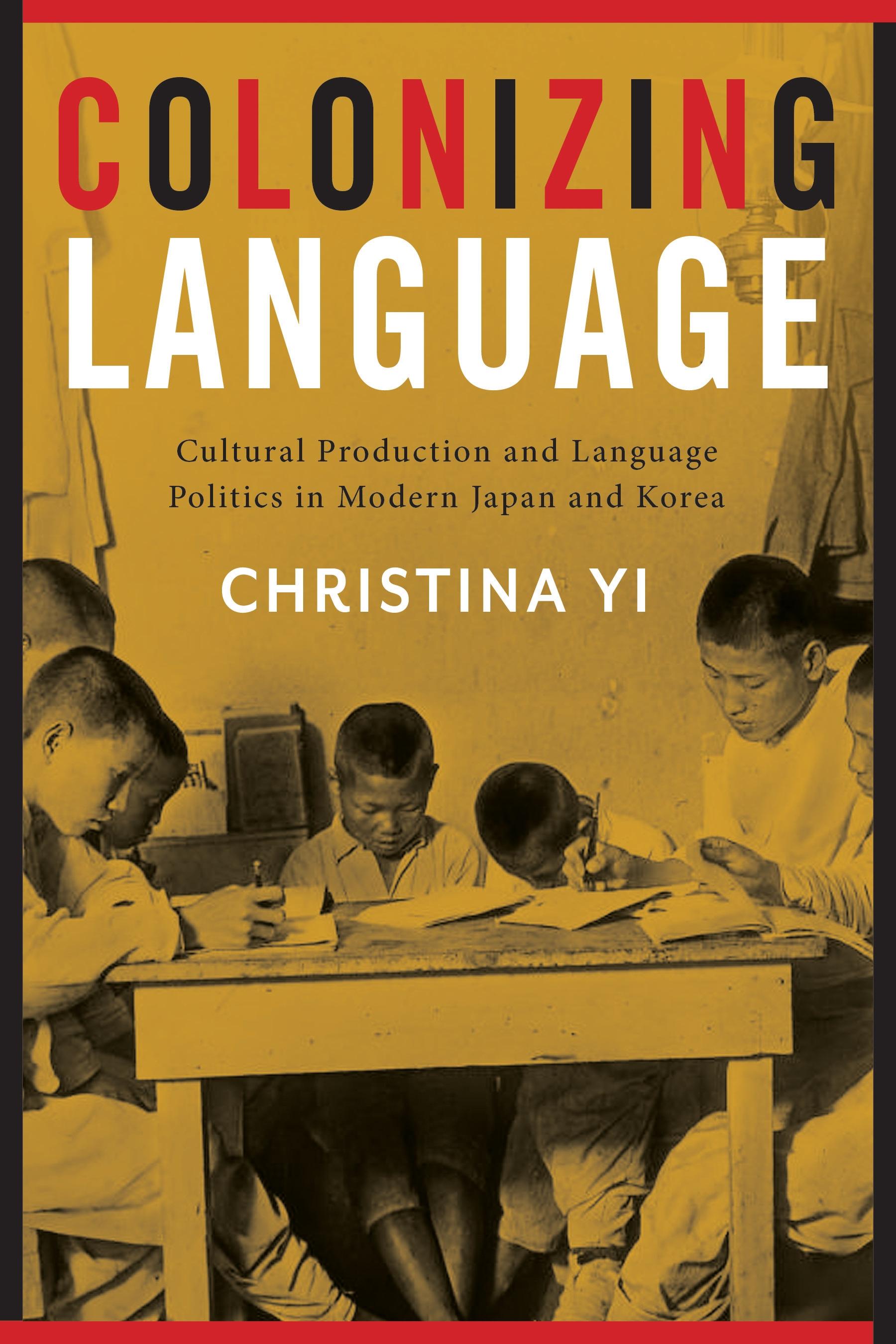
With the outbreak of the Sino-Japanese War in 1894, Japan embarked on a policy of territorial expansion that would claim Taiwan and Korea, among others. Assimilation policies led to a significant body of literature written in Japanese by colonial writers by the 1930s. After its unconditional surrender in 1945, Japan abruptly receded to a nation-state, establishing its present-day borders. Following Korea’s liberation, Korean was labeled the national language of the Korean people, and Japanese-language texts were purged from the Korean literary canon. At the same time, these texts were also excluded from the Japanese literary canon, which was reconfigured along national, rather than imperial, borders.
In Colonizing Language, Christina Yi investigates how linguistic nationalism and national identity intersect in the formation of modern literary canons through an examination of Japanese-language cultural production by Korean and Japanese writers from the 1930s through the 1950s, analyzing how key texts were produced, received, and circulated during the rise and fall of the Japanese empire. She considers a range of Japanese-language writings by Korean colonial subjects published in the 1930s and early 1940s and then traces how postwar reconstructions of ethnolinguistic nationality contributed to the creation of new literary canons in Japan and Korea, with a particular focus on writers from the Korean diasporic community in Japan. Drawing upon fiction, essays, film, literary criticism, and more, Yi challenges conventional understandings of national literature by showing how Japanese language ideology shaped colonial histories and the postcolonial present in East Asia.
A Center for Korean Research Book
Before Memmo my notes were scattered across PDFs. Now a workspace pulls everything into one place — I see exactly what's still left to study.
Memmo's summaries are gold before exams. I don't have to re-read 800 pages two weeks before — just the important parts.
The AI chat has saved me the night before an exam more than once. I just keep asking until I get it — no waiting on a study group to reply.
The quizzes hit exactly what I need to know. Memmo tracks what I get stuck on — so I only practice what's worth it.
Flashcards with spaced repetition are magic. Memmo knows when I'm about to forget something and brings it back.
The AI podcasts are my favorite. I listen on my way to school and get a recap without sitting at a computer.

Handbok i kvalitativa metoder
281 kr

Hållbar utveckling: en introduktion för ingenjörer och andra problemlösare
334 kr

Brymans Samhällsvetenskapliga metoder
390 kr

Projektledning
491 kr

Den orättvisa hälsan: om socioekonomiska skillnader i hälsa och livslängd
326 kr

Organizational Leadership
429 kr

Vetenskapsteori för nybörjare
196 kr

På väg mot läraryrket
172 kr

Det sociala livet i skolan: Socialpsykologiska perspektiv
253 kr

Betygsättningens didaktik
151 kr

Personality
402 kr

Studying Leadership
404 kr

Managing Innovation
477 kr

Introduktion till samhällsvetenskaplig metod
347 kr

The Psychology of Sex and Gender
698 kr

Evidens och kunskap för socialt arbete
207 kr

Introduction to Leadership
605 kr