
Before Memmo my notes were scattered across PDFs. Now a workspace pulls everything into one place — I see exactly what's still left to study.
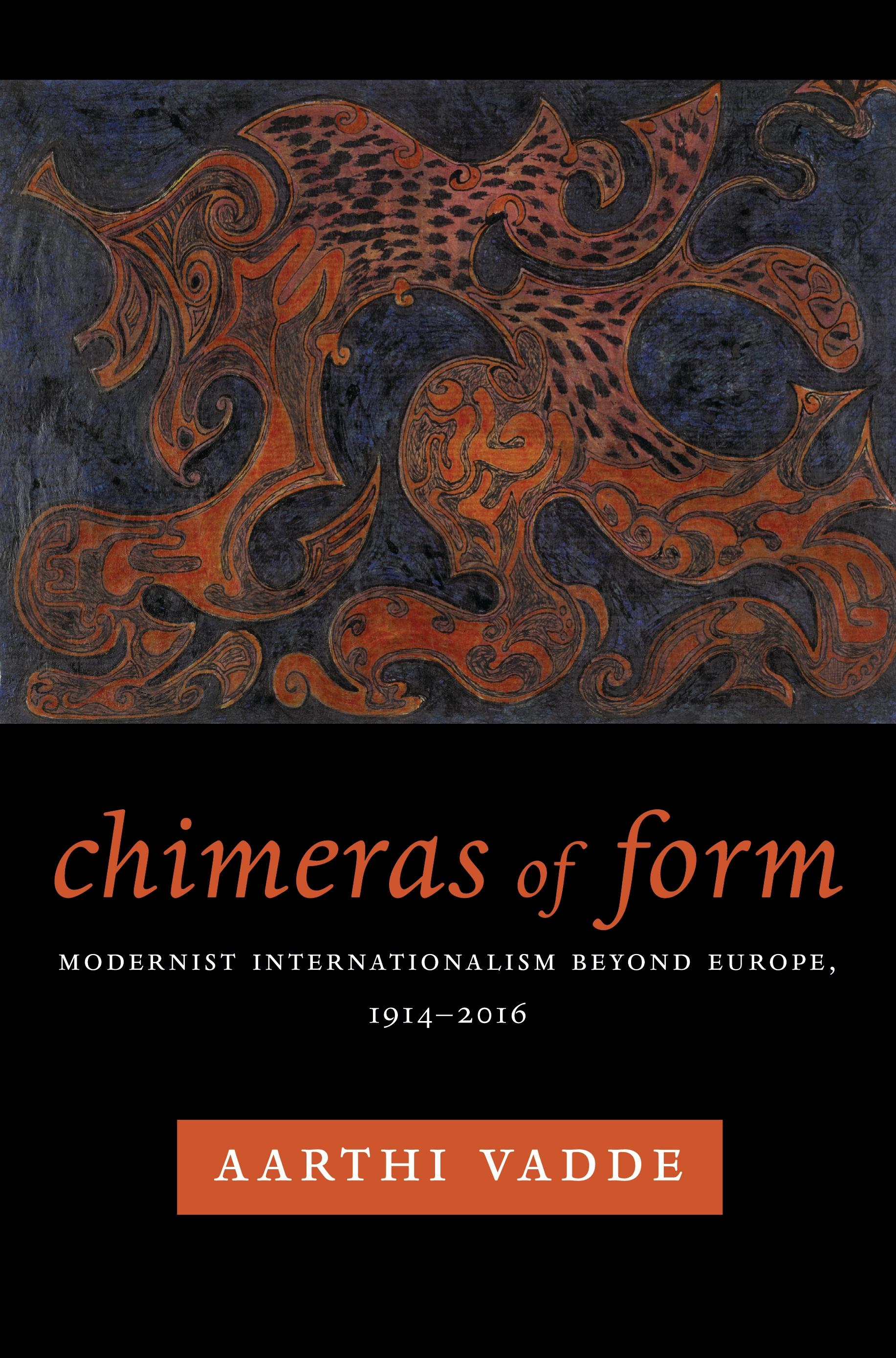
In the years following World War I, the “international” emerged as a distinct scale of political and cultural focus. Internationalisms proliferated in kind as writers and thinkers sought to imagine modes of cooperation that would balance transnational solidarities with national sovereignty. While so-called political realists across the twentieth century have regarded such attempts as wishful thinking, Aarthi Vadde argues that the negotiation of wishing and thinking is at the very heart of internationalism. In Chimeras of Form, she shows why modernist literary form is essential to understanding the aspirational and analytical force of internationalism in and beyond Europe.
Major writers such as Rabindranath Tagore, James Joyce, Claude McKay, George Lamming, Michael Ondaatje, and Zadie Smith use modernist strategies to reshape how readers think about the cohesion and interrelation of political communities in the wake of empire. Vadde lucidly explains how their formal experiments with the novel, short story, poetry, and political essay contribute to and sometimes even anticipate debates in postcolonial theory and cosmopolitanism. She reads Joyce’s use of asymmetrical narratives as a way to ask questions about international camaraderie, and demonstrates how the “plotless” works of McKay and Lamming upturn ideas of citizenship and diasporic alienation. Her analysis of twenty-first-century writers Smith and Shailja Patel shows how ongoing conflicts around migration, displacement, and global economic inequality link modernist, postcolonial, and contemporary traditions of literature. Vadde brings these traditions together to reveal the dual nature of internationalism as an ambition, possibly a chimeric one, and an actual political discourse vital to understanding our present moment.
Before Memmo my notes were scattered across PDFs. Now a workspace pulls everything into one place — I see exactly what's still left to study.
Memmo's summaries are gold before exams. I don't have to re-read 800 pages two weeks before — just the important parts.
The AI chat has saved me the night before an exam more than once. I just keep asking until I get it — no waiting on a study group to reply.
The quizzes hit exactly what I need to know. Memmo tracks what I get stuck on — so I only practice what's worth it.
Flashcards with spaced repetition are magic. Memmo knows when I'm about to forget something and brings it back.
The AI podcasts are my favorite. I listen on my way to school and get a recap without sitting at a computer.

Handbok i kvalitativa metoder
281 kr

Hållbar utveckling: en introduktion för ingenjörer och andra problemlösare
334 kr

Brymans Samhällsvetenskapliga metoder
390 kr

Projektledning
491 kr

Den orättvisa hälsan: om socioekonomiska skillnader i hälsa och livslängd
326 kr

Organizational Leadership
429 kr

Vetenskapsteori för nybörjare
196 kr

På väg mot läraryrket
172 kr

Det sociala livet i skolan: Socialpsykologiska perspektiv
253 kr

Betygsättningens didaktik
151 kr

Personality
402 kr

Studying Leadership
404 kr

Managing Innovation
477 kr

Introduktion till samhällsvetenskaplig metod
347 kr

The Psychology of Sex and Gender
698 kr

Evidens och kunskap för socialt arbete
207 kr

Introduction to Leadership
605 kr