
Before Memmo my notes were scattered across PDFs. Now a workspace pulls everything into one place — I see exactly what's still left to study.
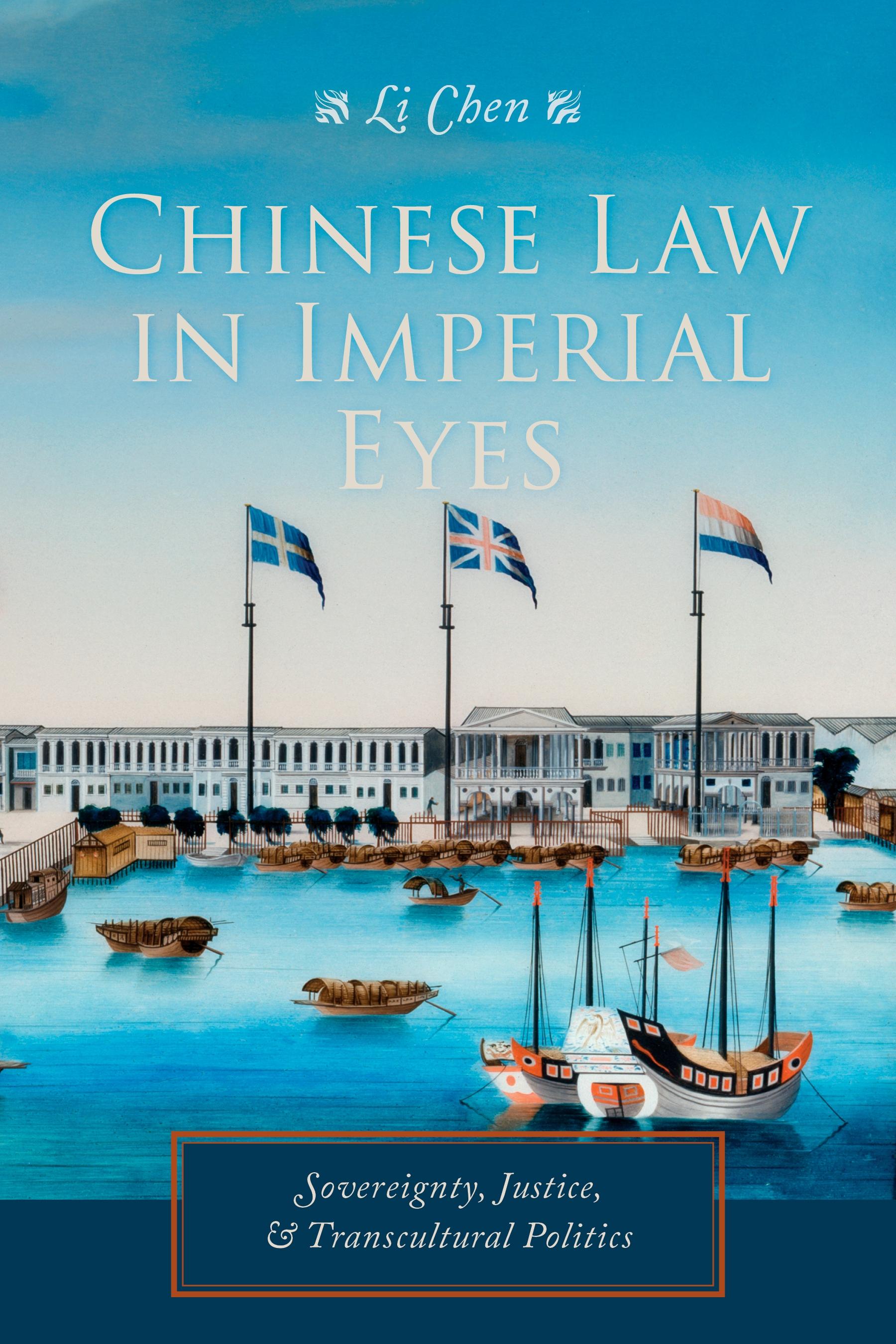
How did American schoolchildren, French philosophers, Russian Sinologists, Dutch merchants, and British lawyers imagine China and Chinese law? What happened when agents of presumably dominant Western empires had to endure the humiliations and anxieties of maintaining a profitable but precarious relationship with China? In Chinese Law in Imperial Eyes, Li Chen provides a richly textured analysis of these related issues and their intersection with law, culture, and politics in the eighteenth and nineteenth centuries.
Using a wide array of sources, Chen's study focuses on the power dynamics of Sino-Western relations during the formative century before the First Opium War (1839-1842). He highlights the centrality of law to modern imperial ideology and politics and brings new insight to the origins of comparative Chinese law in the West, the First Opium War, and foreign extraterritoriality in China. The shifting balance of economic and political power formed and transformed knowledge of China and Chinese law in different contact zones. Chen argues that recovering the variegated and contradictory roles of Chinese law in Western "modernization" helps provincialize the subsequent Euro-Americentric discourse of global modernity.
Chen draws attention to important yet underanalyzed sites in which imperial sovereignty, national identity, cultural tradition, or international law and order were defined and restructured. His valuable case studies show how constructed differences between societies were hardened into cultural or racial boundaries and then politicized to rationalize international conflicts and hierarchy.
Before Memmo my notes were scattered across PDFs. Now a workspace pulls everything into one place — I see exactly what's still left to study.
Memmo's summaries are gold before exams. I don't have to re-read 800 pages two weeks before — just the important parts.
The AI chat has saved me the night before an exam more than once. I just keep asking until I get it — no waiting on a study group to reply.
The quizzes hit exactly what I need to know. Memmo tracks what I get stuck on — so I only practice what's worth it.
Flashcards with spaced repetition are magic. Memmo knows when I'm about to forget something and brings it back.
The AI podcasts are my favorite. I listen on my way to school and get a recap without sitting at a computer.

Handbok i kvalitativa metoder
281 kr

Hållbar utveckling: en introduktion för ingenjörer och andra problemlösare
334 kr

Brymans Samhällsvetenskapliga metoder
390 kr

Projektledning
491 kr

Den orättvisa hälsan: om socioekonomiska skillnader i hälsa och livslängd
326 kr

Vetenskapsteori för nybörjare
196 kr

Organizational Leadership
429 kr

På väg mot läraryrket
172 kr

Det sociala livet i skolan: Socialpsykologiska perspektiv
253 kr

Betygsättningens didaktik
151 kr

Personality
402 kr

Studying Leadership
404 kr

Managing Innovation
477 kr

Introduktion till samhällsvetenskaplig metod
347 kr

The Psychology of Sex and Gender
698 kr

Evidens och kunskap för socialt arbete
207 kr

Introduction to Leadership
605 kr