
Before Memmo my notes were scattered across PDFs. Now a workspace pulls everything into one place — I see exactly what's still left to study.
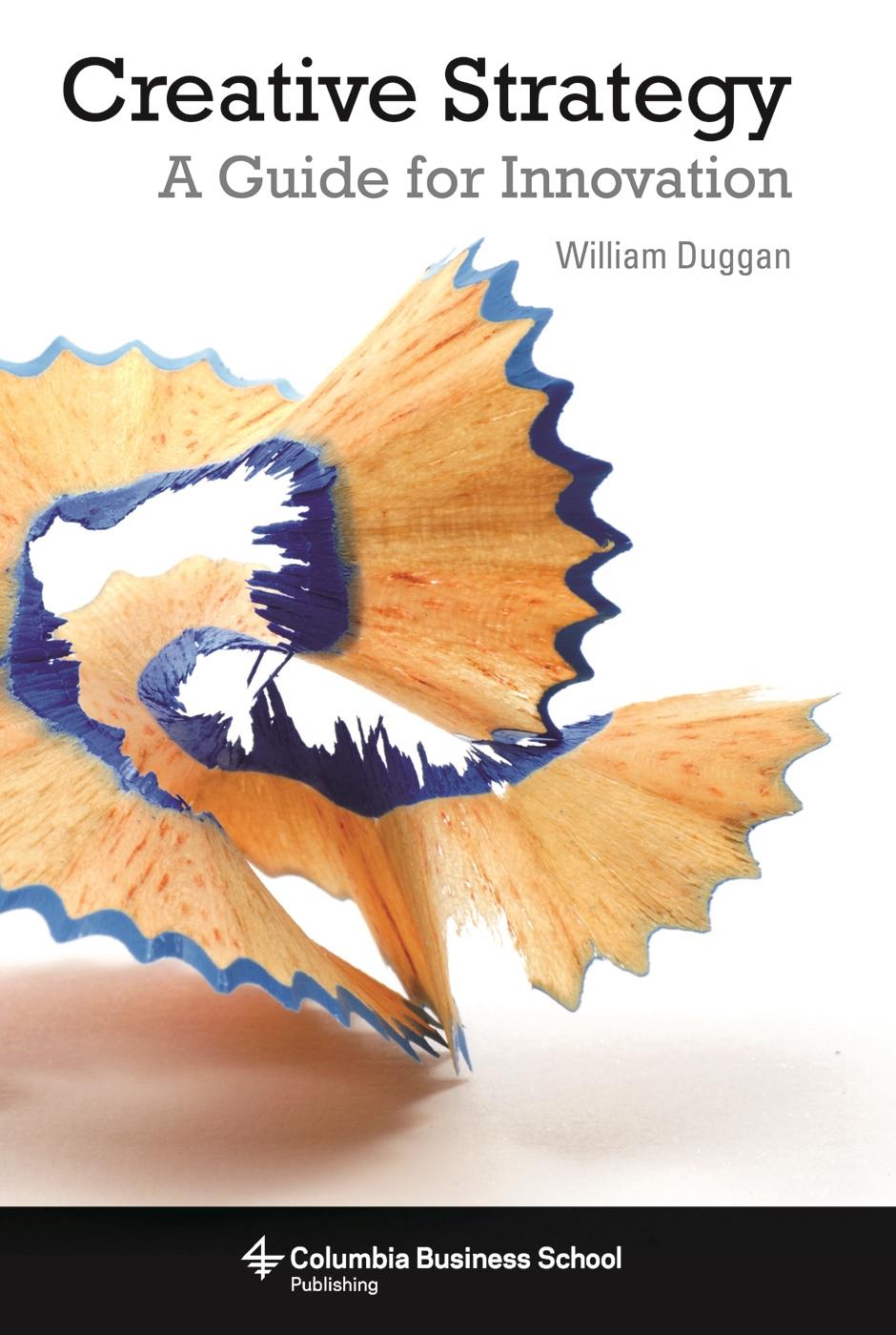
William Duggan's 2007 book, Strategic Intuition, showed how innovation really happens in business and other fields and how that matches what modern neuroscience tells us about how creative ideas form in the human mind. In his new book, Creative Strategy, Duggan offers a step-by-step guide to help individuals and organizations put that same method to work for their own innovations.
Duggan's book solves the most important problem of how innovation actually happens. Other methods of creativity, strategy, and innovation explain how to research and analyze a situation, but they don't guide toward the next step: developing a creative idea for what to do. Or they rely on the magic of "brainstorming"—just tossing out ideas. Instead, Duggan shows how creative strategy follows the natural three-step method of the human brain: breaking down a problem into parts and then searching for past examples to create a new combination to solve the problem. That's how innovation really happens.
Duggan explains how to follow these three steps to innovate in business and any other field as an individual, a team, or a whole company. The crucial middle step—the search for past examples—takes readers beyond their own brain to a "what-works scan" of what others have done within and outside of the company, industry, and country. It is a global search for good ideas to combine as a new innovation. Duggan illustrates creative strategy through real-world cases of innovation that use the same method: from Netflix to Edison, from Google to Henry Ford. He also shows how to integrate creative strategy into other methods you might currently use, such as Porter's Five Forces or Design Thinking. Creative Strategy takes the mystery out of innovation and puts it within your grasp.
Before Memmo my notes were scattered across PDFs. Now a workspace pulls everything into one place — I see exactly what's still left to study.
Memmo's summaries are gold before exams. I don't have to re-read 800 pages two weeks before — just the important parts.
The AI chat has saved me the night before an exam more than once. I just keep asking until I get it — no waiting on a study group to reply.
The quizzes hit exactly what I need to know. Memmo tracks what I get stuck on — so I only practice what's worth it.
Flashcards with spaced repetition are magic. Memmo knows when I'm about to forget something and brings it back.
The AI podcasts are my favorite. I listen on my way to school and get a recap without sitting at a computer.

Handbok i kvalitativa metoder
281 kr

Hållbar utveckling: en introduktion för ingenjörer och andra problemlösare
334 kr

Brymans Samhällsvetenskapliga metoder
390 kr

Projektledning
491 kr

Den orättvisa hälsan: om socioekonomiska skillnader i hälsa och livslängd
326 kr

Vetenskapsteori för nybörjare
196 kr

Organizational Leadership
429 kr

På väg mot läraryrket
172 kr

Det sociala livet i skolan: Socialpsykologiska perspektiv
253 kr

Betygsättningens didaktik
151 kr

Personality
402 kr

Studying Leadership
404 kr

Managing Innovation
477 kr

Introduktion till samhällsvetenskaplig metod
347 kr

The Psychology of Sex and Gender
698 kr

Evidens och kunskap för socialt arbete
207 kr

Introduction to Leadership
605 kr