
Before Memmo my notes were scattered across PDFs. Now a workspace pulls everything into one place — I see exactly what's still left to study.
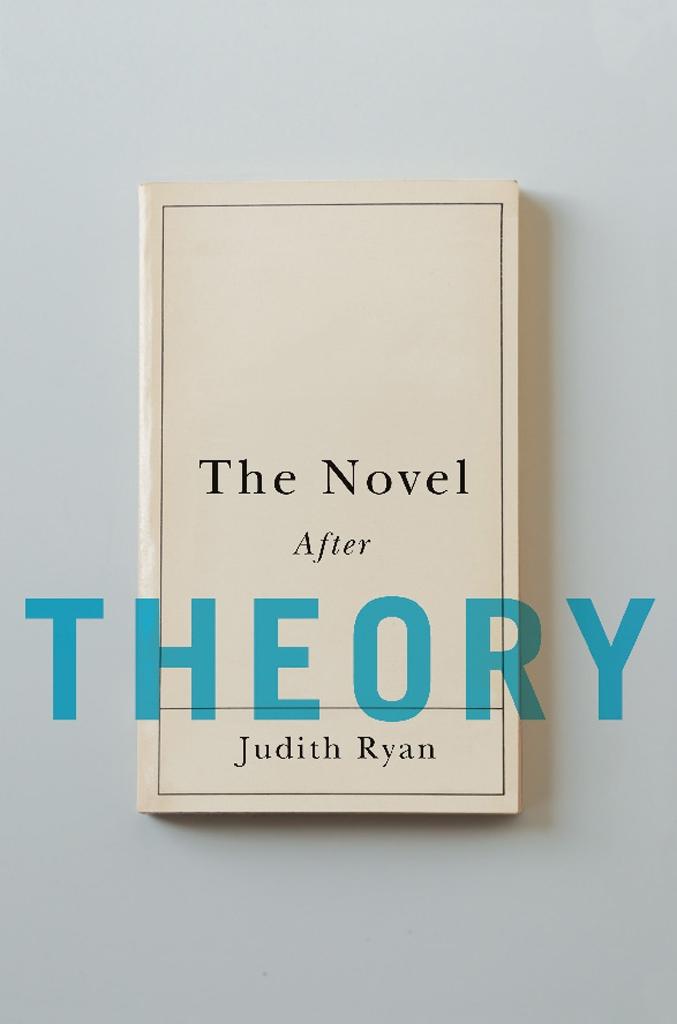
Novels began to incorporate literary theory in unexpected ways in the late twentieth century. Through allusion, parody, or implicit critique, theory formed an additional strand in fiction that raised questions about the nature of authorship and the practice of writing. Studying this phenomenon provides fresh insight into the recent development of the novel and the persistence of modern theory beyond the period of its greatest success. In this book, Judith Ryan opens these questions to a range of readers, drawing them into debates over the value of theory.
Ryan investigates what prompted fiction writers to incorporate and respond to theory nearly thirty years ago. Designed for readers unfamiliar with the complexities of theory, Ryan's book introduces the discipline's major trends and controversies and notes the salient ideas of a carefully selected set of individual thinkers. Ryan follows novelists' adaptation to and engagement with arguments drawn from theory as they translate abstract ideas into language, structure, and fictional strategy. At the core of her book is a fascinating microstudy of French poststructuralism in its dialogue with narrative fiction.
Investigating theories of textuality, psychology, and society in the work of Don DeLillo, Thomas Pynchon, J. M. Coetzee, Margaret Atwood, W. G. Sebald, and Umberto Eco, as well as Monika Maron, Alain Robbe-Grillet, Marguerite Duras, Marilynne Robinson, David Foster Wallace, and Christa Wolf, Ryan identifies subtle negotiations between author and theory and the richness this dynamic adds to texts. Resetting the way we think and learn about literature, her book reads current literary theory while uniquely tracing its shaping of a genre.
Before Memmo my notes were scattered across PDFs. Now a workspace pulls everything into one place — I see exactly what's still left to study.
Memmo's summaries are gold before exams. I don't have to re-read 800 pages two weeks before — just the important parts.
The AI chat has saved me the night before an exam more than once. I just keep asking until I get it — no waiting on a study group to reply.
The quizzes hit exactly what I need to know. Memmo tracks what I get stuck on — so I only practice what's worth it.
Flashcards with spaced repetition are magic. Memmo knows when I'm about to forget something and brings it back.
The AI podcasts are my favorite. I listen on my way to school and get a recap without sitting at a computer.

Handbok i kvalitativa metoder
281 kr

Hållbar utveckling: en introduktion för ingenjörer och andra problemlösare
334 kr

Brymans Samhällsvetenskapliga metoder
390 kr

Projektledning
491 kr

Den orättvisa hälsan: om socioekonomiska skillnader i hälsa och livslängd
326 kr

Organizational Leadership
429 kr

Vetenskapsteori för nybörjare
196 kr

På väg mot läraryrket
172 kr

Det sociala livet i skolan: Socialpsykologiska perspektiv
253 kr

Betygsättningens didaktik
151 kr

Personality
402 kr

Studying Leadership
404 kr

Managing Innovation
477 kr

Introduktion till samhällsvetenskaplig metod
347 kr

The Psychology of Sex and Gender
698 kr

Evidens och kunskap för socialt arbete
207 kr

Introduction to Leadership
605 kr