
Before Memmo my notes were scattered across PDFs. Now a workspace pulls everything into one place — I see exactly what's still left to study.
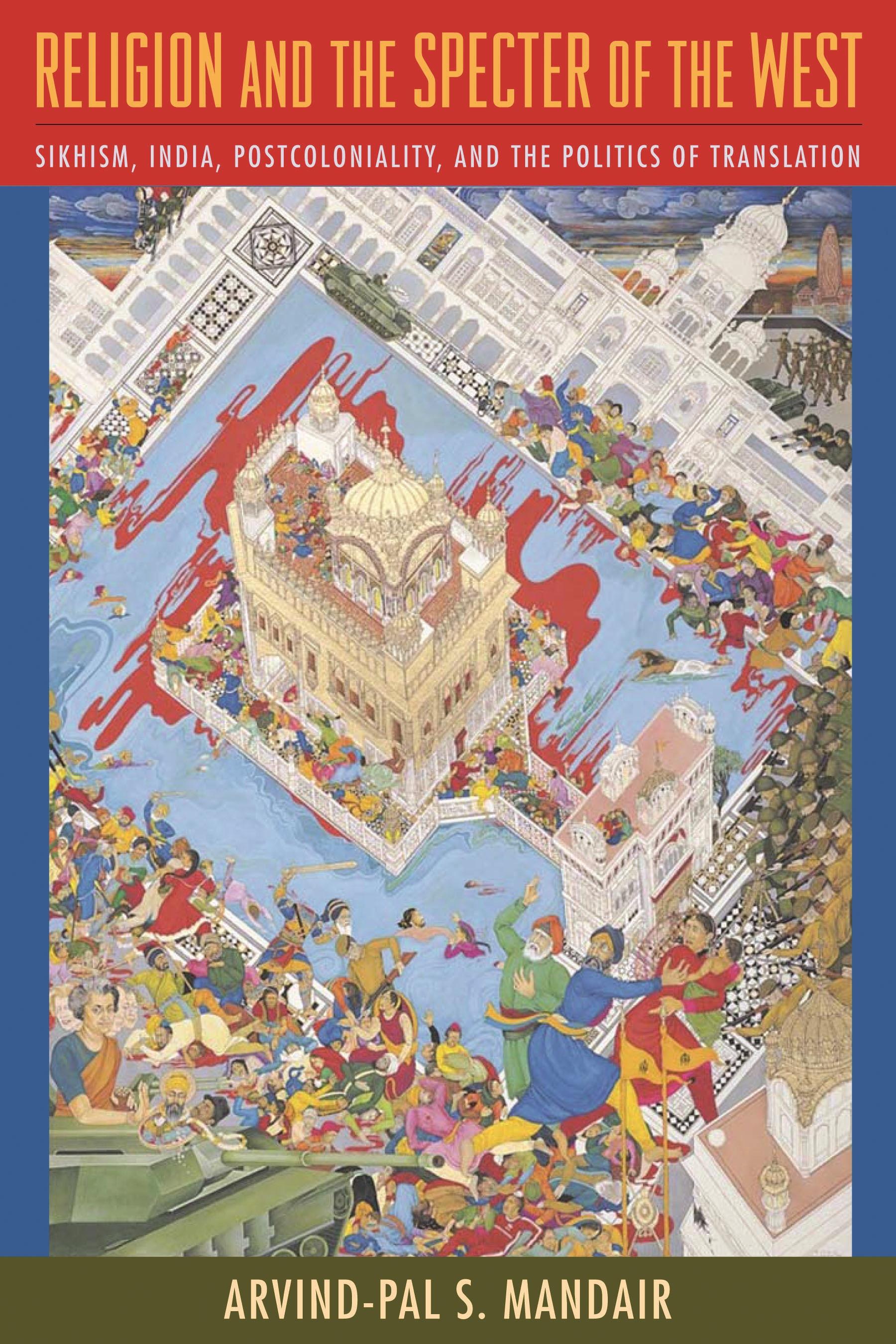
Arguing that intellectual movements, such as deconstruction, postsecular theory, and political theology, have different implications for cultures and societies that live with the debilitating effects of past imperialisms, Arvind Mandair unsettles the politics of knowledge construction in which the category of "religion" continues to be central. Through a case study of Sikhism, he launches an extended critique of religion as a cultural universal. At the same time, he presents a portrait of how certain aspects of Sikh tradition were reinvented as "religion" during the late nineteenth and early twentieth centuries.
India's imperial elite subtly recast Sikh tradition as a sui generis religion, which robbed its teachings of their political force. In turn, Sikhs began to define themselves as a "nation" and a "world religion" that was separate from, but parallel to, the rise of the Indian state and global Hinduism. Rather than investigate these processes in isolation from Europe, Mandair shifts the focus closer to the political history of ideas, thereby recovering part of Europe's repressed colonial memory.
Mandair rethinks the intersection of religion and the secular in discourses such as history of religions, postcolonial theory, and recent continental philosophy. Though seemingly unconnected, these discourses are shown to be linked to a philosophy of "generalized translation" that emerged as a key conceptual matrix in the colonial encounter between India and the West. In this riveting study, Mandair demonstrates how this philosophy of translation continues to influence the repetitions of religion and identity politics in the lives of South Asians, and the way the academy, state, and media have analyzed such phenomena.
Before Memmo my notes were scattered across PDFs. Now a workspace pulls everything into one place — I see exactly what's still left to study.
Memmo's summaries are gold before exams. I don't have to re-read 800 pages two weeks before — just the important parts.
The AI chat has saved me the night before an exam more than once. I just keep asking until I get it — no waiting on a study group to reply.
The quizzes hit exactly what I need to know. Memmo tracks what I get stuck on — so I only practice what's worth it.
Flashcards with spaced repetition are magic. Memmo knows when I'm about to forget something and brings it back.
The AI podcasts are my favorite. I listen on my way to school and get a recap without sitting at a computer.

Handbok i kvalitativa metoder
281 kr

Hållbar utveckling: en introduktion för ingenjörer och andra problemlösare
334 kr

Brymans Samhällsvetenskapliga metoder
390 kr

Projektledning
491 kr

Den orättvisa hälsan: om socioekonomiska skillnader i hälsa och livslängd
326 kr

Vetenskapsteori för nybörjare
196 kr

Organizational Leadership
429 kr

På väg mot läraryrket
172 kr

Det sociala livet i skolan: Socialpsykologiska perspektiv
253 kr

Betygsättningens didaktik
151 kr

Personality
402 kr

Studying Leadership
404 kr

Managing Innovation
477 kr

Introduktion till samhällsvetenskaplig metod
347 kr

The Psychology of Sex and Gender
698 kr

Evidens och kunskap för socialt arbete
207 kr

Introduction to Leadership
605 kr