
Before Memmo my notes were scattered across PDFs. Now a workspace pulls everything into one place — I see exactly what's still left to study.
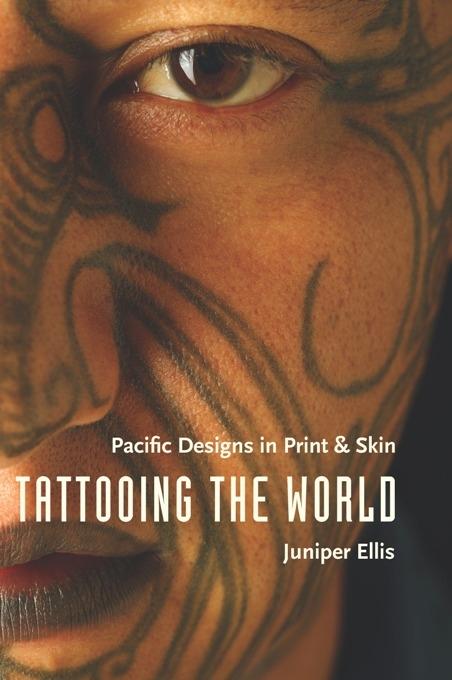
In the 1830s an Irishman named James F. O'Connell acquired a full-body tattoo while living as a castaway in the Pacific. The tattoo featured traditional patterns that, to native Pohnpeians, defined O'Connell's life; they made him wholly human. Yet upon traveling to New York, these markings singled him out as a freak. His tattoos frightened women and children, and ministers warned their congregations that viewing O'Connell's markings would cause the ink to transfer to the skin of their unborn children. In many ways, O'Connell's story exemplifies the unique history of the modern tattoo, which began in the Pacific and then spread throughout the world. No matter what form it has taken, the tattoo has always embodied social standing, aesthetics, ethics, culture, gender, and sexuality. Tattoos are personal and corporate, private and public. They mark the profane and the sacred, the extravagant and the essential, the playful and the political. From the Pacific islands to the world at large, tattoos are a symbolic and often provocative form of expression and communication.
Tattooing the World is the first book on tattoo literature and culture. Juniper Ellis traces the origins and significance of modern tattoo in the works of nineteenth- and twentieth-century artists, travelers, missionaries, scientists, and such writers as Herman Melville, Margaret Mead, Albert Wendt, and Sia Figiel. Traditional Pacific tattoo patterns are formed using an array of well-defined motifs. They place the individual in a particular community and often convey genealogy and ideas of the sacred. However, outside of the Pacific, those who wear and view tattoos determine their meaning and interpret their design differently. Reading indigenous historiography alongside Western travelogue and other writings, Ellis paints a surprising portrait of how culture has been etched both on the human form and on a body of literature.
Before Memmo my notes were scattered across PDFs. Now a workspace pulls everything into one place — I see exactly what's still left to study.
Memmo's summaries are gold before exams. I don't have to re-read 800 pages two weeks before — just the important parts.
The AI chat has saved me the night before an exam more than once. I just keep asking until I get it — no waiting on a study group to reply.
The quizzes hit exactly what I need to know. Memmo tracks what I get stuck on — so I only practice what's worth it.
Flashcards with spaced repetition are magic. Memmo knows when I'm about to forget something and brings it back.
The AI podcasts are my favorite. I listen on my way to school and get a recap without sitting at a computer.

Handbok i kvalitativa metoder
281 kr

Hållbar utveckling: en introduktion för ingenjörer och andra problemlösare
334 kr

Brymans Samhällsvetenskapliga metoder
390 kr

Projektledning
491 kr

Den orättvisa hälsan: om socioekonomiska skillnader i hälsa och livslängd
326 kr

Organizational Leadership
429 kr

Vetenskapsteori för nybörjare
196 kr

På väg mot läraryrket
172 kr

Det sociala livet i skolan: Socialpsykologiska perspektiv
253 kr

Betygsättningens didaktik
151 kr

Personality
402 kr

Studying Leadership
404 kr

Managing Innovation
477 kr

Introduktion till samhällsvetenskaplig metod
347 kr

The Psychology of Sex and Gender
698 kr

Evidens och kunskap för socialt arbete
207 kr

Introduction to Leadership
605 kr