
Before Memmo my notes were scattered across PDFs. Now a workspace pulls everything into one place — I see exactly what's still left to study.
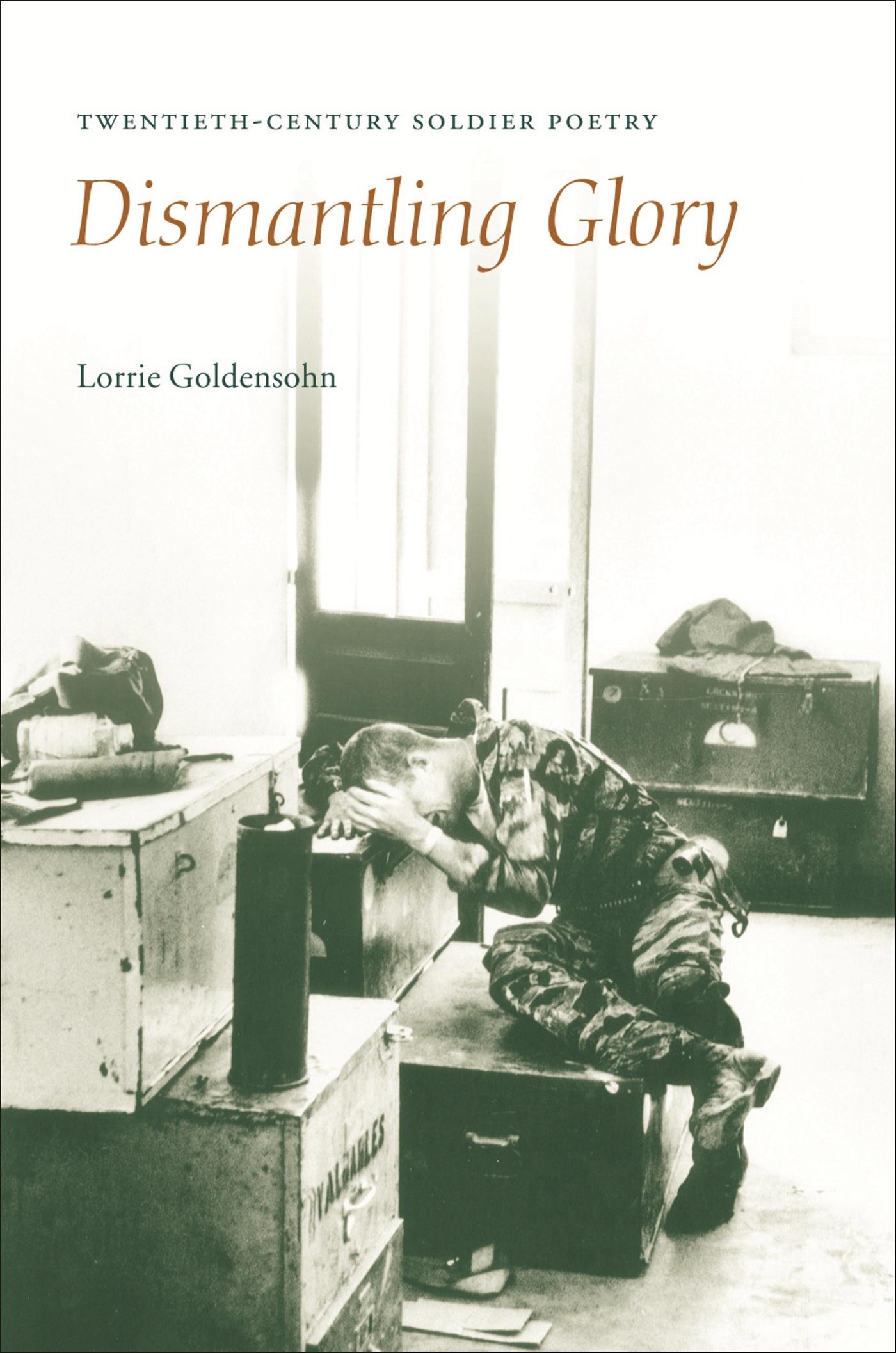
Dismantling Glory presents the most personal and powerful words ever written about the horrors of battle, by the very soldiers who put their lives on the line. Focusing on American and English poetry from World War I, World War II, and the Vietnam War, Lorrie Goldensohn, a poet and pacifist, affirms that by and large, twentieth-century war poetry is fundamentally antiwar. She examines the changing nature of the war lyric and takes on the literary thinking of two countries separated by their common language.
World War I poets such as Wilfred Owen emphasized the role of soldier as victim. By World War II, however, English and American poets, influenced by the leftist politics of W. H. Auden, tended to indict the whole of society, not just its leaders, for militarism. During the Vietnam War, soldier poets accepted themselves as both victims and perpetrators of war's misdeeds, writing a nontraditional, more personally candid war poetry.
The book not only discusses the poetry of trench warfare but also shows how the lives of civilians—women and children in particular—entered a global war poetry dominated by air power, invasion, and occupation. Goldensohn argues that World War II blurred the boundaries between battleground and home front, thus bringing women and civilians into war discourse as never before. She discusses the interplay of fascination and disapproval in the texts of twentieth-century war and notes the way in which homage to war hero and victim contends with revulsion at war's horror and waste.
In addition to placing the war lyric in literary and historical context, the book discusses in detail individual poets such as Wilfred Owen, W. H. Auden, Keith Douglas, Randall Jarrell, and a group of poets from the Vietnam War, including W. D. Ehrhart, Bruce Weigl, Yusef Komunyakaa, David Huddle, and Doug Anderson.
Dismantling Glory is an original and compelling look at the way twentieth-century war poetry posited new relations between masculinity and war, changed and complicated the representation of war, and expanded the scope of antiwar thinking.
Before Memmo my notes were scattered across PDFs. Now a workspace pulls everything into one place — I see exactly what's still left to study.
Memmo's summaries are gold before exams. I don't have to re-read 800 pages two weeks before — just the important parts.
The AI chat has saved me the night before an exam more than once. I just keep asking until I get it — no waiting on a study group to reply.
The quizzes hit exactly what I need to know. Memmo tracks what I get stuck on — so I only practice what's worth it.
Flashcards with spaced repetition are magic. Memmo knows when I'm about to forget something and brings it back.
The AI podcasts are my favorite. I listen on my way to school and get a recap without sitting at a computer.

Handbok i kvalitativa metoder
281 kr

Hållbar utveckling: en introduktion för ingenjörer och andra problemlösare
334 kr

Brymans Samhällsvetenskapliga metoder
390 kr

Projektledning
491 kr

Den orättvisa hälsan: om socioekonomiska skillnader i hälsa och livslängd
326 kr

Vetenskapsteori för nybörjare
196 kr

Organizational Leadership
429 kr

På väg mot läraryrket
172 kr

Det sociala livet i skolan: Socialpsykologiska perspektiv
253 kr

Betygsättningens didaktik
151 kr

Personality
402 kr

Studying Leadership
404 kr

Managing Innovation
477 kr

Introduktion till samhällsvetenskaplig metod
347 kr

The Psychology of Sex and Gender
698 kr

Evidens och kunskap för socialt arbete
207 kr

Introduction to Leadership
605 kr