
Before Memmo my notes were scattered across PDFs. Now a workspace pulls everything into one place — I see exactly what's still left to study.
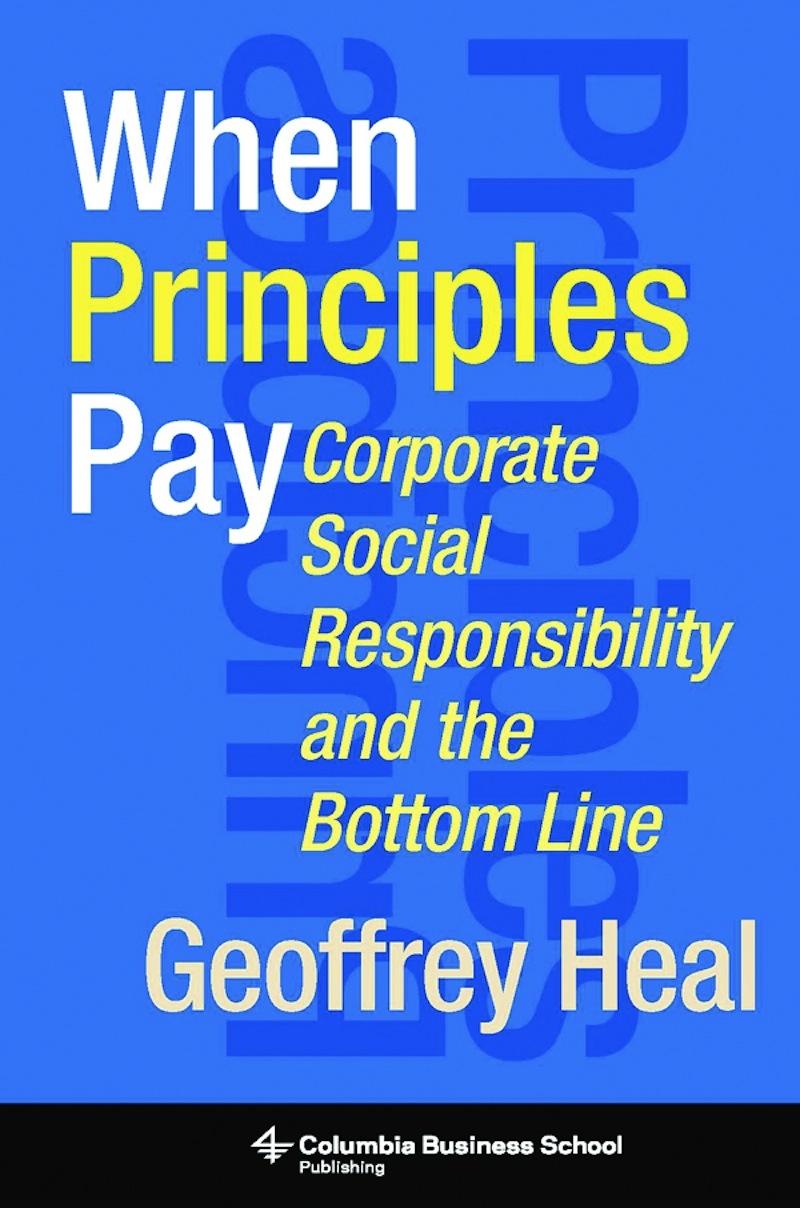
Stories of predatory lending practices and the reckless destruction of the environment by greedy corporations dominate the news, suggesting that, in business, ethics and profit are incompatible pursuits. Yet some of the worst lenders are now bankrupt, and Toyota has enjoyed phenomenal success by positioning itself as the green car company par excellence. These trends suggest that antisocial corporate behavior has its costs, especially in terms of the stock market, which penalizes companies that have poor environmental track records and rewards more socially conscious brands.
The political context of our economy is rapidly changing, particularly in regard to incentives that operate outside the marketplace in a strict and narrow sense and involve interactions between corporations and nongovernmental organizations (NGOs), activist groups, regulatory bodies, consumers, and civil society. These interactions can significantly color a corporation's alternatives, making socially or environmentally harmful behavior much less attractive. British Petroleum, for example, has voluntarily reduced its greenhouse gas emissions over the past ten years, Starbucks, has changed the environmental impact of its coffee production, and Nike and other footwear and textile makers now monitor the labor conditions of their subcontractors.
When Principles Pay jumps headfirst into this engaging and vital issue, asking whether profit maximization and the generation of value for shareholders is compatible with policies that support social and environmental goals. Geoffrey Heal presents a comprehensive examination of how social and environmental performance affects a corporation's profitability and how the stock market reacts to a firm's social and environmental behavior. He looks at socially responsible investment (SRI), reviewing the evolution of the SRI industry and the quality of its returns. He also draws on studies conducted in a wide range of industries, from financials and pharmaceuticals to Wal-Mart and Monsanto, and focuses on the actions of corporations in poor countries. In conclusion, Heal analyzes how social and environmental performance fits into accounting and corporate strategy, presenting an executive perspective on the best way to develop and implement these aspects of a corporation's behavior.
Before Memmo my notes were scattered across PDFs. Now a workspace pulls everything into one place — I see exactly what's still left to study.
Memmo's summaries are gold before exams. I don't have to re-read 800 pages two weeks before — just the important parts.
The AI chat has saved me the night before an exam more than once. I just keep asking until I get it — no waiting on a study group to reply.
The quizzes hit exactly what I need to know. Memmo tracks what I get stuck on — so I only practice what's worth it.
Flashcards with spaced repetition are magic. Memmo knows when I'm about to forget something and brings it back.
The AI podcasts are my favorite. I listen on my way to school and get a recap without sitting at a computer.

Handbok i kvalitativa metoder
281 kr

Hållbar utveckling: en introduktion för ingenjörer och andra problemlösare
334 kr

Brymans Samhällsvetenskapliga metoder
390 kr

Projektledning
491 kr

Den orättvisa hälsan: om socioekonomiska skillnader i hälsa och livslängd
326 kr

Organizational Leadership
429 kr

Vetenskapsteori för nybörjare
196 kr

På väg mot läraryrket
172 kr

Det sociala livet i skolan: Socialpsykologiska perspektiv
253 kr

Betygsättningens didaktik
151 kr

Personality
402 kr

Studying Leadership
404 kr

Managing Innovation
477 kr

Introduktion till samhällsvetenskaplig metod
347 kr

The Psychology of Sex and Gender
698 kr

Evidens och kunskap för socialt arbete
207 kr

Introduction to Leadership
605 kr