
Before Memmo my notes were scattered across PDFs. Now a workspace pulls everything into one place — I see exactly what's still left to study.
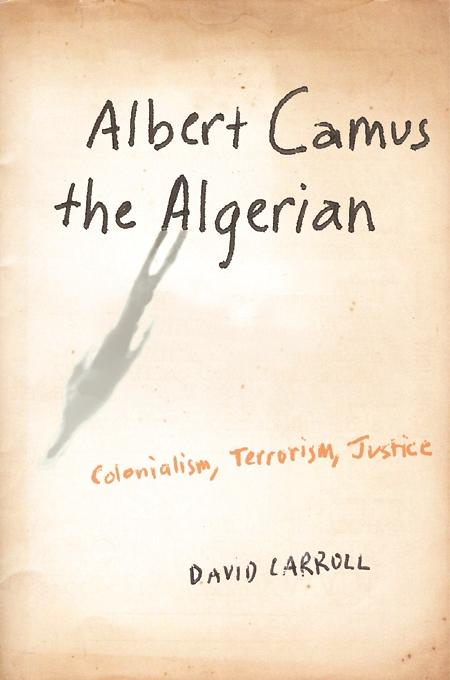
In these original readings of Albert Camus' novels, short stories, and political essays, David Carroll concentrates on Camus' conflicted relationship with his Algerian background and finds important critical insights into questions of justice, the effects of colonial oppression, and the deadly cycle of terrorism and counterterrorism that characterized the Algerian War and continues to surface in the devastation of postcolonial wars today.
During France's "dirty war" in Algeria, Camus called for an end to the violence perpetrated against civilians by both France and the Algerian National Liberation Front (FLN) and supported the creation of a postcolonial, multicultural, and democratic Algeria. His position was rejected by most of his contemporaries on the Left and has, ironically, earned him the title of colonialist sympathizer as well as the scorn of important postcolonial critics.
Carroll rescues Camus' work from such criticism by emphasizing the Algerian dimensions of his literary and philosophical texts and by highlighting in his novels and short stories his understanding of both the injustice of colonialism and the tragic nature of Algeria's struggle for independence. By refusing to accept that the sacrifice of innocent human lives can ever be justified, even in the pursuit of noble political goals, and by rejecting simple, ideological binaries (West vs. East, Christian vs. Muslim, "us" vs. "them," good vs. evil), Camus' work offers an alternative to the stark choices that characterized his troubled times and continue to define our own.
"What they didn't like, was the Algerian, in him," Camus wrote of his fictional double in The First Man. Not only should "the Algerian" in Camus be "liked," Carroll argues, but the Algerian dimensions of his literary and political texts constitute a crucial part of their continuing interest. Carroll's reading also shows why Camus' critical perspective has much to contribute to contemporary debates stemming from the global "war on terror."
Before Memmo my notes were scattered across PDFs. Now a workspace pulls everything into one place — I see exactly what's still left to study.
Memmo's summaries are gold before exams. I don't have to re-read 800 pages two weeks before — just the important parts.
The AI chat has saved me the night before an exam more than once. I just keep asking until I get it — no waiting on a study group to reply.
The quizzes hit exactly what I need to know. Memmo tracks what I get stuck on — so I only practice what's worth it.
Flashcards with spaced repetition are magic. Memmo knows when I'm about to forget something and brings it back.
The AI podcasts are my favorite. I listen on my way to school and get a recap without sitting at a computer.

Handbok i kvalitativa metoder
281 kr

Hållbar utveckling: en introduktion för ingenjörer och andra problemlösare
334 kr

Brymans Samhällsvetenskapliga metoder
390 kr

Projektledning
491 kr

Den orättvisa hälsan: om socioekonomiska skillnader i hälsa och livslängd
326 kr

Vetenskapsteori för nybörjare
196 kr

Organizational Leadership
429 kr

På väg mot läraryrket
172 kr

Det sociala livet i skolan: Socialpsykologiska perspektiv
253 kr

Betygsättningens didaktik
151 kr

Personality
402 kr

Studying Leadership
404 kr

Managing Innovation
477 kr

Introduktion till samhällsvetenskaplig metod
347 kr

The Psychology of Sex and Gender
698 kr

Evidens och kunskap för socialt arbete
207 kr

Introduction to Leadership
605 kr